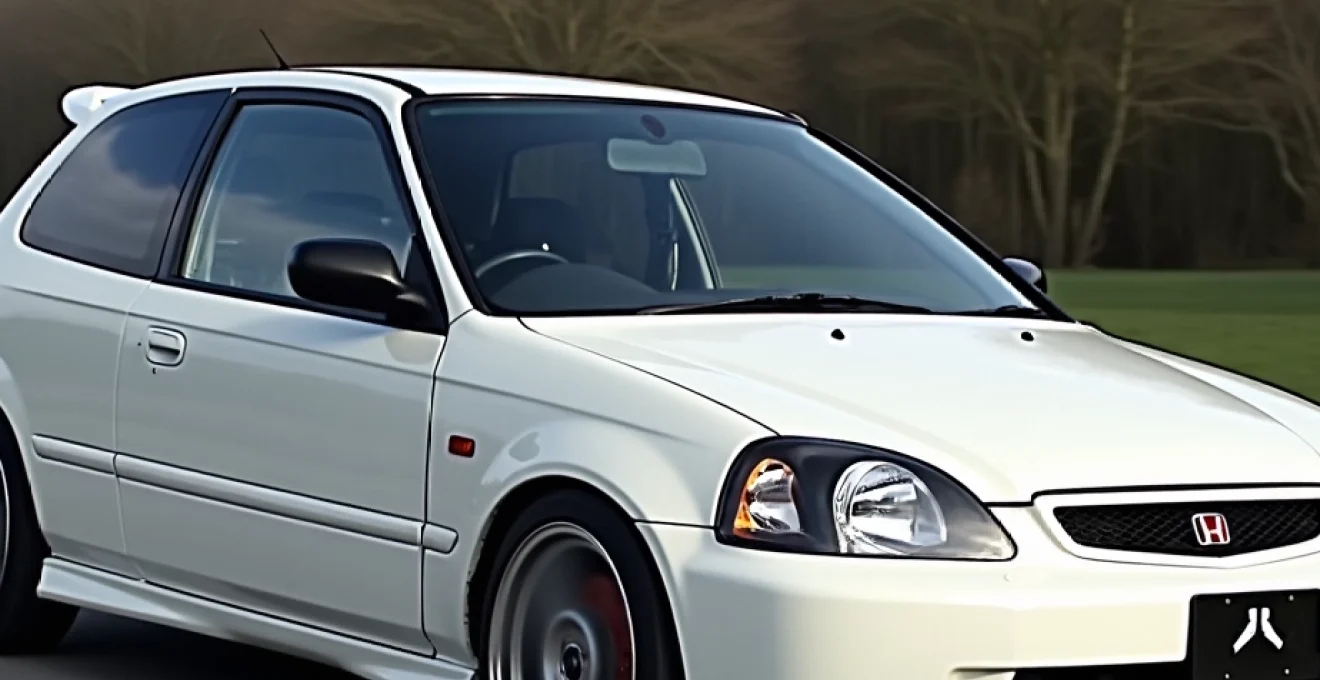
The 2003 Honda Civic Type R EP3 represents a pivotal moment in performance hatchback history, marking Honda’s first serious attempt to challenge European hot hatch dominance with Japanese engineering excellence. This naturally aspirated marvel combines Honda’s legendary reliability with genuine track-bred performance, creating a package that remains remarkably relevant in today’s turbocharged landscape. With values steadily climbing and pristine examples becoming increasingly scarce, understanding the intricacies of EP3 ownership has never been more crucial for enthusiasts and collectors alike.
The EP3’s unique blend of everyday usability and weekend warrior capability stems from Honda’s uncompromising approach to performance engineering. Unlike many contemporary rivals that prioritised comfort over dynamics, the Type R emerged from Honda’s racing programme with track-honed suspension geometry, a screaming naturally aspirated engine, and the kind of mechanical precision that defines legendary performance cars. This dedication to pure driving experience has ensured the EP3’s enduring appeal among discerning enthusiasts who value authentic performance over modern conveniences.
Honda civic type R EP3 engine specifications and K20A2 performance analysis
K20A2 i-VTEC engine architecture and technical specifications
The heart of the EP3 Type R lies in its revolutionary K20A2 i-VTEC engine, a masterpiece of naturally aspirated engineering that delivers 197 bhp at 7,400 rpm. This 1,998cc four-cylinder unit features an aluminium block construction with iron cylinder liners, providing the perfect balance between weight reduction and durability. The engine’s oversquare design, with an 86mm bore and 86mm stroke, enables exceptional high-rpm performance while maintaining reasonable low-end tractability for daily driving scenarios.
Honda’s engineers specified a compression ratio of 11.5:1 for the K20A2, demanding premium unleaded fuel for optimal performance and reliability. This aggressive compression ratio works in conjunction with the sophisticated i-VTEC system to extract maximum power from the naturally aspirated configuration. The engine features a forged steel crankshaft, lightweight connecting rods, and high-compression pistons designed to withstand the rigours of extended high-rpm operation.
Variable valve timing and lift electronic control (VTEC) system operation
The i-VTEC system represents Honda’s most advanced iteration of their legendary VTEC technology, combining variable valve timing with electronic control for unprecedented flexibility. The primary VTEC engagement occurs at approximately 5,500 rpm, where hydraulic pressure actuates secondary cam lobes with higher lift and longer duration profiles. This transition transforms the engine’s character dramatically, unleashing an additional 50 bhp in the final 2,000 rpm of the rev range.
Beyond the traditional VTEC switchover, the i-VTEC system incorporates Variable Timing Control (VTC) on the intake camshaft, allowing continuous adjustment of valve timing based on engine load and throttle position. This sophisticated system optimises torque delivery across the rev range while maintaining emissions compliance and fuel economy during normal driving conditions. The electronic control unit monitors numerous parameters including engine speed, throttle position, and intake manifold pressure to determine optimal valve timing strategies.
Intake manifold runner control (IMRC) system functionality
The K20A2 features an advanced Intake Manifold Runner Control system that varies intake tract length to optimise volumetric efficiency across different engine speeds. During low to mid-range operation, butterfly valves within the intake manifold create longer, more tortuous pathways that enhance air velocity and promote better fuel mixing. As engine speed increases beyond 4,500 rpm, these valves open fully to create shorter, straighter pathways that reduce restriction and maximise airflow.
This system works synergistically with the i-VTEC setup to provide a broader, more usable power band than traditional VTEC engines. The result is an engine that produces a respectable 145 lb-ft of torque at 5,900 rpm while maintaining the explosive high-rpm characteristics that define the Type R experience. Understanding this system’s operation proves crucial when evaluating potential purchases, as any hesitation or irregular behaviour during the transition phases may indicate underlying mechanical issues.
Compression ratio and High-Octane fuel requirements
The K20A2’s 11.5:1 compression ratio represents an aggressive specification that demands careful consideration of fuel quality and octane ratings. Honda recommends using fuel with a minimum octane rating of 95 RON, though many enthusiasts report improved performance and reduced knock sensitivity when using 98 or 99 RON super unleaded petrol. The high compression ratio contributes significantly to the engine’s power output and thermal efficiency but also increases sensitivity to fuel quality and ignition timing.
Detonation or pre-ignition can cause catastrophic engine damage in high-compression naturally aspirated engines like the K20A2. Symptoms include metallic knocking sounds under acceleration, reduced power output, and elevated combustion chamber temperatures. Prospective buyers should enquire about the previous owner’s fuel habits and listen carefully for any unusual noises during test drives, particularly under load or during aggressive acceleration phases.
Market valuation and price analysis for 2003 honda civic type R EP3
Current market pricing trends and regional variations
The EP3 Type R market has experienced significant appreciation over the past five years, with average values increasing by approximately 40% since 2019. Entry-level examples with higher mileage and some cosmetic imperfections typically command between £4,000 and £6,500, representing the most accessible route into EP3 ownership. These vehicles often require immediate attention to common wear items such as suspension bushes, brake components, and interior trim pieces.
Mid-market examples, representing the majority of available vehicles, trade between £7,000 and £10,000 depending on condition, mileage, and specification. These cars typically feature comprehensive service histories, minimal modification, and reasonable cosmetic condition. The upper echelon of the market, reserved for exceptionally low-mileage examples with flawless presentation, can command prices approaching £15,000 for the most desirable specifications.
Mileage impact on valuation and depreciation patterns
Mileage considerations prove particularly complex in the EP3 market, where low-mileage examples don’t automatically command premium valuations. Cars with extensive service histories and evidence of regular use often represent better purchasing decisions than garage queens with minimal mileage but questionable maintenance records. The K20A2 engine thrives on regular exercise, and vehicles driven sympathetically but consistently typically exhibit fewer mechanical issues than those stored for extended periods.
Examples with mileages between 80,000 and 120,000 miles often represent the sweet spot for enthusiast purchases, offering proven reliability at reasonable prices. These vehicles have typically experienced their major service intervals, including the crucial 75,000-mile timing chain and valve clearance inspection. Conversely, very low-mileage examples under 30,000 miles command significant premiums but may harbour hidden issues related to prolonged storage or insufficient mechanical exercise.
Championship white vs alternative colour options value differential
Championship White remains the most desirable colour option for EP3 Type R models, typically commanding a 10-15% premium over alternative paint schemes. This iconic Honda performance colour was unavailable on UK-specification vehicles, making genuine JDM imports particularly sought after. However, buyers should exercise caution when encountering Championship White examples, as some vehicles have been resprayed to achieve this coveted specification.
Milano Red represents the most common UK-specification colour and offers excellent value proposition for buyers prioritising driving experience over investment potential. These vehicles often trade at slight discounts compared to rarer colours but can suffer from UV-related fading if not properly maintained. Nighthawk Black and Cosmic Grey examples occupy the middle ground, offering distinctive aesthetics without the premium associated with Championship White specifications.
Original owner documentation and service history premium
Complete documentation packages significantly impact EP3 valuations, with vehicles featuring comprehensive service records commanding premiums of £1,000-£2,000 over similar examples with patchy histories. Original owner handbooks, service books, and the distinctive Type R leather document wallet indicate careful ownership and proper maintenance protocols. These items prove particularly valuable when authenticating vehicle specifications and confirming adherence to Honda’s recommended service intervals.
Service history represents the single most important factor when evaluating EP3 Type R examples, often outweighing cosmetic condition or minor mechanical issues in determining long-term ownership satisfaction.
Buyers should prioritise vehicles with evidence of major service completion at appropriate intervals, particularly the crucial 75,000-mile timing chain inspection and valve clearance adjustment. Missing documentation doesn’t automatically disqualify potential purchases but should prompt thorough mechanical inspections and realistic pricing expectations based on unknown maintenance history.
Pre-purchase inspection protocol for EP3 type R chassis and drivetrain
Subframe cracking detection and structural integrity assessment
Subframe integrity represents a critical inspection point for EP3 Type R evaluation, as stress fractures can develop around suspension mounting points and engine bay attachment areas. The front subframe experiences significant loads during aggressive driving, particularly on vehicles subjected to track use or modified with stiffer suspension components. Visual inspection should focus on welded seams, mounting brackets, and areas surrounding the engine mount locations.
Professional inspection techniques include thorough cleaning of suspect areas to remove accumulated road grime and careful examination using proper lighting equipment. Hairline cracks often appear as dark lines in painted surfaces or slight discoloration in bare metal areas. Any evidence of previous welding work should prompt detailed investigation to determine the nature and quality of repairs performed.
Limited slip differential operation and helical torsen LSD evaluation
UK-specification EP3 models lack the limited-slip differential fitted to JDM examples, creating significant handling compromises during aggressive cornering situations. This omission results in pronounced inside wheel spin during tight corner exits and reduced traction deployment compared to properly equipped variants. Many UK owners address this deficiency through aftermarket LSD installation, making differential condition evaluation crucial during pre-purchase inspections.
Testing differential operation requires controlled acceleration scenarios where wheel speed differences naturally occur. Effective evaluation involves gentle acceleration through tight turns while monitoring wheelspin characteristics and listening for unusual mechanical noises. Vehicles equipped with aftermarket LSDs should demonstrate improved traction characteristics and reduced single-wheel spin compared to open differential examples.
Suspension bushings and MacPherson strut component inspection
The EP3’s sophisticated suspension system relies heavily on rubber bushings and precision-engineered components that deteriorate predictably with age and mileage. Front MacPherson struts incorporate multiple mounting points that can develop play or wear, affecting handling precision and generating unwanted noises during operation. Particular attention should focus on top mount bearings, lower ball joints, and anti-roll bar connecting links.
Rear suspension evaluation proves equally important, as the double wishbone configuration employs numerous bushings and joints that influence handling characteristics. Worn rear suspension components typically manifest as imprecise handling, unusual tyre wear patterns, or metallic noises during suspension articulation. Professional inspection may reveal issues not immediately apparent during casual examination.
Brembo brake system assessment and pad wear analysis
EP3 Type R models feature upgraded brake systems designed to cope with the demands of high-performance driving, though specific component specifications vary between production years and market destinations. Front brake evaluation should encompass disc condition, pad thickness, caliper operation, and brake fluid quality. Warped discs manifest as steering wheel vibration during braking, while contaminated brake fluid appears dark or contains visible particulates.
Brake pedal feel provides valuable insight into system condition, with spongy or inconsistent pedal response indicating air contamination, worn seals, or fluid degradation. Professional brake testing should evaluate stopping distances, pedal travel, and system response under various loading conditions. Any evidence of brake fluid leakage requires immediate attention and may indicate expensive component replacement needs.
Common EP3 type R reliability issues and preventive maintenance
The EP3 Type R exhibits predictable reliability patterns that reflect both Honda’s engineering excellence and the inevitable consequences of enthusiastic ownership. Timing chain stretch represents the most significant mechanical concern, typically manifesting between 75,000 and 100,000 miles depending on maintenance history and driving style. Early detection involves listening for metallic rattling during cold starts or engine shut-down sequences, while advanced cases may produce timing irregularities affecting engine performance.
Valve clearance adjustment forms an integral component of the 75,000-mile major service interval, addressing the gradual tightening of valve clearances that occurs through normal operation. Neglecting this critical maintenance item can result in valve damage, reduced performance, and expensive engine rebuilding requirements. Professional technicians measure clearances using feeler gauges and adjust using precision shims to restore factory specifications.
Steering rack wear represents another common reliability concern, particularly affecting early production vehicles manufactured before the 2004 model year recall. Symptoms include directional pulling, inability to self-centre after cornering, and excessive play around the straight-ahead position. Honda issued technical service bulletins addressing this issue and provided warranty extensions for affected vehicles, though many examples may have exceeded warranty coverage periods.
Regular oil changes using high-quality synthetic lubricants represent the most effective preventive maintenance strategy for K20A2 engine longevity, particularly given the engine’s high-rpm operational characteristics.
The VTEC system’s complexity demands scrupulous attention to oil quality and change intervals, as hydraulic actuators rely on clean, properly pressurised oil for correct operation. Contaminated or degraded oil can cause VTEC engagement issues, manifesting as reduced power output or unusual engine noises during transition phases. Honda recommends 5W-30 synthetic oil with changes every 6,000 miles or 12 months, whichever occurs first.
Electrical system reliability generally exceeds expectations for a performance-oriented vehicle, though specific components exhibit predictable failure patterns. Window mechanisms, particularly the driver’s side unit, can develop operational irregularities that require motor replacement or regulator adjustment. Air conditioning systems, when fitted, may experience condenser or compressor failures that prove expensive to rectify properly.
Insurance considerations and running costs for honda civic type R EP3
Insurance classification for EP3 Type R models typically falls within Group 16-18 categories, reflecting both the vehicle’s performance capabilities and its appeal to younger demographics historically associated with higher claim frequencies. Modern insurance calculations incorporate numerous factors beyond simple group ratings, including driver age, location, annual mileage, and modification status. Many specialists insurers offer competitive rates for unmodified examples with comprehensive security provisions.
Annual running costs for EP3 ownership typically range between £2,500 and £4,000 depending on annual mileage, maintenance requirements, and driving style. Fuel consumption averages approximately 28-32 mpg during mixed driving conditions, though spirited driving can reduce efficiency to 22-25 mpg. Premium unleaded fuel requirements add approximately 10-15% to fuel costs compared to standard unleaded alternatives.
Parts availability remains excellent through Honda’s dealer network and specialist suppliers, though certain components command premium prices reflecting their performance specifications. Genuine Honda parts typically cost 20-30% more than pattern alternatives, though quality differences often justify the additional expenditure. Common service items such as oil filters, spark plugs, and brake pads remain reasonably priced and widely available.
Specialised maintenance requirements can significantly impact ownership costs, particularly for vehicles requiring timing chain replacement or major suspension component renewal. Professional labour rates for Honda specialist technicians typically range between £80-£120 per hour, though experienced specialists often complete work more efficiently than general mechanics unfamiliar with K20A2 engine characteristics.
Modification potential represents both an opportunity and a financial consideration for EP3 owners, as the K20A2 engine responds exceptionally well to performance enhancements. Conservative modifications such as intake and exhaust upgrades can yield 10-15 bhp increases for modest investments, while forced induction conversions can produce 300+ bhp with appropriate supporting modifications. However, such modifications typically void manufacturer warranties and may impact insurance premiums significantly.
Investment potential and future collectibility of 2003 honda civic type R
The EP3 Type R’s investment credentials continue strengthening as naturally aspirated performance cars become increasingly rare in modern automotive landscapes. Historical appreciation rates suggest annual value increases of 8-12% for well-maintained examples, though market volatility can produce significant short-term fluctuations. The vehicle’s position as Honda’s first European-market Type R model ensures continued historical significance and collector interest.
Rarity factors contribute substantially to investment potential, as total production numbers remain relatively modest compared to mainstream alternatives. UK-specification vehicles total approximately 8,000 examples, while the most desirable JDM imports represent even smaller populations. Limited edition variants such as the Premier
Edition and 30th Anniversary models command significant premiums due to their limited production runs and enhanced equipment levels.
Future collectibility prospects appear particularly strong for Championship White JDM examples and low-mileage UK-specification vehicles with comprehensive documentation. The trend toward electrification in performance vehicles ensures that naturally aspirated engines like the K20A2 will become increasingly special to enthusiasts who value mechanical engagement over electronic assistance. This transition mirrors the collector market’s evolution with classic air-cooled Porsches and naturally aspirated Ferraris.
Market analysts suggest that EP3 values may stabilise around £20,000-£25,000 for exceptional examples within the next decade, though this projection depends heavily on overall economic conditions and regulatory changes affecting classic vehicle ownership. The vehicle’s relatively modern engineering ensures continued usability compared to older classics that may require extensive restoration work or struggle with modern fuel compositions.
Geographic considerations play increasingly important roles in investment calculations, as certain regions implement restrictions on older vehicles or impose additional taxation burdens. The EP3’s Euro 4 emissions compliance provides some protection against immediate regulatory concerns, though future environmental legislation may impact long-term ownership viability in urban areas.
The EP3 Type R represents the final generation of naturally aspirated Honda performance engineering before regulatory pressures mandated smaller, turbocharged alternatives, ensuring its position as a significant milestone in automotive history.
Preservation versus enjoyment presents the classic collector’s dilemma for EP3 owners seeking to maximise investment returns while experiencing the vehicle’s intended purpose. Low-mileage garage queens may command premium prices but deny owners the visceral satisfaction of VTEC engagement and high-rpm mechanical symphony. Conversely, regularly driven examples maintain mechanical health while potentially limiting ultimate appreciation potential through accumulated wear and exposure to road hazards.
The emergence of track-focused driving experiences and circuit rental opportunities provides EP3 owners with controlled environments for enjoying their vehicles’ capabilities without compromising road-going condition. Many collectors adopt dual-use strategies, maintaining pristine examples for investment purposes while acquiring higher-mileage variants for regular driving and track activities. This approach maximises both financial returns and driving satisfaction while supporting the broader EP3 enthusiast community through increased market activity and parts demand.