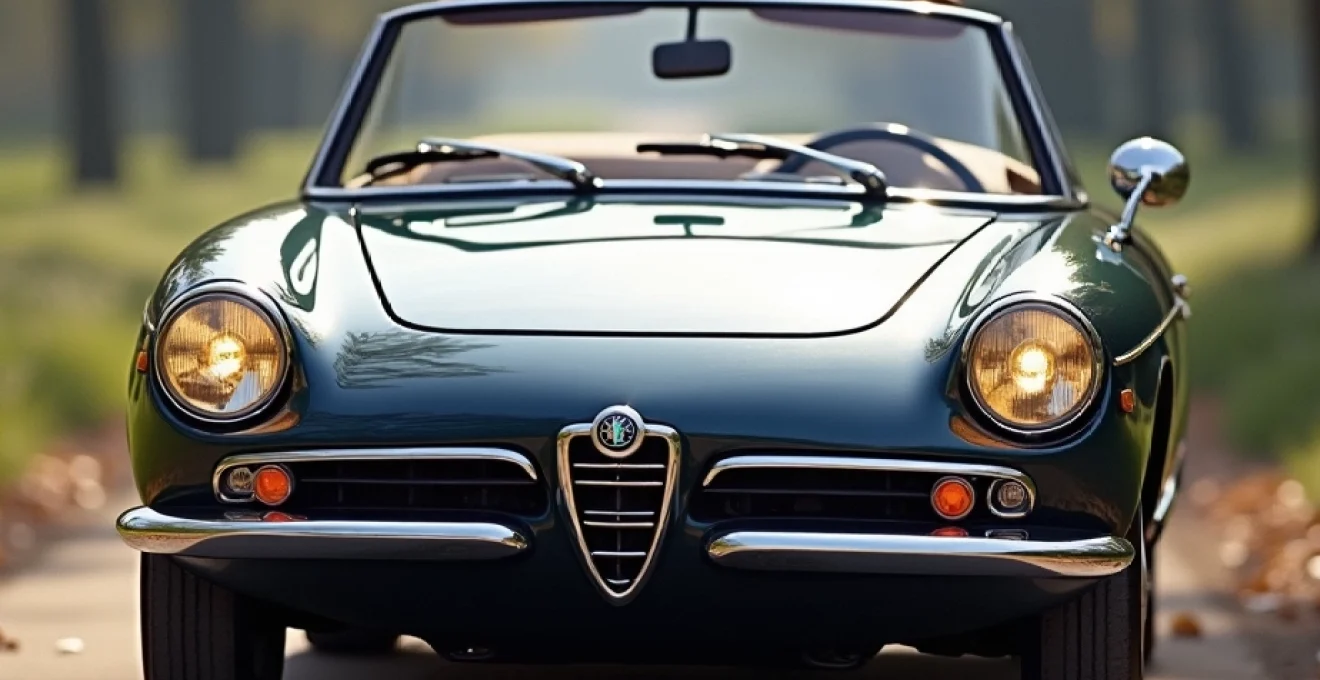
The Alfa Romeo Duetto represents one of the most enduring and captivating automotive designs in cabriolet history, embodying the perfect marriage of Italian passion and engineering excellence. Launched at the Geneva Motor Show in 1966, this distinctive spider emerged from Pininfarina’s drawing boards to become an instant icon, though its revolutionary styling initially divided critics and enthusiasts alike. The Duetto’s unique “cuttlefish bone” tail design challenged conventional automotive aesthetics, yet its sensual curves and distinctive character would eventually win hearts across the globe. Today, nearly six decades after its debut, the Duetto remains one of the most sought-after classic convertibles, offering collectors and enthusiasts an authentic taste of la dolce vita combined with genuine Italian sporting credentials.
Alfa romeo duetto spider heritage and model evolution
The development of the Alfa Romeo Spider began in the early 1960s when the company recognised the need to replace the successful Giulietta Spider. Pininfarina had been experimenting with aerodynamic forms since the mid-1950s, creating a series of concept vehicles that would eventually influence the final Duetto design. The Spider’s journey from concept to production represents a fascinating evolution of automotive styling and engineering philosophy that would span nearly three decades.
Series 1 osso di seppia design by pininfarina
The original Duetto, officially known as the 1600 Spider (Type 105.03), featured the now-legendary “osso di seppia” or cuttlefish bone tail design. This distinctive rear treatment, with its pointed, boat-tail configuration, was inspired by Pininfarina’s earlier Super Flow concepts from the 1950s. The design incorporated deeply sculpted side panels with characteristic longitudinal grooves that not only enhanced the vehicle’s visual drama but also improved aerodynamic stability in crosswinds. The Series 1 Spider featured distinctive plexiglass headlight covers, small flush-mounted rear lights, and a characteristic two-piece rear bumper arrangement.
Production of the original long-tail Spider continued from 1966 to 1969, with approximately 6,300 examples manufactured. These early models are distinguished by their 15-inch steel wheels with distinctive hubcaps, a painted metal dashboard without central console, and the famous cursive “Alfa Romeo” script on the boot lid. The teardrop-shaped side repeater lights positioned behind the front wheel arches became another identifying feature of these earliest Spiders.
Series 2 kamm tail aerodynamic modifications
By late 1969, Alfa Romeo had decided to modify the Spider’s rear treatment, officially citing improved aerodynamics following Professor Wunibald Kamm’s theories, though practical considerations regarding parking manoeuvres also influenced this decision. The Series 2 “coda tronca” (truncated tail) featured a dramatically chopped rear end with vertical tail treatment and larger, more prominent rear lights. This modification fundamentally altered the Spider’s proportions whilst maintaining its essential character.
The truncated tail design introduced stainless steel bumpers with protective rubber strips and eliminated the complex boat-tail construction that had proven costly to manufacture and vulnerable to parking incidents. Despite losing some of the original’s visual drama, the Series 2 Spider gained practicality and, according to contemporary testing, achieved marginally better high-speed stability due to reduced rear lift.
Series 3 black rubber bumper integration
The third-generation Spider, introduced in 1982, represented the most controversial styling evolution in the model’s history. Dubbed “Aerodinamica,” this version incorporated extensive black plastic body cladding, including wraparound bumpers, side skirts, and a prominent rear spoiler. The aesthetic changes were substantial, transforming the Spider’s clean, minimalist appearance into something more aligned with 1980s automotive fashion trends.
While purists criticised these modifications as heavy-handed, the Series 3 Spider incorporated meaningful technical improvements including revised suspension tuning, improved interior ergonomics, and enhanced weather sealing. The plastic additions, though visually divisive, provided better protection against minor impacts and reduced maintenance concerns associated with chrome bumpers of earlier generations.
Series 4 final production specifications
The final Spider generation, launched in 1990, represented Pininfarina’s successful attempt to recapture the model’s original elegance whilst incorporating modern safety and comfort features. The Series 4 Spider eliminated the controversial black plastic elements of its predecessor, returning to body-coloured bumpers and cleaner surfacing reminiscent of the original Duetto design philosophy.
This ultimate Spider iteration featured improved aerodynamics, enhanced structural rigidity, and significantly upgraded interior appointments including power steering, electric windows, and improved HVAC systems. Production continued until 1993, marking the end of the rear-wheel-drive Spider lineage and concluding one of the longest production runs in automotive history.
Engine specifications and performance analysis
The Spider’s mechanical foundation represented some of Alfa Romeo’s finest engineering achievements, centred around the legendary “bialbero” twin-cam engine family. This all-aluminium powerplant had proven itself in countless racing applications and provided the Spider with both melodious acoustics and genuine performance capabilities that defined the model’s sporting character throughout its production life.
1.6-litre twin cam engine characteristics
The original Duetto’s 1570cc twin-cam engine delivered 109 DIN horsepower at 6000 rpm, providing sufficient performance to exceed 185 km/h. This engine featured dual Weber 40 DCOE 27 horizontal twin-choke carburettors, delivering crisp throttle response and the characteristic metallic rasp that became synonymous with Alfa Romeo’s sporting heritage. The engine’s bore and stroke measurements of 78mm x 82mm created a slightly oversquare configuration that favoured high-rpm operation.
Maintenance requirements for the 1.6-litre unit included regular oil changes every 5000 kilometres and careful attention to warm-up procedures before aggressive driving. The twin-cam design demanded respect for proper operating temperatures , requiring approximately 20 minutes of gentle running before full performance could be safely accessed. When properly maintained, these engines regularly achieved 200,000 kilometres of service life.
1750 veloce power plant configuration
The 1750 Veloce engine, introduced in 1968, increased displacement to 1779cc whilst maintaining the twin-cam architecture’s fundamental characteristics. This larger-capacity unit produced 118 horsepower and delivered improved torque characteristics that enhanced driveability in urban conditions. The 1750 represented perhaps the ideal compromise between performance and refinement within the Spider range.
Carburation remained the domain of twin Weber units, though the 1750 specification required different jetting to accommodate the increased displacement. The engine’s longer stroke dimension improved low-end torque delivery whilst maintaining the high-rpm capabilities that defined Alfa Romeo’s sporting character. This configuration proved exceptionally durable in service , with many examples surviving decades of enthusiastic use.
2000 spider engine displacement specifications
The ultimate evolution of the twin-cam family arrived with the 2000 Spider in 1971, featuring 1962cc displacement achieved through increased bore dimensions. This final carburetor-equipped variant produced 128 horsepower and represented the pinnacle of the original twin-cam design philosophy. The 2000’s additional displacement provided stronger mid-range performance whilst retaining the free-revving characteristics that made earlier engines so engaging.
Later 2000 models transitioned to Bosch L-Jetronic fuel injection, initially maintaining similar power outputs but improving emissions compliance and cold-weather operation. The injected engines, whilst lacking some of the carburetor versions’ immediate throttle response, offered improved reliability and reduced maintenance requirements that appealed to daily-use owners.
Weber carburettor tuning parameters
The Weber carburettor systems fitted to early Spiders require specific knowledge for optimal performance and reliability. Proper synchronisation between the twin carburettors represents perhaps the most critical adjustment, requiring specialised equipment and experience to achieve smooth idle characteristics and linear acceleration response. The DCOE units feature numerous adjustable circuits that affect different operating conditions.
Maintenance of Weber carburettors includes regular cleaning of air filters, periodic adjustment of idle mixture screws, and attention to accelerator pump diaphragms. Float level settings prove particularly critical for consistent fuel delivery, whilst worn throttle spindles can create vacuum leaks that dramatically affect engine performance. Many enthusiasts consider properly-tuned Weber carburettors superior to later fuel injection systems for sheer driving engagement.
Inspection protocol for rust prevention and structural integrity
Corrosion represents the primary concern for any prospective Duetto purchaser, as these vehicles employed construction methods and materials that leave them particularly vulnerable to rust damage. The Spider’s unitary construction means that structural corrosion can render an otherwise attractive vehicle economically unviable to restore. A systematic inspection approach using appropriate tools can reveal hidden problems before they become costly surprises.
Sill panel corrosion assessment techniques
The Spider’s sill panels bear primary structural loads and commonly suffer severe corrosion that can compromise the entire vehicle’s integrity. Inspection should begin with careful examination of the jack mounting points, which often show the first signs of structural deterioration. Using a small magnet along the sill’s entire length can reveal areas where filler or fiberglass repairs mask underlying problems.
Particular attention should focus on the junctions between sill panels and floor sections, where water accumulation accelerates corrosion processes. Many Spiders exhibit apparently solid sills that collapse when jack loads are applied, indicating advanced internal deterioration. Professional inspection may require removal of interior trim panels to access areas where moisture commonly accumulates.
Front subframe mounting point evaluation
The Spider’s front subframe attaches to the monocoque through specific mounting points that experience significant stress loads during normal operation. These areas frequently develop cracks or corrosion that can affect handling characteristics and safety. Visual inspection should include careful examination of the mounting hardware for signs of elongation or deformation that might indicate structural movement.
Access to these mounting points requires removal of underbody panels and careful cleaning to reveal the actual condition of the mounting areas. Any signs of previous repair work in these critical areas warrant detailed investigation, as improper modifications can create stress concentrations that lead to future failures.
Door frame and window seal deterioration
Door frames represent another area where structural integrity and corrosion resistance intersect with functionality concerns. The Spider’s door frame construction incorporates areas where water can accumulate, particularly around window seals and lock mechanisms. Advanced corrosion in these areas can affect door alignment and compromise the vehicle’s weather sealing capabilities.
Inspection should include operation of both doors through their full range of motion, noting any binding or unusual sounds that might indicate frame distortion. Window seals require careful examination for tears or hardening that could allow water ingress. Door lock mechanisms should operate smoothly without excessive force, as worn components often indicate broader maintenance neglect.
Boot floor and spare wheel well inspection
The Spider’s boot area commonly suffers from corrosion due to water accumulation around the spare wheel well and fuel filler neck. These areas remain hidden under carpet and trim, making detection difficult during casual inspection. The distinctive musty odour often indicates water damage that may have progressed to structural corrosion.
Removal of the spare wheel and boot carpet allows proper assessment of these vulnerable areas. The fuel filler neck connection point requires particular attention, as leakage can cause accelerated corrosion that extends into surrounding structural elements. Any evidence of previous repair work should be carefully evaluated for quality and completeness.
Soft-top mechanism and hood assessment
The Spider’s convertible top system represents both a defining characteristic and a significant maintenance consideration. The original manual folding mechanism, whilst elegant in its simplicity, requires proper adjustment and maintenance to function correctly. A properly operating soft-top system should fold and unfold smoothly without binding or excessive force requirements.
Inspection of the soft-top mechanism begins with careful examination of the fabric itself, noting any tears, excessive wear, or UV damage that might compromise weather sealing. The rear window, whether glass or plastic, requires attention for clarity and potential replacement needs. Frame mechanisms should operate smoothly with appropriate lubrication at all pivot points.
The soft-top’s mounting points to the body structure represent critical stress areas that commonly develop problems over time. These attachment points must maintain proper alignment to ensure adequate weather sealing and prevent excessive wear on the fabric edges. Many Spiders suffer from poorly-adjusted tops that create wind noise and water leakage issues.
The Spider’s soft-top system, when properly maintained and adjusted, provides surprisingly effective weather protection whilst preserving the open-air experience that defines the model’s character.
Market valuation and price analysis across production years
Current market values for Alfa Romeo Spiders reflect both the model’s enduring appeal and the varying desirability of different production periods. Early “osso di seppia” examples command premium pricing, particularly well-preserved 1600 and 1750 variants that retain their original character and specifications. Market analysis indicates strong appreciation for original, unmodified examples whilst heavily restored vehicles may not recover their investment costs.
Series 1 long-tail Spiders in excellent condition can command £15,000-25,000, with exceptional examples reaching higher figures. The Series 2 “coda tronca” models typically trade in the £8,000-15,000 range, depending on condition and maintenance history. Series 3 Aerodinamica versions represent current market opportunities, with good examples available from £6,000-12,000.
Geographic factors significantly influence Spider valuations, with European-market left-hand-drive examples generally commanding higher prices than UK right-hand-drive variants. Original colour schemes, particularly red and yellow variants, typically achieve premium pricing compared to common colours or non-original paint schemes. Documentation and provenance play increasingly important roles in determining market values for the most desirable examples.
Market trends suggest continued appreciation for well-maintained Spiders, particularly early examples that retain their original specifications and character.
Alfa romeo duetto acquisition strategy and documentation verification
Successful Spider acquisition requires careful planning and systematic evaluation of potential purchases. The most critical decision involves determining the appropriate balance between purchase price and restoration requirements, as cosmetic appeal can mask significant underlying problems that dramatically affect ownership costs.
Documentation verification should include examination of ownership history, service records, and any evidence of major mechanical or structural work. Original handbook and service documentation adds significant value whilst providing insights into the vehicle’s maintenance history. Matching numbers verification becomes increasingly important for valuable early examples, with engine and chassis numbers providing authentication of originality.
Professional pre-purchase inspection represents sound investment for significant Spider acquisitions, particularly for buyers lacking extensive Alfa Romeo experience. These inspections can reveal hidden problems whilst providing negotiating leverage for necessary repairs. The specialist knowledge required for proper Spider evaluation often justifies professional consultation costs through prevention of costly mistakes.
The most successful Spider acquisitions result from patient searching and thorough evaluation rather than impulsive decisions based on superficial appeal.