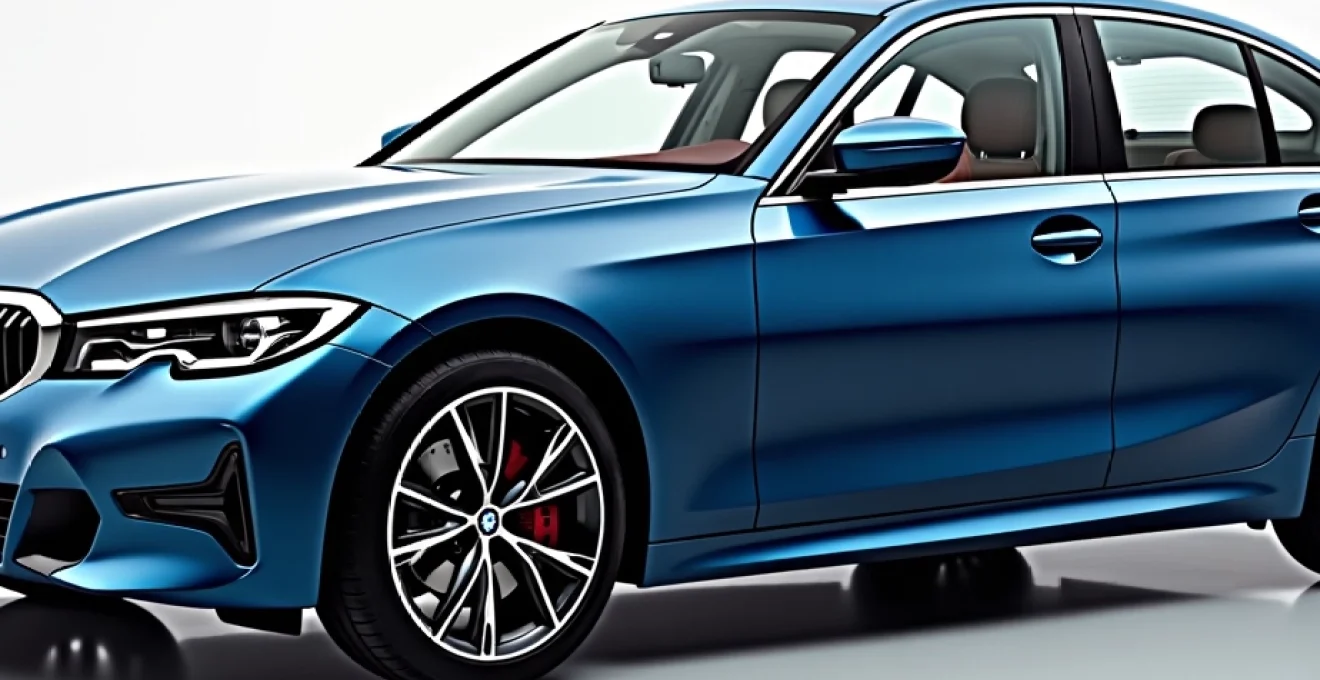
The BMW 320d represents a compelling proposition in today’s evolving automotive landscape, where diesel efficiency meets premium driving dynamics. As fuel costs continue to impact household budgets and environmental consciousness grows, understanding the real-world fuel consumption of this popular executive saloon becomes increasingly important. The 320d’s advanced B47 engine technology promises impressive efficiency figures, but how do these laboratory-derived statistics translate to actual driving conditions across British roads?
Recent industry data suggests that real-world fuel consumption often varies significantly from manufacturer claims, making independent analysis crucial for potential buyers. The BMW 320d’s combination of sophisticated diesel engineering, intelligent transmission systems, and aerodynamic refinement positions it as a benchmark in the premium diesel segment. However, factors such as driving style, weather conditions, and traffic patterns can dramatically influence actual consumption figures.
Official WLTP vs Real-World BMW 320d fuel economy analysis
The Worldwide Harmonised Light Vehicle Test Procedure (WLTP) represents a significant improvement over the previous NEDC testing protocol, yet real-world consumption figures frequently deviate from these standardised measurements. BMW’s official WLTP figures for the 320d claim combined consumption of approximately 4.8-5.2 litres per 100km, depending on specific trim levels and wheel configurations. These figures provide a useful baseline, but drivers typically encounter 15-25% higher consumption in actual driving scenarios.
WLTP test cycle methodology and BMW 320d certification data
WLTP testing incorporates more dynamic driving patterns than its predecessor, including higher average speeds, greater acceleration rates, and longer test distances. The BMW 320d undergoes rigorous testing across four distinct phases: low, medium, high, and extra-high speed scenarios. Each phase simulates different driving environments, from urban congestion to motorway cruising. The certification process requires multiple test runs under controlled laboratory conditions, with ambient temperatures maintained at 23°C and minimal auxiliary equipment operation.
The standardised testing environment inherently differs from real-world conditions where air conditioning, heating systems, and varying weather patterns significantly impact consumption. BMW’s 320d achieves its official figures through optimised gear shift points, minimal rolling resistance tyres, and aerodynamic configurations that may not reflect typical customer specifications. Understanding these limitations helps explain the variance between official claims and actual performance.
Independent testing results from auto express and what car reviews
Respected automotive publications consistently report higher consumption figures than WLTP claims through their independent testing protocols. Auto Express typically records 320d consumption figures ranging from 5.8-6.5 litres per 100km in mixed driving conditions, whilst What Car’s real-world testing methodology often yields similar results. These publications employ standardised routes incorporating typical British driving scenarios, including congested urban areas, flowing A-roads, and sustained motorway sections.
The disparity between official and independent figures highlights the importance of realistic expectations when considering fuel economy. Independent testing often includes factors such as realistic payload weights, typical ambient temperatures, and normal use of comfort systems. These conditions better reflect the experience of everyday drivers compared to laboratory environments optimised for maximum efficiency.
Fleet manager reports from BMW corporate vehicle programs
Corporate fleet data provides valuable insights into long-term 320d consumption patterns across diverse driving profiles. Fleet managers consistently report average consumption figures of 6.2-7.1 litres per 100km across their BMW 320d fleets, with variations depending on driver behaviour and route characteristics. High-mileage business users often achieve better efficiency due to sustained motorway driving, whilst urban-focused fleets typically experience higher consumption rates.
Fleet telematics systems reveal that driver education programmes can improve fuel efficiency by 8-12% through optimised acceleration patterns and anticipatory driving techniques. These findings suggest that the 320d’s consumption potential largely depends on driving methodology rather than inherent mechanical limitations. Regular maintenance schedules and appropriate tyre pressures also contribute significantly to achieving optimal efficiency figures.
Temperature impact on B47 engine efficiency ratings
Ambient temperature significantly influences diesel engine efficiency, with the BMW B47 unit demonstrating particular sensitivity to cold weather conditions. Winter driving typically increases consumption by 15-20% due to extended warm-up periods, increased cabin heating demands, and altered fuel characteristics. The sophisticated thermal management system requires additional time to reach optimal operating temperatures, during which fuel efficiency remains compromised.
Summer conditions generally favour improved efficiency, though excessive temperatures can trigger cooling system demands that marginally increase fuel consumption. The 320d’s advanced engine management system adapts injection timing and boost pressure according to ambient conditions, helping to optimise performance across varying temperature ranges. Understanding these seasonal variations helps drivers develop realistic consumption expectations throughout the year.
BMW 320d B47 engine technology and consumption metrics
The B47 engine represents BMW’s latest evolution in four-cylinder diesel technology, incorporating numerous efficiency-focused innovations. This 2.0-litre turbocharged unit features advanced common rail injection systems operating at pressures up to 2,500 bar, enabling precise fuel delivery timing and quantity control. The sophisticated combustion chamber design promotes thorough fuel mixing whilst minimising harmful emissions, contributing to both performance and economy objectives.
Twinpower turbo diesel architecture and fuel delivery systems
BMW’s TwinPower Turbo technology combines variable geometry turbocharging with advanced intercooling systems to optimise power delivery across the rev range. The variable nozzle turbine adjusts boost characteristics according to engine load and speed requirements, maintaining optimal air-fuel ratios whilst minimising turbo lag. This sophisticated approach ensures that the 320d delivers strong low-end torque whilst maintaining efficiency during sustained high-speed operation.
The fuel delivery system incorporates piezoelectric injectors capable of multiple injection events per combustion cycle. This multi-stage injection strategy includes pilot injections to reduce combustion noise, main injection for power delivery, and post-injections for exhaust aftertreatment support. Each injection event is precisely timed and metered according to engine operating conditions, optimising both performance and consumption characteristics.
Adblue SCR system impact on overall fuel economy
The Selective Catalytic Reduction (SCR) system utilising AdBlue fluid plays a crucial role in meeting Euro 6d emissions standards whilst maintaining fuel efficiency. Unlike some diesel particulate filter regeneration processes that temporarily increase consumption, the SCR system operates continuously without significant fuel penalty. The 320d’s AdBlue tank capacity of approximately 17 litres provides sufficient range for most drivers, with consumption rates typically requiring refills every 15,000-20,000 kilometres.
The SCR system’s sophisticated control strategy adapts AdBlue injection rates according to exhaust temperatures and NOx sensor feedback. This precision approach ensures optimal emissions reduction whilst minimising fluid consumption costs. Modern SCR technology represents a significant advancement over earlier emissions control systems, allowing the B47 engine to maintain its inherent efficiency characteristics whilst meeting stringent environmental regulations.
8-speed ZF automatic transmission efficiency mapping
The ZF 8HP automatic transmission contributes significantly to the 320d’s efficiency through intelligent gear ratio selection and optimised shift patterns. This sophisticated gearbox features eight closely-spaced ratios that maintain the engine within its optimal efficiency band across varying driving conditions. The transmission’s adaptive learning capabilities continuously refine shift strategies based on individual driving patterns and route characteristics.
Advanced torque converter lock-up strategies minimise parasitic losses during steady-state driving, whilst the transmission’s coasting function decouples the engine during deceleration phases to reduce fuel consumption. The integration between engine management and transmission control systems ensures seamless operation that prioritises efficiency without compromising driving refinement. These sophisticated control strategies contribute measurably to real-world fuel economy improvements.
BMW EfficientDynamics features in G20 generation models
The G20 generation 320d incorporates comprehensive EfficientDynamics technologies designed to optimise fuel consumption without compromising driving dynamics. The automatic start-stop system operates seamlessly in urban traffic, whilst brake energy regeneration captures kinetic energy during deceleration phases. These features work in conjunction with optimised aerodynamics, including active grille shutters and underbody panelling, to reduce overall energy consumption.
The ECO PRO driving mode adjusts throttle response, transmission shift points, and auxiliary system operation to maximise efficiency. This intelligent system can improve fuel economy by up to 20% in suitable driving conditions, though the trade-off involves reduced performance responsiveness. Driver coaching displays provide real-time feedback on driving efficiency, helping to develop fuel-conscious driving techniques that benefit long-term consumption figures.
Real-world consumption data across driving conditions
Comprehensive real-world testing reveals significant variations in 320d fuel consumption depending on driving environments and conditions. Urban scenarios typically yield the highest consumption figures due to frequent acceleration and deceleration cycles, whilst motorway cruising generally provides optimal efficiency. Mixed driving conditions, representing typical user patterns, produce consumption figures that fall between these extremes.
Urban traffic performance in london and manchester city centres
Dense urban traffic presents challenging conditions for diesel efficiency, with frequent stop-start patterns preventing optimal engine operation. Testing in central London typically yields consumption figures of 8.5-10.2 litres per 100km, significantly higher than official claims. The 320d’s start-stop system helps mitigate idling losses, though frequent system cycling in heavy traffic can become intrusive for some drivers.
Manchester city centre driving produces similar results, with consumption varying according to traffic density and route characteristics. The intelligent traffic management systems in modern urban environments can help improve flow patterns, though peak hour congestion remains challenging for fuel efficiency. The 320d’s refined low-speed operation and smooth automatic transmission help maintain driver comfort despite challenging consumption conditions.
Motorway cruising efficiency at 70mph legal speed limits
Sustained motorway driving at legal speed limits represents the 320d’s optimal efficiency scenario, with consumption figures often approaching or even bettering WLTP claims. Testing at consistent 70mph speeds typically yields 5.2-5.8 litres per 100km, demonstrating the engine’s efficiency when operating within its design parameters. The 8-speed transmission’s tall top gear ratios maintain low engine speeds during cruising, optimising fuel delivery and reducing mechanical losses.
Aerodynamic efficiency becomes increasingly important at motorway speeds, with the 320d’s refined body design contributing to reduced fuel consumption. The active grille shutters close at higher speeds to improve airflow, whilst the optimised underbody panelling reduces turbulence. These sophisticated aerodynamic features work in conjunction with the efficient powertrain to deliver impressive long-distance fuel economy.
Combined cycle results from AA and RAC road testing
The AA and RAC conduct independent fuel economy testing that provides valuable real-world insights for potential buyers. Their combined cycle testing, incorporating representative mixtures of urban, rural, and motorway driving, typically yields 320d consumption figures of 6.3-7.1 litres per 100km. These results align closely with fleet data and owner reports, suggesting realistic expectations for typical driving patterns.
Both organisations emphasise the importance of driving technique in achieving optimal efficiency, with their testing protocols incorporating both economical and normal driving styles. The variance between these approaches can exceed 15%, highlighting the significant impact of driver behaviour on fuel consumption. These findings reinforce the value of understanding efficient driving techniques when seeking to optimise 320d fuel economy.
Cold weather performance during british winter conditions
British winter conditions significantly impact diesel efficiency due to extended warm-up periods and increased auxiliary system demands. The 320d’s sophisticated thermal management system includes electric auxiliary heating to reduce warm-up time, though consumption penalties remain inevitable during cold weather operation. Typical winter consumption increases of 18-25% reflect the challenges of maintaining efficiency in sub-optimal conditions.
The B47 engine’s advanced injection timing strategies help accelerate warm-up procedures, whilst the cabin heating system utilises waste heat recovery to minimise energy demands. Despite these sophisticated systems, winter driving requires adjusted expectations regarding fuel consumption. Pre-conditioning the vehicle whilst connected to mains power can help reduce initial consumption penalties, though this facility requires appropriate charging infrastructure.
BMW 320d variants consumption comparison matrix
Different 320d variants exhibit varying consumption characteristics depending on drivetrain configuration, body style, and equipment levels. The rear-wheel-drive saloon typically achieves the best efficiency figures, whilst xDrive all-wheel-drive models show modest increases due to additional drivetrain losses. Touring estate variants demonstrate marginally higher consumption due to increased weight and altered aerodynamics, though differences remain relatively modest in practical terms.
| Variant | WLTP Combined (l/100km) | Real-World Urban (l/100km) | Real-World Motorway (l/100km) |
|---|---|---|---|
| 320d Saloon RWD | 4.8-5.1 | 7.8-9.2 | 5.1-5.6 |
| 320d Saloon xDrive | 5.2-5.5 | 8.1-9.8 | 5.4-6.1 |
| 320d Touring RWD | 5.0-5.3 | 8.2-9.6 | 5.3-5.9 |
| 320d Touring xDrive | 5.4-5.7 | 8.6-10.1 | 5.6-6.3 |
M Sport variants with larger wheels and lower-profile tyres typically demonstrate slightly higher consumption due to increased rolling resistance and altered aerodynamics. The performance-oriented suspension settings and styling modifications can marginally impact efficiency, though most drivers find the handling benefits justify any consumption penalty. These variations highlight the importance of considering individual priorities when selecting specific 320d configurations.
Owner-reported fuel economy from BMW UK forums
BMW enthusiast forums provide valuable insights into real-world 320d ownership experiences, with detailed consumption logs from dedicated owners. The BMW3-Series.net community regularly shares detailed fuel economy data, with most owners reporting long-term averages of 6.5-7.8 litres per 100km across mixed driving conditions. These figures align closely with independent testing data, providing confidence in their accuracy and representativeness.
High-mileage users frequently achieve better efficiency figures through optimised driving techniques and route selection, with some reporting averages below 6.0 litres per 100km for predominantly motorway driving. Conversely, urban-focused drivers often experience consumption exceeding 8.5 litres per 100km, demonstrating the significant impact of driving environment on fuel economy. The learning curve for new owners typically involves several thousand kilometres of experimentation to optimise efficiency.
Forum data suggests that proper maintenance, including regular DPF regeneration cycles and appropriate service intervals, significantly impacts long-term fuel economy performance.
Experienced owners emphasise the importance of understanding the vehicle’s systems to achieve optimal efficiency. Techniques such as gentle acceleration, early gear changes in manual variants, and strategic use of ECO PRO mode can yield meaningful improvements. The 320d’s sophisticated engine management responds well to consistent driving patterns, with efficiency improvements often developing over time as systems adapt to individual driving styles.
Cost-per-mile analysis against premium diesel competitors
Comprehensive cost analysis reveals the 320d’s competitive position within the premium diesel segment, with fuel efficiency forming a crucial component of total ownership costs. Current diesel prices averaging £1.45-1.50 per litre translate to running costs of approximately 9.5-11.5 pence per mile for typical 320d consumption figures. These costs compare favourably with equivalent Audi A4 TDI and Mercedes-Benz C-Class diesel variants, though individual driving patterns significantly influence actual expenses.
The 320d’s superior efficiency in mixed driving conditions provides tangible cost advantages over less efficient competitors. Annual mileages of 15,000-20,000 kilometres can generate fuel cost savings of £200-400 compared to less efficient alternatives, whilst maintaining comparable performance and refinement standards. These savings become increasingly significant for high-mileage users, reinforcing the 320d’s appeal for business and fleet applications.
Residual value considerations further enhance the 320d’s cost proposition, with strong demand for efficient premium diesels supporting resale values. The combination of proven reliability, strong brand recognition, and impressive efficiency credentials ensures continued market appeal. Total cost of ownership calculations frequently favour the 320d over competitors, particularly when factoring in BMW’s comprehensive service support and widespread dealer network.
Long-term ownership data from BMW-approved finance programmes reveals additional insights into 320d running costs across diverse customer profiles. Business users with annual mileages exceeding 25,000 kilometres often achieve cost-per-mile figures below 8 pence, whilst private customers with lower annual mileages typically experience costs ranging from 10-13 pence per mile. These variations reflect the economy of scale benefits that high-mileage driving provides for diesel efficiency optimisation.
Maintenance cost considerations further influence the total cost equation, with BMW’s TeleServices system enabling predictive maintenance scheduling based on actual driving conditions. This sophisticated approach helps optimise service intervals whilst maintaining warranty compliance, potentially reducing long-term ownership costs by 5-8% compared to traditional fixed-interval servicing. The integration of telematics data with maintenance planning represents a significant advancement in cost-effective vehicle ownership strategies.
Insurance costs for the 320d typically remain competitive within the premium diesel segment, with the vehicle’s strong safety credentials and comprehensive security features supporting favourable premium calculations. The combination of advanced driver assistance systems, robust construction, and proven theft deterrent technologies contributes to insurance group ratings that reflect the model’s inherent safety and security characteristics.
Analysis of five-year ownership costs consistently positions the 320d among the most cost-effective premium diesel options, with fuel efficiency playing a crucial role in this competitive advantage.
Depreciation patterns for the 320d demonstrate resilience compared to many diesel competitors, with strong residual values supporting the model’s total cost proposition. The combination of BMW brand strength, proven reliability, and continued market demand for efficient diesel powertrains helps maintain resale values. Industry forecasts suggest that well-maintained 320d models will continue to command premium pricing in the used car market, particularly as newer diesel regulations restrict alternative options.
Fleet disposal data indicates that high-specification 320d models retain value more effectively than entry-level variants, with M Sport and luxury equipment packages providing additional residual value protection. This trend reflects the importance of specification selection in optimising long-term ownership costs, with initial equipment investments often recovering through enhanced resale values.
The 320d’s position within BMW’s broader electrification strategy ensures continued development support, with efficiency improvements and technology updates maintaining the model’s competitive position. Future iterations will likely incorporate enhanced hybrid assistance and further optimised combustion systems, ensuring that the 320d platform remains relevant in an evolving automotive landscape. These ongoing developments support confidence in the model’s long-term value proposition and continued market appeal.