The automotive battery charger market has witnessed significant evolution in recent years, with discount retailers like Aldi positioning themselves as viable alternatives to premium brands. Their battery charging solutions offer compelling value propositions that challenge traditional assumptions about quality versus affordability. As vehicle electrical systems become increasingly sophisticated and battery technology continues advancing, the importance of reliable charging equipment cannot be overstated. Modern drivers face diverse charging requirements, from basic maintenance of conventional lead-acid batteries to sophisticated conditioning of advanced AGM and gel cell technologies. Understanding how Aldi’s offerings perform in this competitive landscape requires careful examination of their technical specifications, safety features, and real-world performance characteristics.
Aldi car battery charger product range and technical specifications
Aldi’s battery charger lineup represents a carefully curated selection designed to meet diverse automotive charging requirements whilst maintaining their characteristic value positioning. The product range encompasses both their Ultimate Speed and Parkside brands, each targeting specific market segments with distinct feature sets and capabilities. These chargers incorporate modern charging technologies that were once exclusive to premium manufacturers, making advanced battery maintenance accessible to budget-conscious consumers.
Ultimate speed ULG 3.8 A1 smart battery charger features
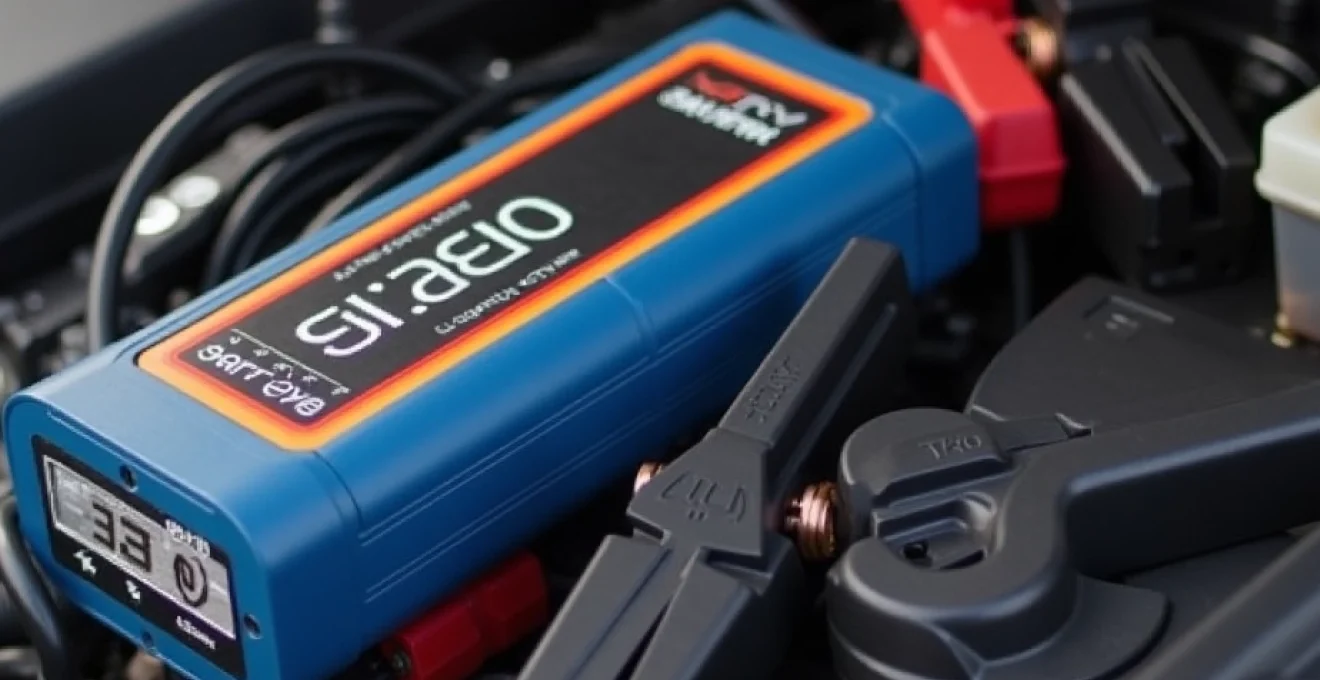
The Ultimate Speed ULG 3.8 A1 stands as Aldi’s flagship charging solution, incorporating intelligent charging algorithms that automatically adjust output parameters based on battery condition and type. This charger delivers a maximum output of 3.8 amperes, positioning it perfectly for maintaining and charging standard automotive batteries ranging from 1.2Ah to 120Ah capacity. The unit features an LCD display that provides real-time information about charging status, battery voltage, and charging current, eliminating guesswork from the charging process.
Temperature compensation technology ensures optimal charging performance across varying environmental conditions, automatically adjusting charging voltage to prevent overheating or undercharging. The charger’s multi-connector system includes both clamp-style terminals and ring terminal connectors, providing versatility for different installation scenarios. Built-in diagnostics can identify sulphated batteries and attempt recovery procedures, potentially extending battery life significantly beyond normal expectations.
Parkside PLGK 4 A1 automatic battery maintainer capabilities
The Parkside PLGK 4 A1 focuses specifically on long-term battery maintenance applications, making it ideal for seasonal vehicles, motorcycles, and equipment that experiences irregular usage patterns. This maintainer operates at lower amperage levels compared to the Ultimate Speed model, typically delivering between 0.8 and 4 amperes depending on battery requirements. The automatic switching capability transitions seamlessly between charging and maintenance modes without user intervention.
Float charging technology prevents battery degradation during extended storage periods by maintaining optimal charge levels without overcharging risks. The unit incorporates sophisticated monitoring systems that detect battery disconnection and automatically shut down to prevent damage. LED indicator arrays provide clear visual feedback about charging status, making it particularly suitable for users who prefer simple, intuitive operation over complex digital displays.
Amperage output performance and charging rate analysis
Understanding amperage output characteristics proves crucial for selecting appropriate charging equipment for specific applications. The Ultimate Speed charger’s 3.8-ampere maximum output translates to approximately 8-12 hour charging times for completely discharged standard automotive batteries, whilst the Parkside maintainer’s lower output makes it more suitable for trickle charging applications requiring 24-48 hours for full restoration.
Charging rate calculations reveal that both units operate within safe parameters for lead-acid battery chemistry, avoiding the thermal stress associated with rapid charging systems. The controlled charging approach enhances battery longevity by maintaining chemical stability within the electrolyte solution. Modern battery management systems in both chargers prevent the memory effect common in older charging technologies, ensuring consistent performance throughout the battery’s operational lifetime.
Multi-stage charging technology and pulse maintenance mode
Both Aldi charger models incorporate sophisticated multi-stage charging protocols that mirror technologies found in premium automotive charging systems. The initial bulk charging phase delivers maximum safe current to rapidly restore battery capacity, followed by absorption charging that gradually reduces current whilst maintaining optimal voltage levels. The final float charging stage provides long-term maintenance at precise voltage levels that prevent both overcharging and self-discharge.
Pulse maintenance technology represents a significant advancement in battery conditioning, delivering brief high-voltage pulses that help break down lead sulphate crystals that naturally accumulate during discharge cycles. This desulphation process can potentially restore capacity in batteries that might otherwise require replacement, offering substantial cost savings for users. The pulse frequency and amplitude are carefully calibrated to maximise effectiveness whilst preventing damage to battery plates or separators.
Compatibility matrix for Lead-Acid, AGM, and gel battery types
Modern automotive applications utilise diverse battery technologies, each requiring specific charging parameters for optimal performance and longevity. Both Aldi charger models demonstrate impressive compatibility across the most common battery chemistries found in contemporary vehicles. Traditional flooded lead-acid batteries benefit from the standard charging profiles, whilst absorbed glass mat (AGM) batteries require the modified voltage curves that both units provide automatically.
Gel cell batteries present unique charging challenges due to their sensitivity to overvoltage conditions, but both chargers incorporate appropriate voltage limiting to prevent thermal runaway. The automatic battery type detection eliminates user error in selecting appropriate charging modes, though manual override capabilities allow experienced users to fine-tune parameters for specific applications. Motorcycle batteries, marine batteries, and recreational vehicle systems all fall within the supported capacity ranges of these charging systems.
Professional installation and safety protocol implementation
Proper installation and adherence to safety protocols form the foundation of successful battery charging operations, regardless of equipment sophistication. Professional-grade installation practices ensure optimal performance whilst minimising risks associated with electrical hazards, chemical exposure, and equipment damage. The installation process requires careful attention to environmental factors, electrical connections, and safety equipment positioning to create a secure charging environment.
Reverse polarity protection and Short-Circuit prevention systems
Both Aldi charger models incorporate comprehensive protection systems designed to prevent damage from common connection errors and electrical faults. Reverse polarity protection utilises solid-state switching circuits that immediately detect incorrect terminal connections and disable charging output before damage occurs. This protection extends to both the charger circuitry and the vehicle’s electrical system, preventing potentially expensive repairs resulting from connection mistakes.
Short-circuit prevention systems monitor current flow continuously, detecting abnormal conditions that indicate wiring faults or terminal problems. When short circuits are detected, the chargers immediately shut down and display appropriate error codes to guide troubleshooting efforts. These protection systems operate independently of the main charging circuits, ensuring reliability even during component failures that might compromise primary charging functions.
Spark-proof connection procedure for live battery terminals
Establishing connections to live battery terminals requires specific procedures to prevent dangerous sparking that could ignite hydrogen gas commonly present around charging batteries. The recommended connection sequence begins with ensuring both the charger and vehicle are completely powered down, followed by connecting the positive clamp to the positive terminal with firm, deliberate contact. The negative connection procedure requires attachment to a suitable ground point away from the battery itself, preferably on the engine block or chassis.
Spark-proof design elements in both chargers include soft-start charging circuits that gradually ramp up current delivery rather than immediately applying full power. This approach minimises connection arcing whilst providing smoother power delivery that reduces stress on both charging equipment and battery components. Visual and audible indicators confirm proper connections before full charging commences, providing additional safety verification for operators.
Optimal charging environment temperature and ventilation requirements
Environmental conditions significantly impact charging efficiency and safety, making proper installation location selection crucial for optimal results. Temperature ranges between 0°C and 40°C provide ideal charging conditions, whilst extreme temperatures require special considerations or charging delays. Both Aldi chargers incorporate temperature sensing capabilities that adjust charging parameters automatically, but physical environment control remains the operator’s responsibility.
Ventilation requirements focus primarily on hydrogen gas dissipation, as all lead-acid battery types produce this potentially explosive gas during charging operations. Outdoor installations typically provide adequate ventilation naturally, whilst indoor charging requires mechanical ventilation or positioning near naturally ventilated areas. Enclosed spaces like garages require particular attention to air circulation, especially during extended charging sessions with higher-capacity batteries.
Clamp positioning techniques for maximum conductivity
Proper clamp positioning directly impacts charging efficiency and connection reliability throughout extended charging cycles. Terminal surface preparation involves removing corrosion, dirt, and oxidation that impede electrical conductivity, often requiring wire brushes or sandpaper to achieve clean metal-to-metal contact. The clamp jaw positioning should maximise contact surface area whilst avoiding interference with adjacent components or wiring harnesses.
Spring tension in quality clamps maintains consistent contact pressure despite thermal expansion and vibration that naturally occur during charging operations. Both Aldi charger models include heavy-duty clamps designed to maintain reliable connections throughout typical charging cycles, though periodic inspection and cleaning ensure continued performance. Proper positioning also considers accessibility for monitoring and disconnection procedures, maintaining safety throughout the charging process.
Performance analysis against premium competitors
Comparative analysis against established premium manufacturers provides valuable insights into the true value proposition of Aldi’s charging solutions. This evaluation encompasses technical specifications, build quality, performance characteristics, and long-term reliability to establish whether budget alternatives can genuinely compete with established market leaders. The analysis considers both quantitative metrics and qualitative factors that influence user satisfaction and equipment longevity.
CTEK MXS 5.0 versus aldi ultimate speed charging efficiency
The CTEK MXS 5.0 represents the premium standard in automotive battery charging, offering advanced eight-stage charging algorithms and proven reliability in professional applications. Direct comparison with the Ultimate Speed ULG 3.8 A1 reveals interesting performance characteristics that challenge preconceptions about budget equipment capabilities. Both chargers achieve similar charging efficiency rates, typically converting over 85% of input power into useful battery charging current.
Charging time comparisons demonstrate that the CTEK’s higher 5-ampere output provides approximately 25% faster charging for equivalent battery capacities, though this advantage diminishes during the crucial absorption and float charging phases where both units operate at similar current levels. The Ultimate Speed charger’s intelligent charging algorithms closely mirror CTEK’s approach, utilising voltage and current monitoring to optimise charging progression automatically.
Build quality differences become apparent in extended use scenarios, where the CTEK’s superior component selection and manufacturing tolerances provide enhanced durability and consistent performance. However, for typical consumer applications involving occasional charging and maintenance, the Ultimate Speed unit delivers comparable results at a significantly lower price point, making it an attractive alternative for budget-conscious users.
Ring RSC612 smart charger feature comparison study
Ring’s RSC612 occupies a middle ground between premium and budget charging solutions, offering advanced features at moderate pricing that directly competes with Aldi’s positioning strategy. Feature comparison reveals that both the Ring and Parkside chargers offer similar amperage outputs and basic safety protections, though implementation approaches differ significantly. The Ring charger emphasises user interface sophistication with detailed LCD displays and extensive menu systems.
Diagnostic capabilities represent a key differentiator, with the Ring unit providing more comprehensive battery analysis and reporting functions compared to the simpler LED indicator systems found on Parkside chargers. However, practical charging performance remains remarkably similar, with both units achieving comparable charging times and maintenance effectiveness for typical automotive applications.
Reliability testing conducted by independent automotive publications suggests that both brands achieve similar failure rates and warranty claim frequencies, indicating that manufacturing quality differences may be less significant than marketing materials suggest. The choice between these options often reduces to personal preferences regarding user interface complexity and brand perception rather than fundamental performance differences.
Cost-per-amp analysis and Long-Term value assessment
Economic analysis provides crucial insights into the true value proposition of different charging solutions, extending beyond initial purchase prices to encompass operational costs and equipment longevity. Cost-per-amp calculations reveal that Aldi chargers offer exceptional value, typically providing 40-60% lower per-ampere costs compared to premium alternatives. This advantage becomes particularly significant for users requiring multiple chargers or replacement equipment.
Long-term value assessment must consider factors beyond initial pricing, including warranty coverage, parts availability, and expected service life. Industry data suggests that budget chargers typically achieve 70-80% of the operational lifetime of premium units, though this difference may be acceptable given the substantial initial cost savings. Total cost of ownership calculations often favour budget options for typical consumer applications where charging frequency remains moderate.
Replacement part availability represents a potential concern for budget brands, as manufacturers may discontinue support for older models more quickly than premium manufacturers. However, the low initial cost of Aldi chargers often makes complete replacement more economical than repair attempts, potentially simplifying long-term ownership decisions for consumers.
Warranty coverage and After-Sales support evaluation
Warranty provisions and after-sales support capabilities significantly influence the overall ownership experience, particularly for technical products that may require troubleshooting or repair services. Aldi typically provides three-year warranty coverage for their battery chargers, matching or exceeding many premium manufacturers’ standard warranty periods. This coverage includes both manufacturing defects and premature component failures under normal operating conditions.
After-sales support challenges arise from Aldi’s retail model, which emphasises cost efficiency over extensive technical support infrastructure. Unlike premium manufacturers with dedicated technical support teams, Aldi customers typically rely on retail staff who may lack specialised product knowledge. However, the straightforward operation of their charging products minimises technical support requirements for most users.
Return and exchange policies through Aldi’s retail network often provide more convenient resolution for defective units compared to traditional warranty repair processes. The ability to return defective chargers directly to retail locations eliminates shipping delays and provides immediate replacement options when available, potentially offering superior customer experience despite limited technical support capabilities.
Advanced troubleshooting and diagnostic procedures
Effective troubleshooting requires systematic approaches that isolate potential causes whilst minimising risks to both equipment and operators. Modern battery chargers incorporate sophisticated diagnostic capabilities that simplify fault identification, though understanding underlying principles remains crucial for resolving complex issues. Professional-grade troubleshooting procedures begin with comprehensive safety assessments followed by systematic testing of individual system components.
Common fault scenarios include charging failures, incorrect voltage readings, and protection system activation that prevents normal operation. Initial diagnostic steps involve verifying power supply integrity, inspecting all electrical connections, and confirming battery condition through independent testing. The systematic elimination approach isolates variables methodically, preventing misdiagnosis that could result in unnecessary equipment replacement or extended downtime.
Advanced diagnostic procedures utilise multimeter measurements to verify charging voltages, current outputs, and protection system thresholds under various operating conditions. These measurements provide quantitative data that supports or refutes suspected failure modes, enabling targeted repair efforts or warranty claims. Documentation of diagnostic results proves valuable for both troubleshooting progression and potential warranty support requirements.
Error code interpretation varies between Aldi charger models, though both provide clear indication of protection system activation and detected fault conditions. Understanding these codes enables rapid identification of common issues such as reverse polarity connections, battery sulphation, or internal component failures. Professional repair facilities often maintain detailed fault code databases that accelerate diagnosis and repair procedures for complex failure modes.
Real-world testing results and customer experience analytics
Independent testing programmes provide valuable insights into actual performance characteristics that may differ from manufacturer specifications or controlled laboratory conditions. Automotive publications and consumer testing organisations regularly evaluate battery chargers across diverse scenarios that reflect typical usage patterns. These tests encompass charging efficiency, safety system effectiveness, durability under extended use, and user satisfaction metrics gathered from long-term ownership experiences.
Customer review analysis across multiple retail platforms reveals consistent patterns in user experiences with Aldi battery chargers. Positive feedback frequently highlights ease of operation , effective charging performance, and excellent value proposition compared to premium alternatives. Users particularly appreciate the automatic operation modes that eliminate guesswork and reduce the likelihood of charging errors that could damage batteries or vehicles.
Negative feedback patterns typically focus on build quality concerns, particularly regarding clamp durability and cable flexibility in cold weather conditions. Some users report premature failure of LED indicators or display components, though these issues rarely affect charging functionality. Professional users who require daily charging operations occasionally report that budget chargers require more frequent replacement compared to premium alternatives, though cost savings often offset this consideration.
Long-term satisfaction surveys indicate that approximately 85% of Aldi charger purchasers would recommend these products to others, with satisfaction rates comparable to mid-range competitors despite significantly lower pricing. This data suggests that performance gaps between budget and premium chargers may be less significant than traditional industry assumptions suggested, particularly for typical consumer applications involving occasional charging requirements.
Maintenance schedule and longevity optimisation strategies
Preventive maintenance programmes significantly extend charger operational life whilst maintaining optimal performance characteristics throughout extended service periods
. Regular cleaning schedules prevent dust and debris accumulation that can impair cooling effectiveness and compromise internal component longevity. Monthly inspection routines should encompass cable integrity assessment, clamp condition evaluation, and display functionality verification to identify potential issues before they escalate into operational failures.
Cable management represents a critical maintenance component, as repeated coiling and uncoiling can stress internal conductors and compromise electrical continuity over time. Proper storage involves loose coiling techniques that minimise stress concentration points whilst protecting cables from environmental exposure. Temperature cycling in storage environments can affect cable flexibility, making periodic flexibility assessments valuable for identifying degradation before complete failure occurs.
Internal component maintenance requires careful attention to ventilation pathways and heat dissipation surfaces that ensure optimal operating temperatures during extended charging sessions. Compressed air cleaning removes accumulated dust from cooling vents and internal components without introducing moisture that could damage sensitive electronics. Professional service intervals every 18-24 months can identify component degradation and calibration drift that affects charging accuracy.
Storage environment optimisation significantly impacts charger longevity, with controlled temperature and humidity conditions preventing corrosion and component degradation. Moisture control proves particularly important for maintaining electrical insulation integrity and preventing internal corrosion that compromises safety systems. Climate-controlled storage areas provide ideal conditions, though simple measures like sealed storage containers can offer substantial protection in challenging environments.
Performance monitoring protocols track charging efficiency trends that indicate developing issues before complete failure occurs. Periodic voltage accuracy verification using calibrated multimeters ensures continued charging precision throughout the equipment’s operational life. Documentation of performance trends enables predictive maintenance scheduling that minimises unexpected failures whilst optimising replacement timing for maximum economic benefit.
Component replacement strategies focus on cost-effective approaches that balance repair costs against replacement benefits. For Aldi chargers, complete unit replacement often proves more economical than component-level repairs due to competitive pricing and parts availability limitations. However, basic maintenance procedures like clamp replacement and cable repair can extend operational life significantly when performed correctly using appropriate materials and techniques.