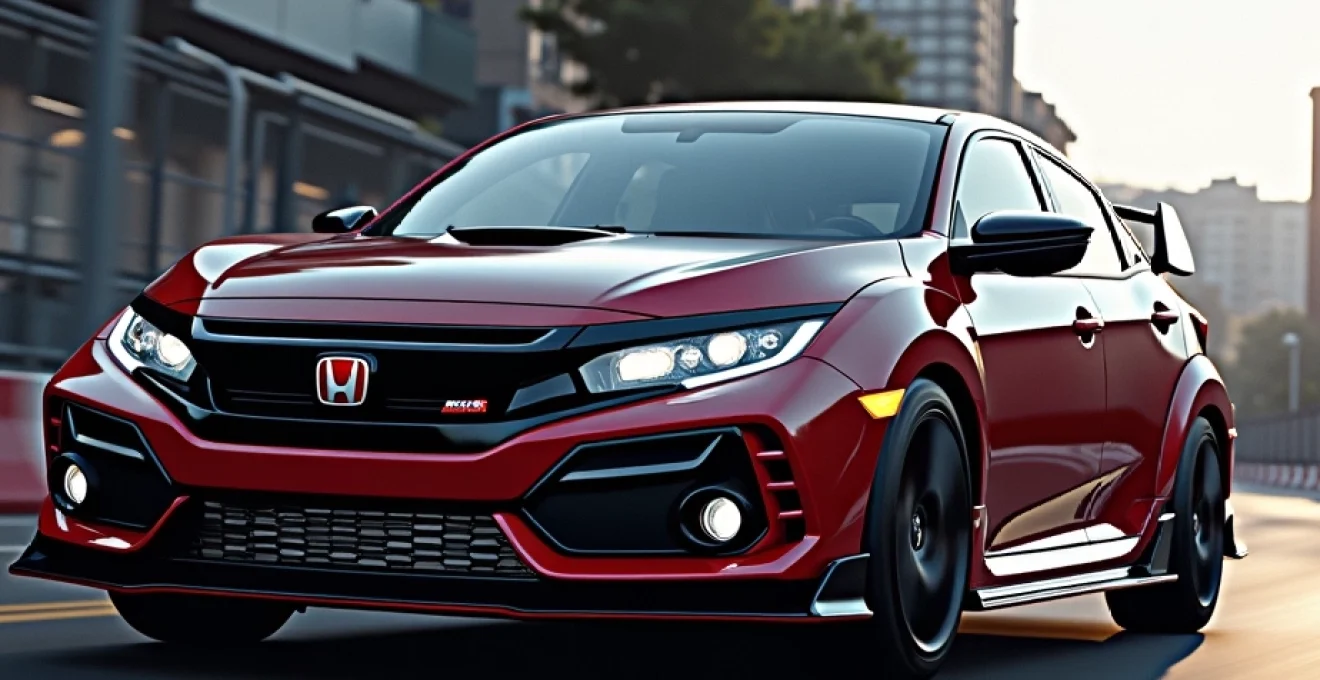
The Honda Civic Type R stands as Honda’s flagship hot hatch, representing decades of engineering excellence and motorsport heritage distilled into a road-legal package. For 2021, this tenth-generation Type R delivered unprecedented performance capabilities through its sophisticated K20C1 turbocharged engine, advanced chassis dynamics, and track-focused aerodynamic package. With 320 horsepower on tap and a meticulously tuned suspension system, the Type R established itself as a benchmark in the front-wheel-drive performance segment, offering genuine supercar-challenging capabilities wrapped in practical five-door packaging.
Engine specifications and K20C1 VTEC turbo performance analysis
K20C1 2.0-litre turbocharged Four-Cylinder architecture
At the heart of the 2021 Civic Type R lies Honda’s masterfully engineered K20C1 powerplant, a 1996cc four-cylinder turbocharged engine that represents the pinnacle of Honda’s naturally aspirated heritage merged with modern forced induction technology. This aluminium-block construction features an 86.0mm bore and 85.9mm stroke configuration, creating a remarkably square engine design that optimises both high-rpm breathing and low-end torque production. The engine’s architecture incorporates direct fuel injection, variable valve timing on both intake and exhaust camshafts, and a sophisticated cooling system designed to maintain consistent performance during extended track sessions.
VTEC turbo variable valve timing system integration
Honda’s legendary VTEC technology receives a contemporary interpretation in the K20C1 through the VTEC Turbo system, which seamlessly combines variable valve timing with turbocharger efficiency. This system operates across two distinct cam profiles, switching at approximately 2500rpm to optimise airflow characteristics throughout the rev range. The integration allows for exceptional low-end torque delivery whilst maintaining the high-rpm performance characteristics that define Honda’s sporting engines. The VTEC Turbo system represents a fundamental shift from traditional naturally aspirated VTEC implementations , delivering broader torque curves and improved fuel efficiency without sacrificing the characteristic Honda engine note.
Peak power output of 320hp at 6500rpm dynamics
The K20C1 delivers its maximum power output of 320 horsepower at 6500rpm, representing a substantial increase over previous naturally aspirated Type R engines whilst maintaining Honda’s philosophy of high-revving performance. This power figure places the Type R firmly in supercar territory, with specific output exceeding 160hp per litre—a remarkable achievement for a production turbocharged engine. The power delivery curve demonstrates exceptional linearity from 3000rpm onwards, with minimal turbo lag and progressive acceleration that builds consistently to the 7000rpm redline.
The K20C1’s power delivery characteristics demonstrate Honda’s commitment to maintaining the engaging, naturally aspirated feel despite turbocharger implementation.
Maximum torque delivery of 400nm between 2500-4500rpm
Torque production reaches 400Nm (295 lb-ft) across a broad plateau between 2500-4500rpm, providing exceptional flexibility for both street driving and track applications. This torque curve represents a significant improvement over naturally aspirated predecessors, delivering approximately 60% more torque whilst maintaining the rev-happy character that enthusiasts demand. The wide torque band eliminates the need for constant gear changes during spirited driving, whilst the relatively modest peak figure helps manage front-wheel-drive traction limitations effectively.
Compression ratio and fuel injection system optimisation
Honda engineers selected a conservative 9.8:1 compression ratio for the K20C1, balancing power output with reliability and fuel quality tolerance. This compression ratio works synergistically with the direct injection system to prevent knock whilst maximising thermal efficiency. The fuel system operates at high pressure, delivering precise fuel metering that adapts to driving conditions and engine load demands. The system requires premium unleaded fuel (98 octane) to achieve optimal performance parameters , with the engine management system automatically adjusting timing and boost pressure for lower octane fuels when necessary.
Transmission and drivetrain configuration
Six-speed manual transmission with Rev-Match technology
The 2021 Type R exclusively employs a close-ratio six-speed manual transmission developed specifically for high-performance applications. This gearbox features shortened gear ratios optimised for track use, with particularly close spacing between second, third, and fourth gears to maintain engine rpm within the peak power band during circuit driving. The transmission incorporates Honda’s intelligent rev-matching system, which automatically blips the throttle during downshifts to match engine and transmission speeds, reducing clutch wear and improving stability under braking. The system can be disabled for purist drivers who prefer to heel-and-toe manually, providing flexibility for different driving preferences and skill levels.
Helical Limited-Slip differential operation
Managing the substantial power output through the front wheels requires sophisticated torque distribution, achieved through Honda’s helical limited-slip differential. This mechanical system uses gear-driven friction to automatically transfer torque between the front wheels during acceleration, cornering, and varying traction conditions. Unlike electronic torque vectoring systems, the helical differential provides immediate response without relying on brake intervention or complex electronic controls. The differential’s preload settings have been specifically calibrated for the Type R’s power output and suspension geometry , ensuring optimal traction whilst minimising understeer characteristics during aggressive cornering.
Front-wheel drive layout with torque steer mitigation
Despite its substantial power output, the Type R employs a front-wheel-drive configuration that Honda has refined through decades of hot hatch development. The drivetrain incorporates equal-length driveshafts to minimise torque steer, whilst the dual-axis strut suspension geometry further reduces unwanted steering wheel feedback during acceleration. This setup provides several advantages including reduced weight, lower manufacturing complexity, and improved traction in adverse weather conditions compared to rear-wheel-drive alternatives. The front-drive layout also contributes to the Type R’s practical daily usability, maintaining excellent interior space and cargo capacity.
Dual-axis strut suspension geometry
The front suspension employs Honda’s innovative dual-axis strut design, which separates the steering axis from the suspension damping axis to reduce friction and improve steering precision. This configuration significantly reduces the impact of suspension movement on steering feel, creating a more isolated and precise steering experience even during aggressive driving. The system incorporates forged aluminium knuckles and control arms to reduce unsprung weight, whilst maintaining the structural integrity required for high-performance applications. This suspension geometry represents one of the most significant advances in front-wheel-drive handling dynamics , effectively addressing traditional limitations of strut-based suspension systems.
Aerodynamic package and bodywork modifications
The Type R’s aerodynamic package represents a comprehensive approach to managing airflow both around and through the vehicle at high speeds. The front splitter, side skirts, and prominent rear wing work collectively to generate downforce whilst managing cooling airflow to critical components. The front bumper incorporates large air intakes that channel cooling air to the radiator, intercooler, and brake cooling ducts, whilst the bonnet features functional vents that extract hot air from the engine bay. The rear wing generates genuine downforce at speed, with its distinctive three-piece design optimising airflow attachment across varying angles of attack. Wind tunnel testing confirmed the aerodynamic package generates meaningful downforce without significantly impacting fuel economy at legal road speeds . The underbody incorporates aerodynamic panels and diffuser elements that smooth airflow beneath the vehicle, reducing lift and improving high-speed stability. These modifications combine to create a cohesive aerodynamic strategy that enhances both performance and cooling efficiency during track use.
Chassis dynamics and suspension tuning
The Type R’s chassis represents a masterclass in suspension tuning, balancing track-focused performance with acceptable ride quality for daily use. The front suspension employs adaptive dampers that continuously adjust damping rates based on driving conditions and selected drive mode, providing optimal wheel control across varying road surfaces. The rear multi-link setup incorporates geometry changes specific to the Type R, with revised pickup points that optimise camber change and toe control during cornering. Spring rates have been increased substantially over standard Civic variants, with carefully calculated progressive rate characteristics that provide compliance over small bumps whilst maintaining control during high-load cornering situations. The suspension tuning philosophy prioritises mechanical grip over electronic intervention , allowing skilled drivers to feel and respond to the vehicle’s dynamic behaviour naturally. Anti-roll bars feature hollow construction to reduce weight whilst maintaining torsional stiffness, with the rear bar incorporating adjustment capabilities for fine-tuning handling balance. The dampers feature velocity-sensitive valving that provides comfortable low-speed ride quality whilst delivering exceptional high-frequency control during spirited driving. Bushings throughout the suspension system use harder durometer materials compared to standard Civic applications, reducing deflection and improving response precision whilst maintaining acceptable NVH characteristics for daily driving.
The suspension tuning achieves the delicate balance between track capability and street usability that defines truly exceptional hot hatches.
Interior features and Driver-Focused technology
The Type R’s cabin reflects Honda’s philosophy of purposeful design, with every element focused on enhancing the driving experience. The bucket seats feature prominent side bolsters and alcantara trim surfaces that provide exceptional lateral support during aggressive cornering, whilst maintaining reasonable comfort for extended journeys. The seats incorporate manual adjustment mechanisms to save weight and complexity, with the driving position optimised for shorter drivers than many European competitors. The steering wheel features a flat-bottomed design wrapped in genuine leather, with the Type R logo embossed prominently at the twelve o’clock position. The instrument cluster combines analogue gauges with a central digital display that provides comprehensive engine monitoring capabilities . The infotainment system includes Honda’s CONNECT navigation system with smartphone integration, though the interface prioritises functionality over visual complexity. Climate control remains manually operated, reflecting the Type R’s focus on driver engagement over convenience features. Storage solutions throughout the cabin are practical rather than luxurious, with door pockets, cup holders, and centre console storage providing adequate space for daily essentials. The rear seats offer surprising space for a hot hatch, accommodating adult passengers on shorter journeys whilst folding completely flat to maximise cargo capacity when required.
Performance metrics and Track-Tested capabilities
The Type R’s performance capabilities extend far beyond basic acceleration figures, encompassing track-tested metrics that demonstrate its comprehensive dynamic competence. Acceleration from standstill to 100km/h requires just 5.4 seconds, with the broad torque curve enabling consistent launches despite the front-wheel-drive configuration. More impressive is the 80-120km/h overtaking performance, accomplished in 4.9 seconds thanks to the engine’s substantial mid-range torque delivery. Top speed reaches 275km/h when conditions permit, though the Type R’s capabilities truly shine in circuit environments where cornering speed and braking performance prove more relevant than straight-line acceleration. Braking distances from 100km/h measure just 34 metres, achieved through large ventilated disc brakes measuring 350mm front and 305mm rear, combined with high-performance tyres and sophisticated ABS calibration. The brake system demonstrates remarkable consistency during repeated heavy use, with fade resistance that exceeds many vehicles costing significantly more . Lateral acceleration capabilities exceed 1.0g on appropriate surfaces, with the suspension geometry and tyre selection optimised for maximum mechanical grip. The electronic stability systems include multiple intervention levels, from fully active for adverse conditions to completely disabled for track use, providing flexibility across varying driving scenarios. Fuel consumption averages 8.2 litres per 100km in combined driving, though track use typically sees consumption figures double or triple depending on driving intensity and circuit characteristics.