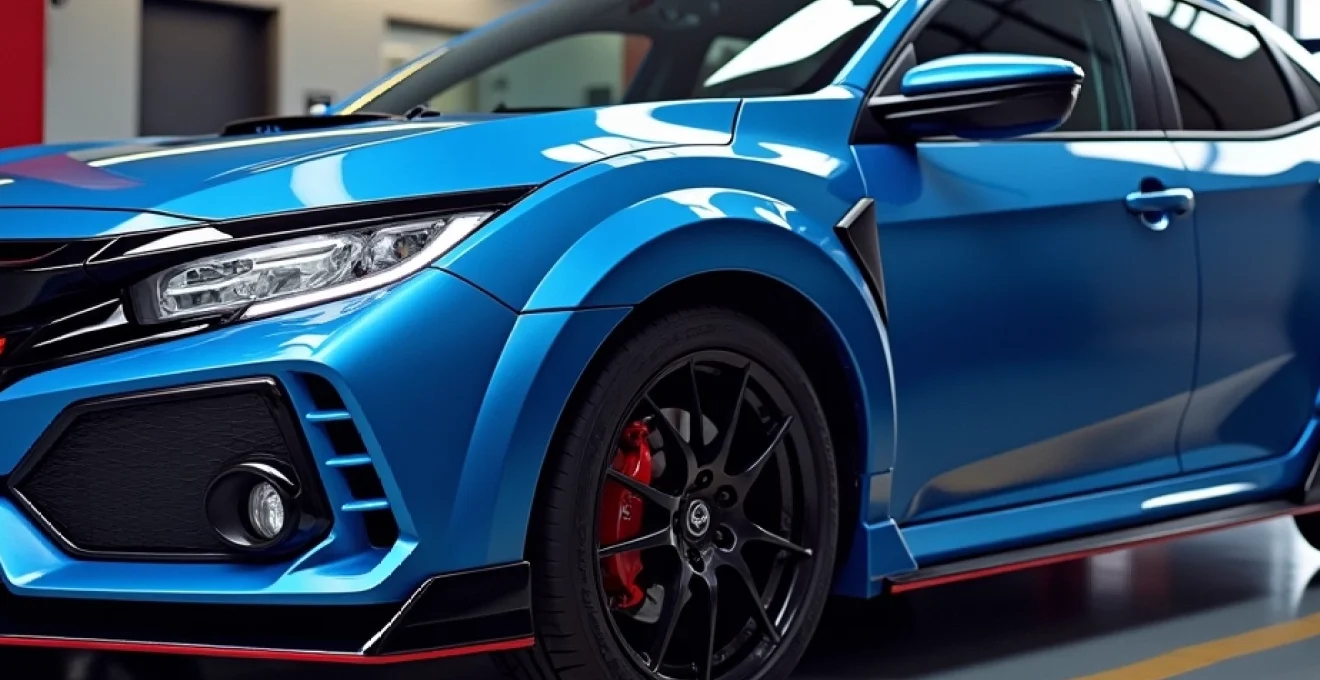
The Honda Civic Type R FN2 represents a fascinating chapter in the evolution of Honda’s iconic performance hatchback, bridging the gap between the raw, lightweight EP3 and the modern turbocharged FK2 generation. Launched in 2007 and produced until 2011, this eighth-generation Civic Type R maintained the naturally aspirated K20 engine philosophy whilst introducing a more mature, spacious cabin design that polarised enthusiasts. For prospective buyers navigating today’s used car market, understanding the specific inspection points and potential issues unique to the FN2 becomes crucial for making an informed purchase decision.
The FN2’s distinctive triangular exhaust outlets, futuristic interior design, and aggressive aero package marked a bold departure from conventional hot hatch aesthetics. However, beneath this striking exterior lies a complex mechanical package that demands careful scrutiny during any pre-purchase evaluation. With examples now ranging from budget-friendly track cars to pristine low-mileage collector pieces, knowing exactly what to examine can mean the difference between securing an exceptional driving machine and inheriting costly repair bills.
Engine bay inspection points for FN2 K20Z4 powerplant
The heart of every FN2 Type R beats with Honda’s legendary K20Z4 VTEC engine, a 2.0-litre naturally aspirated powerplant that produces 201 horsepower at a screaming 7800 rpm. This high-revving motor demands meticulous attention during inspection, as its performance-oriented nature makes it susceptible to abuse from inexperienced owners. The engine bay layout in the FN2 provides reasonable access to most components, though some areas require careful examination with proper lighting and tools.
K20Z4 VTEC solenoid operation and engagement testing
The VTEC solenoid represents one of the most critical components to verify during your inspection. Located on the cylinder head, this electromagnetically controlled valve determines when the high-performance cam profile engages, typically around 5600 rpm. A failing solenoid often produces symptoms ranging from poor high-rpm performance to complete loss of the characteristic VTEC engagement sensation. During your test drive, listen for the distinctive change in engine note as you approach the VTEC crossover point. The transition should feel smooth and immediate, accompanied by a noticeable surge in power delivery.
Visual inspection of the solenoid requires removing the engine cover to access the component directly. Look for oil seepage around the solenoid mounting point, as this indicates worn O-rings that will eventually require replacement. The electrical connector should appear clean and corrosion-free, with no signs of moisture ingress that could affect operation. If possible, request diagnostic data showing VTEC solenoid activation cycles, as excessive cycling can indicate underlying engine management issues.
Timing chain tensioner wear assessment on High-Mileage units
Unlike many Honda engines that utilise timing belts, the K20Z4 employs a timing chain system that theoretically provides greater durability. However, the chain tensioner mechanism can develop issues, particularly on high-mileage examples or engines that have experienced poor maintenance schedules. Chain stretch becomes increasingly problematic beyond 100,000 miles, potentially leading to catastrophic engine damage if left unchecked.
During cold startup, listen carefully for any rattling noises emanating from the timing chain area, typically heard most clearly from the driver’s side of the engine bay. A healthy timing chain should operate virtually silently, with only minimal mechanical noise during the first few seconds of operation. Persistent rattling, especially after the engine reaches operating temperature, suggests imminent timing chain or tensioner replacement requirements. The repair costs for timing chain issues can easily exceed £800, making this inspection point absolutely critical during your evaluation process.
Oil consumption analysis through dipstick and PCV system evaluation
High-performance engines like the K20Z4 naturally consume more oil than conventional powerplants, but excessive consumption indicates serious internal wear. During your inspection, request maintenance records showing oil change intervals and quantities added between services. Healthy FN2 engines typically consume between 0.5-1.0 litres per 1000 miles under spirited driving conditions, though conservative driving should result in minimal consumption.
The positive crankcase ventilation (PCV) system plays a crucial role in managing internal engine pressures and oil vapour recirculation. A blocked or failing PCV valve can cause excessive oil consumption, rough idling, and increased emissions. Remove the oil filler cap during idle operation and check for excessive vapour emissions or unusual pressure build-up. The PCV valve itself, located in the intake manifold, should move freely when removed and shaken gently.
Cooling system integrity including radiator and water pump performance
The FN2’s cooling system must handle significant heat loads during enthusiastic driving, making thorough inspection essential for preventing costly overheating damage. The radiator should appear clean and free from debris, with no signs of impact damage or corrosion around the mounting points. Inspect the cooling fans for proper operation by allowing the engine to reach operating temperature and observing automatic fan activation.
Water pump failure, whilst relatively uncommon on K20 engines, can occur without warning and result in immediate engine damage. Listen for unusual bearing noises from the water pump area, typically located behind the timing chain cover. Any grinding or squealing noises suggest imminent pump failure requiring immediate attention. The expansion tank should maintain consistent coolant levels without requiring frequent top-ups, as persistent coolant loss indicates internal or external leak points requiring investigation.
Suspension and chassis component verification
The FN2 generation marked Honda’s transition from the EP3’s sophisticated multi-link rear suspension to a simpler torsion beam arrangement, a decision that sparked considerable debate amongst enthusiasts. Despite this apparent simplification, the FN2’s chassis delivers impressive handling characteristics when all components function correctly. However, the performance-oriented suspension setup places higher stresses on bushings, mounts, and joints compared to standard Civic variants.
Macpherson strut mount deterioration and bearing noise detection
The front MacPherson strut mounts endure significant loads during aggressive driving, particularly on track-oriented examples. Worn strut mounts produce characteristic symptoms including steering wheel judder during braking, unusual tyre wear patterns, and metallic knocking noises over road imperfections. During your inspection, grasp each front wheel at the 12 and 6 o’clock positions and attempt to rock the assembly vertically. Excessive movement suggests worn strut mount bearings requiring replacement.
The strut mount bearings themselves can develop flat spots or corrosion, causing steering to feel notchy or requiring increased effort during parking manoeuvres. These symptoms become particularly noticeable when turning the steering wheel whilst stationary. Replacement strut mounts represent a moderately expensive repair, typically costing £200-300 per side including labour, making this inspection point financially significant for budget-conscious buyers.
Anti-roll bar link bushings and end link play assessment
Anti-roll bar link failures plague many performance-oriented vehicles, and the FN2 proves no exception to this common issue. The front and rear anti-roll bar links connect the suspension arms to the stabiliser bars, transmitting cornering loads and maintaining chassis stability. Worn links produce distinctive clunking noises over bumps and during direction changes, symptoms that worsen progressively until replacement becomes necessary.
Inspect each anti-roll bar link by grasping the link rod and attempting to twist or move it within its mounting points. Healthy links should exhibit minimal movement, with bushings appearing intact and properly seated. Look for torn rubber boots, exposed metal components, or excessive corrosion around the link assemblies. Aftermarket upgraded links from reputable manufacturers often provide superior durability compared to original equipment parts, representing a worthwhile upgrade during replacement.
Lower control arm ball joint wear patterns and movement testing
Lower control arm ball joints bear substantial loads during cornering and braking, making them susceptible to wear particularly on track-used examples. Failed ball joints present serious safety implications, potentially causing loss of steering control if they separate completely. During inspection, jack up the front of the vehicle and grasp each wheel at the 9 and 3 o’clock positions, attempting to rock the assembly horizontally whilst monitoring the ball joint movement.
Excessive play in the ball joint typically manifests as visible movement between the ball joint stud and its housing. Additionally, inspect the ball joint boot for tears or damage that could allow contamination to enter the joint mechanism. Some wear indicators provide visual confirmation of joint condition, though these aren’t fitted to all FN2 variants. Professional mechanics often use specialised leverage tools to assess ball joint condition more accurately than manual testing alone.
Rear torsion beam bushings inspection for Track-Induced damage
The FN2’s rear torsion beam suspension, whilst simpler than its predecessor’s multi-link arrangement, relies heavily on bushing condition for proper geometry maintenance. Track-oriented driving places enormous stresses on these bushings, often causing premature failure or deterioration. The large bushings that mount the torsion beam to the vehicle chassis represent particular weak points, especially on cars that have seen circuit use.
Visual inspection requires accessing the rear suspension from beneath the vehicle, examining each bushing for cracking, separation, or excessive deformation. Healthy bushings maintain their original shape and exhibit minimal visible wear, whilst failed units often show obvious splitting or complete separation from their metal mounting points. Replacement costs can vary significantly depending on bushing quality and labour rates, though budget between £150-400 for complete rear bushing renewal.
The rear torsion beam arrangement, despite criticism from purists, actually provides excellent handling characteristics when bushings remain in good condition, offering a compelling balance between performance and maintenance simplicity.
Drivetrain and transmission health evaluation
The FN2’s drivetrain combines Honda’s proven six-speed manual transmission with a robust limited-slip differential system, though LSD fitment varies depending on production year and market specification. This powertrain configuration demands careful inspection, particularly given the high-stress environment created by the engine’s 201 horsepower output and enthusiastic driving patterns typical of Type R ownership.
Six-speed manual gearbox synchromesh operation testing
Honda’s six-speed manual transmission generally provides excellent reliability and precise gear selection when maintained properly. However, synchromesh wear can occur, particularly affecting second and third gears due to their frequent use during spirited driving. During your test drive, pay careful attention to gear selection quality across all ratios, noting any resistance, grinding, or unusual noises during shifts.
Cold-weather operation often reveals synchromesh problems most clearly, as reduced lubricant viscosity places greater demands on these components. Attempt shifts into each gear from neutral whilst the engine runs at idle, listening for grinding noises that indicate worn synchromesh rings. Particularly problematic gears may refuse to engage smoothly or pop out of gear under load. Third gear synchromesh failure represents a common issue on 2007 model year vehicles, potentially requiring complete transmission rebuild if damage becomes severe.
Limited slip differential function and clutch pack condition
Limited-slip differential fitment varies across FN2 production years, with early models often lacking this crucial component whilst later variants, particularly Championship White editions and post-2010 models, received factory LSD units. The differential’s condition significantly affects handling characteristics and tyre wear patterns, making proper evaluation essential for performance-oriented buyers.
Testing LSD function requires careful observation during acceleration and cornering scenarios. A properly functioning limited-slip differential should prevent excessive wheelspin during hard acceleration, instead transferring power between front wheels as traction conditions dictate. During parking lot testing, execute tight circles at moderate speeds whilst observing steering effort and tyre scrubbing characteristics. Worn LSD clutch packs often exhibit symptoms including increased wheelspin, uneven tyre wear, and reduced cornering stability.
CV joint boot integrity and driveshaft wear assessment
Constant velocity joints endure significant stress in high-performance front-wheel-drive applications, making thorough inspection crucial for avoiding expensive drivetrain failures. The CV joint boots protect these precision components from contamination whilst retaining essential lubricants, making boot condition absolutely critical for joint longevity.
Inspect each CV joint boot carefully for tears, cracks, or grease leakage that indicates compromised protection. Pay particular attention to the outer CV joints, which experience greater articulation during steering inputs and remain more susceptible to boot damage. Fresh grease deposits around the wheel well area often indicate recent boot failure requiring immediate attention. Complete CV joint replacement typically costs £200-350 per side, making boot condition financially significant during purchase negotiations.
CV joint maintenance represents a perfect example of preventive care benefits, as boot replacement costs perhaps £50 compared to complete joint renewal at five times that expense.
Brake system performance and component analysis
The FN2’s braking system must cope with significant demands placed upon it by the car’s performance capabilities and typical usage patterns. Factory specification includes ventilated front discs measuring 320mm diameter paired with solid rear discs, though many owners upgrade to larger diameter rotors or performance pad compounds. The brake system’s condition directly impacts both safety and running costs, making comprehensive evaluation absolutely essential.
During your inspection, measure brake disc thickness using appropriate gauges, comparing measurements against Honda’s minimum thickness specifications. Front discs typically require replacement when thickness falls below 28mm, whilst rear discs need renewal at 8mm minimum thickness. Examine disc surfaces for scoring, cracking, or heat-related distortion that indicates aggressive use or component overheating. Warped discs often produce steering wheel vibration during braking, particularly noticeable during motorway-speed deceleration.
Brake pad condition varies enormously depending on driving style and pad compound selection. Performance-oriented compounds typically show faster wear rates but provide superior stopping power under demanding conditions. Inspect pad thickness through wheel spokes where possible, noting any uneven wear patterns that suggest caliper problems or disc warping. Squealing noises during light brake application often indicate worn pad material approaching minimum thickness limits.
The brake fluid condition provides valuable insight into maintenance standards and system integrity. Fresh brake fluid appears clear or light amber, whilst contaminated fluid exhibits dark coloration and reduced boiling point characteristics. Moisture contamination, inevitable over time, significantly reduces braking performance and promotes internal corrosion. Professional brake fluid testing equipment can measure moisture content accurately, though visual assessment provides reasonable indication of fluid condition.
Interior and electronic systems diagnostic review
The FN2’s interior represents a significant departure from conventional automotive design philosophy, featuring a distinctive digital instrument cluster and triangular design elements throughout the cabin. Whilst this futuristic approach initially impressed reviewers, certain electronic components and interior materials have proven problematic over time, requiring careful evaluation during inspection.
The Recaro sports seats represent one of the FN2’s standout features, providing exceptional support and comfort during spirited driving. However, the seat bolsters frequently show wear from entry and exit, particularly on high-mileage examples. Inspect the seat surfaces carefully for tears, excessive bolster wear, or damaged adjustment mechanisms. Seat heater operation, where fitted, should function correctly across all temperature settings without producing unusual odours or electrical issues.
Electronic systems inspection should encompass all major functions including climate control, audio system, and instrument cluster operation. The air conditioning system requires particular attention, as non-GT models lack climate control entirely whilst GT variants feature dual-zone automatic systems. Inoperative air conditioning often indicates refrigerant leaks, compressor failure, or electrical issues requiring professional diagnosis.
Interior rattles plague many FN2 examples, stemming from various sources including loose trim panels, inadequate sound deadening, and component tolerances. Common rattle sources include the headlining area, dashboard sections, and door panel assemblies. Whilst these issues rarely affect mechanical reliability, they significantly impact ownership satisfaction and can prove challenging to eliminate permanently.
The digital instrument cluster, whilst visually striking, occasionally develops pixel failures or backlight issues that require expensive LCD panel replacement to resolve properly. These electronic components typically cost several hundred pounds to replace, making their condition financially significant during purchase evaluation. Test all instrument cluster functions including warning lights, digital displays, and illumination systems to ensure proper operation.
Exterior body panel assessment and accident history investigation
The FN2’s distinctive bodywork combines functional aerodynamic elements with aggressive styling cues that clearly identify the Type R variant. However, this bold aesthetic approach creates vulnerability to damage from parking incidents, speed bumps, and general usage scenarios. The low front splitter, prominent side skirts, and substantial rear wing all require careful inspection for damage or previous repair work.
Paint condition varies significantly across the FN2 production run, with Honda’s paint quality receiving criticism for softness and susceptibility to stone chip damage. The front bumper area typically shows extensive stone chipping unless protective film has been applied or remedial paintwork completed. Milano Red examples often fade to a pinkish hue
on prolonged exposure to sunlight, whilst Championship White examples show discolouration and yellowing over time. Examine paint consistency across all body panels, looking for colour variations that indicate panel replacement or extensive repair work.
Panel alignment provides crucial insight into accident history, particularly around high-stress areas including door frames, bonnet edges, and boot lid margins. Misaligned panels often indicate structural damage or inadequate repair work following collision damage. Use a straight edge or measuring tape to verify consistent gaps between adjacent panels, paying particular attention to areas where insurance claims typically focus attention.
The rear spoiler assembly requires specific attention due to its size and mounting complexity. Inspect the spoiler mounting points for stress cracks in the boot lid, particularly around the upper fixing bolts where aerodynamic loads concentrate during high-speed driving. Water ingress around spoiler mounting points can cause corrosion in the boot lid structure, leading to expensive repair requirements if left unchecked.
Wheel condition reflects both maintenance standards and driving habits, making thorough inspection essential. The standard 18-inch alloy wheels frequently suffer kerb damage, corrosion, and impact damage from aggressive driving or poor parking technique. Championship White models feature colour-matched white wheels that show dirt and damage more readily than dark finishes, though they provide easier damage assessment during inspection.
Remember that extensive stone chip damage on the nose doesn’t necessarily indicate poor care – Honda’s soft paint formulation makes some degree of chipping virtually inevitable on any regularly driven example.
Door handle mechanisms represent a common failure point across the FN2 range, with the plastic covers frequently breaking away from their mounting points. This issue typically results from temperature cycling and material fatigue rather than abuse, though replacement handles can prove expensive through Honda parts channels. Aftermarket solutions exist, though colour matching can present challenges particularly on faded paint finishes.
The distinctive front splitter sits extremely low to the ground, making contact with speed bumps, parking blocks, and road debris almost inevitable during normal usage. Inspect the splitter carefully for cracks, missing sections, or previous repair work that might affect aerodynamic performance. Aftermarket splitter options provide enhanced durability compared to the fragile original component, representing a practical upgrade for many owners.
Electric mirror operation should function smoothly without binding or unusual noises, as the mirror motors frequently fail due to wear or water ingress affecting the internal mechanisms. Test both folding and adjustment functions across their full range of movement, listening for grinding noises or hesitation that suggests impending failure. Mirror replacement costs can exceed £200 per side, making this inspection point financially relevant for budget-conscious buyers.
Finally, examine the underside of the vehicle for corrosion, impact damage, or signs of track use including additional chassis bracing or suspension modifications. The FN2’s relatively low ground clearance makes underbody damage from speed bumps or rough road surfaces a common concern, particularly affecting exhaust components, suspension arms, and front subframe sections.