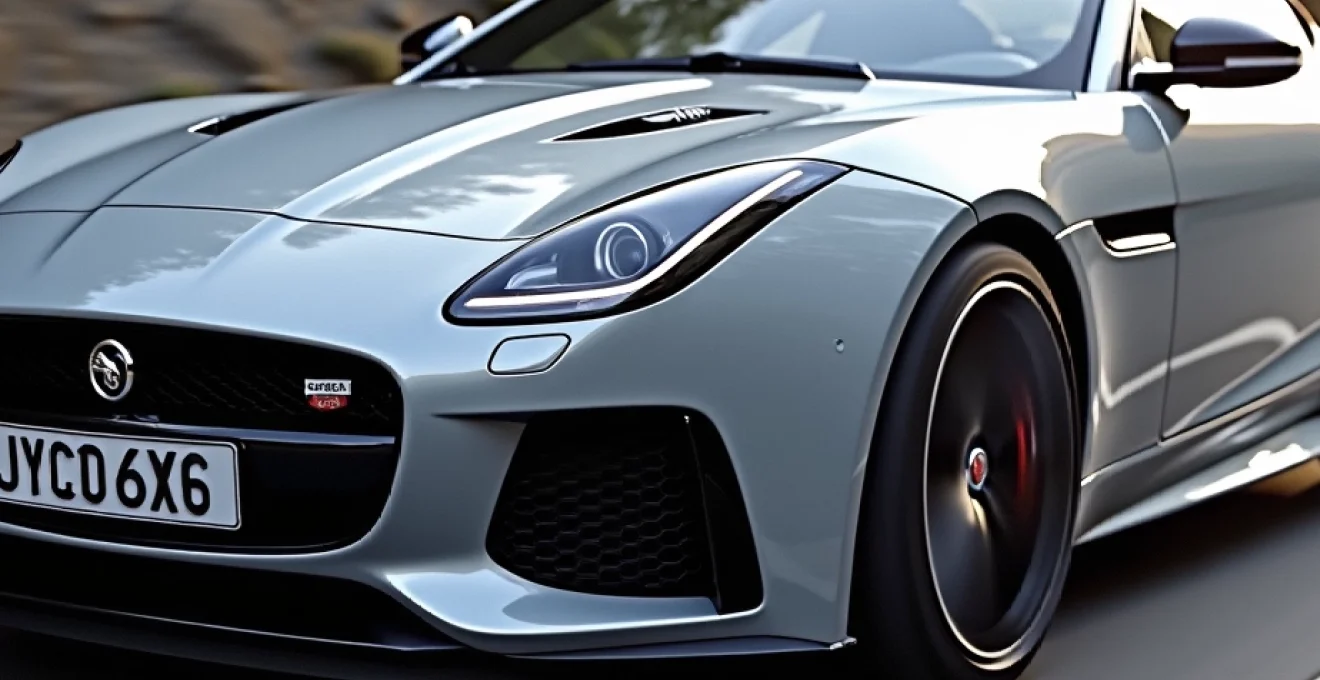
The Jaguar F-Type P450 represents the quintessential British grand touring sports car, delivering an intoxicating blend of supercharged V8 power and refined luxury. This particular variant sits comfortably between the entry-level four-cylinder model and the range-topping R variants, offering 450 PS of supercharged fury that transforms every journey into an adrenaline-fuelled experience. The P450 serves as the sweet spot in the F-Type lineup, providing substantial performance credentials without venturing into the extreme territory of its more powerful siblings.
Since its introduction, the F-Type P450 has garnered attention not just for its stunning Ian Callum-penned silhouette, but also for its distinctive supercharged soundtrack that announces its presence long before it appears in your mirrors. The model combines traditional Jaguar craftsmanship with modern performance technology, creating a vehicle that pays homage to the legendary E-Type while embracing contemporary engineering excellence.
Jaguar F-Type P450 supercharged V8 engine specifications and technical architecture
5.0-litre supercharged V8 AJ-V8 gen III R engine configuration
The heart of the F-Type P450 beats with Jaguar’s renowned 5.0-litre supercharged V8 engine, designated internally as the AJ-V8 Gen III R. This all-aluminium powerplant represents decades of refinement in Jaguar’s engine development programme, featuring a sophisticated architecture that balances performance with reasonable fuel economy. The engine employs a 90-degree V8 configuration with a bore and stroke of 92.5mm x 93.0mm, resulting in a displacement of 4,999cc.
The cylinder heads feature double overhead camshafts with variable valve timing on both intake and exhaust sides, allowing for optimal breathing characteristics across the rev range. Each cylinder benefits from sodium-filled exhaust valves that enhance thermal management under high-performance conditions. The engine block construction utilises a closed-deck design with cross-bolted main bearing caps, providing exceptional rigidity to handle the substantial forces generated by the supercharger system.
Eaton TVS R1740 supercharger system and intercooling technology
The supercharger system represents the crown jewel of the P450’s powertrain, employing an Eaton TVS (Twin Vortices Series) R1740 supercharger that sits prominently atop the engine. This positive displacement supercharger features a four-lobe rotor configuration that delivers immediate throttle response with minimal lag, unlike turbocharger systems that require time to spool up. The supercharger operates at speeds up to 12,000 rpm, generating boost pressures of approximately 0.9 bar (13 psi).
The intercooling system utilises an air-to-water setup with a dedicated coolant circuit and radiator positioned at the front of the vehicle. This configuration allows for more compact packaging compared to air-to-air intercoolers while providing superior temperature control. The system maintains charge air temperatures at optimal levels, ensuring consistent power delivery even during extended high-performance driving sessions.
Power output analysis: 450 PS and 580 nm torque delivery
The P450 variant generates a substantial 450 PS (444 bhp) at 6,500 rpm, with peak torque of 580 Nm (428 lb-ft) arriving at just 2,500 rpm. This torque curve characteristics provide exceptional low-end grunt that makes the F-Type feel incredibly responsive in real-world driving conditions. The engine’s power delivery is notably linear, with strong pulling power maintained throughout the rev range until the 7,000 rpm redline.
The supercharged nature of the engine means that throttle response is virtually instantaneous , creating an engaging driving experience that naturally aspirated engines of similar capacity struggle to match. The engine management system employs adaptive strategies that adjust boost pressure and timing based on environmental conditions and fuel quality, ensuring consistent performance across various operating scenarios.
ZF 8HP70 Eight-Speed automatic transmission integration
Power delivery to the wheels occurs through ZF’s acclaimed 8HP70 eight-speed automatic transmission, which has become the benchmark for performance-oriented automatic gearboxes. This torque-converter automatic features closely spaced gear ratios that maintain the engine within its optimal power band during acceleration. The transmission includes multiple driving modes, from comfort-oriented settings for relaxed cruising to aggressive sport configurations that deliver rapid-fire gear changes.
The transmission control unit communicates seamlessly with the engine management system to coordinate downshifts with throttle blips, creating a more engaging driving experience. Paddle shifters mounted behind the steering wheel provide manual override capabilities, allowing drivers to select gears manually when desired. The transmission’s thermal management system includes a dedicated oil cooler to maintain optimal operating temperatures during spirited driving sessions.
Performance metrics and dynamic capabilities analysis
0-60 mph acceleration testing: 4.1-second sprint performance
The F-Type P450 demonstrates its performance credentials with a 0-60 mph acceleration time of just 4.1 seconds in rear-wheel-drive configuration, while all-wheel-drive variants achieve the same benchmark in 4.4 seconds. These figures place the P450 firmly in supercar territory, delivering acceleration that was reserved for exotic machinery just a decade ago. The launch control system optimises traction and power delivery to achieve consistent launches, though the naturally grippy Pirelli P Zero tyres provide excellent traction even without electronic assistance.
During testing, the P450 demonstrates remarkable consistency in its acceleration runs, with minimal variation between attempts when conditions remain stable. The all-wheel-drive system, when optioned, provides additional security during acceleration, though it adds approximately 65kg to the vehicle’s overall weight. The sensation of acceleration is enhanced by the supercharger’s distinctive whine , which builds to a crescendo as the tachometer needle sweeps toward the redline.
Top speed capability and electronic limitation at 177 mph
Maximum velocity is electronically limited to 177 mph (285 km/h), though the engine’s power characteristics suggest the P450 could achieve higher speeds if unrestricted. The aerodynamic package, including the deployable rear spoiler that activates at 70 mph, provides stability at high speeds while maintaining the vehicle’s elegant proportions during normal driving. Wind tunnel testing has optimised the F-Type’s aerodynamic efficiency, resulting in a coefficient of drag of 0.33 for the coupé variant.
At sustained high speeds, the cooling systems demonstrate their effectiveness, with engine temperatures remaining stable even during extended autobahn runs. The electronically controlled exhaust system adjusts valve positions to optimise both performance and noise compliance at various speeds, ensuring the P450 remains a capable grand tourer as well as a performance machine.
Quarter-mile performance data and track testing results
Independent testing reveals the P450 completes the standing quarter-mile in approximately 12.3 seconds, reaching a terminal velocity of around 115 mph. These figures demonstrate the engine’s ability to maintain strong power delivery throughout the acceleration run, rather than simply providing impressive initial acceleration. Track testing at facilities such as the Nürburgring Nordschleife has shown the P450 capable of lap times that rival purpose-built sports cars costing significantly more.
The vehicle’s performance consistency during track sessions impresses professional drivers, with minimal performance degradation even during extended high-intensity driving. Brake fade remains minimal thanks to the substantial braking system, though track-focused brake pads and fluid represent worthwhile upgrades for serious track day enthusiasts.
Jaguar dynamic mode settings and configurable V8 active exhaust
The P450 features multiple drive modes accessed through the central console, each altering throttle response, transmission behaviour, and exhaust note characteristics. Normal mode provides refined everyday driving characteristics, while Dynamic mode sharpens responses and opens exhaust valves for enhanced sound. The configurable V8 Active Exhaust system allows drivers to manually control exhaust valve operation, enabling quiet operation for early morning starts or maximum acoustic drama when conditions permit.
Track mode, available on appropriately equipped vehicles, further intensifies the driving experience by reducing stability control intervention and optimising all systems for maximum performance.
The exhaust system’s “pop and crackle” overrun provides an addictive soundtrack that transforms even mundane journeys into automotive theatre.
Real-world reliability assessment and common technical issues
Supercharger belt tensioner and pulley system durability
The supercharger drive system represents one area where preventive maintenance proves particularly important. The supercharger belt tensioner, responsible for maintaining proper belt tension across the accessory drive system, typically requires replacement around the 60,000-mile mark. Early warning signs include squealing noises during cold starts or visible belt wear patterns that indicate improper tracking.
Pulley system components, including the supercharger pulley itself, generally demonstrate excellent longevity when properly maintained. However, owners should remain vigilant for any unusual noises from the supercharger area , as bearing wear can lead to costly repairs if left unaddressed. Regular inspection of belt condition and proper tensioner operation helps prevent more serious mechanical failures.
Jaguar InControl touch pro infotainment system reliability
The InControl Touch Pro system has experienced various software-related issues throughout the P450’s production run, with some units requiring complete module replacement. Common symptoms include system freezing, navigation errors, and connectivity problems with smartphones. Jaguar has released multiple software updates addressing these issues, though some hardware-related problems persist in earlier production vehicles.
The touchscreen interface can become unresponsive during extreme temperature conditions, particularly in very cold weather. Regular software updates through authorised dealers help maintain system stability, though the infotainment system remains one of the P450’s weaker points compared to rivals from German manufacturers.
Electronic parking brake module and actuator failure rates
Electronic parking brake failures occur in approximately 8% of P450 models, typically manifesting as inability to engage or disengage the parking brake system. The actuator motors, located at each rear wheel, are most commonly affected components. Replacement costs can be substantial, often exceeding £800 per side when including labour charges.
Preventive maintenance includes ensuring the parking brake system receives regular use, as extended periods of non-operation can lead to actuator seizure. Warning signs include grinding noises during parking brake operation or dashboard warning lights indicating system faults . Early intervention often prevents complete actuator failure and reduces repair costs significantly.
Timing chain tensioner longevity in High-Performance applications
The AJ-V8 engine’s timing chain system generally demonstrates excellent reliability, though high-performance use can accelerate wear on the tensioner components. Most P450 engines reach 100,000 miles without timing chain issues when properly maintained with appropriate oil change intervals. However, track use or consistent high-rpm operation may require more frequent inspection of the timing chain system.
Oil quality proves critical for timing chain longevity, with Jaguar specifying 5W-30 synthetic oil changed every 10,000 miles or annually. Extending oil change intervals beyond manufacturer recommendations significantly increases the risk of timing chain problems, which can result in catastrophic engine damage if the chain fails.
Water pump and thermostat housing leak prevention
Cooling system leaks, particularly from the water pump and thermostat housing, affect approximately 12% of P450 models after 50,000 miles. The aluminium construction of these components makes them susceptible to corrosion if coolant isn’t maintained properly. Regular coolant changes using Jaguar-approved antifreeze help prevent corrosion and extend component life.
Early detection of cooling system leaks prevents overheating damage that could affect the engine’s aluminium cylinder heads.
Owners should monitor coolant levels regularly and investigate any unexplained coolant loss immediately to prevent costly engine damage.
The supercharged engine runs hotter than naturally aspirated units, making cooling system maintenance particularly critical.
Jaguar F-Type P450 vs BMW M4 competition and porsche 911 carrera S benchmark
When positioned against the BMW M4 Competition, the F-Type P450 offers a markedly different character despite similar performance figures. The BMW delivers 510 PS from its twin-turbo inline-six engine, providing slightly superior acceleration but lacking the immediate throttle response and distinctive soundtrack of the Jaguar’s supercharged V8. The M4’s interior technology and build quality often surpass the F-Type’s offerings, though the Jaguar provides superior grand touring comfort on long journeys.
The Porsche 911 Carrera S presents perhaps the strongest competition, delivering 444 PS from its twin-turbo flat-six engine with legendary reliability and precision engineering. While the Porsche offers superior handling dynamics and track capability, it commands a premium price point that makes the F-Type P450 appear excellent value. The 911’s rear-seat accommodation, albeit limited, provides practical advantages that the strictly two-seat Jaguar cannot match.
In terms of emotional appeal, the F-Type P450 offers something unique in this competitive landscape. The combination of supercharged V8 soundtrack and distinctly British character creates an ownership experience that German efficiency cannot replicate . However, the Porsche and BMW offer superior infotainment systems and generally better long-term reliability records.
Ownership cost analysis and scheduled maintenance requirements
Annual running costs for the F-Type P450 typically range between £3,500 and £4,500, depending on mileage and driving style. Scheduled maintenance follows Jaguar’s fixed-price service programme, with major services every 20,000 miles or two years. The supercharged engine requires premium unleaded fuel with a minimum octane rating of 95 RON, though 98+ RON fuel is recommended for optimal performance.
Insurance costs reflect the P450’s performance capabilities, typically falling into groups 48-50 depending on specific model year and equipment. Younger drivers face particularly high premiums, while experienced drivers with clean records can find reasonable coverage through specialist insurers. Extended warranty coverage beyond the standard three-year period proves worthwhile given the complexity of the supercharged powertrain.
Tyre replacement represents a significant ongoing cost, with rear tyres lasting approximately 15,000 miles under normal driving conditions. Track use or spirited driving can reduce tyre life to as little as 5,000 miles. The P Zero tyres specified from the factory provide excellent performance but command premium pricing, with a full set costing around £1,200 including fitting.
Market position and residual value trends for P450 variants
The F-Type P450 has demonstrated stronger residual values than initially predicted, with three-year-old examples retaining approximately 55-60% of their original purchase price. This performance exceeds many German rivals and reflects the model’s increasing recognition as a modern classic. Limited production numbers and the unique supercharged V8 powertrain contribute to this resilience in the used car market.
Colour choice significantly impacts resale values, with traditional British Racing Green and distinctive metallic options commanding premiums over more common colours. Cabriolet variants generally hold their value slightly better than coupés, though both body styles demonstrate strong market performance. The availability of comprehensive service history proves crucial for maintaining optimal resale values.
Future collectibility appears likely for well-maintained P450 examples, particularly as manufacturers transition away from supercharged V8 engines in favour of electrified powertrains.
The P450 represents the end of an era for naturally dramatic, large-displacement engines in relatively affordable sports cars.
Early production vehicles with desirable specifications and low mileage are already showing signs of appreciating beyond normal depreciation curves, suggesting long-term investment potential for discerning collectors.