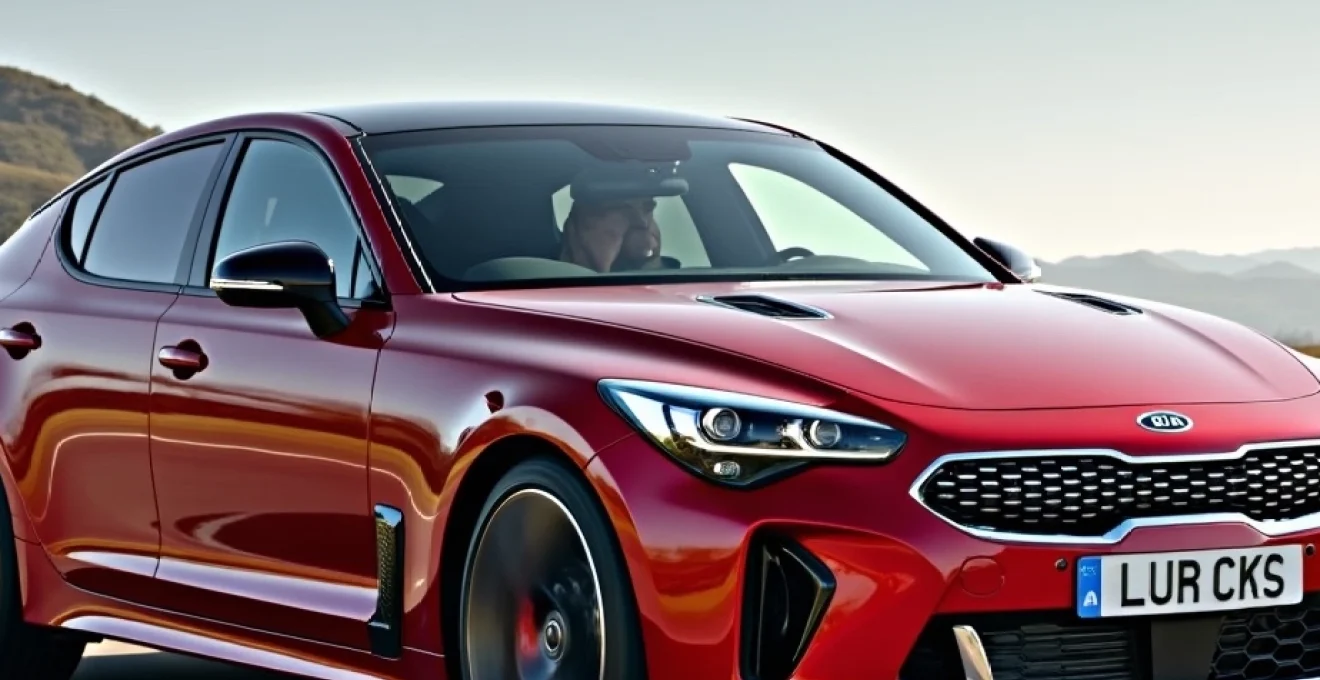
The Kia Stinger GT-S represents a bold departure from the Korean manufacturer’s traditional focus on practical family vehicles, establishing itself as a legitimate contender in the executive sports saloon segment. This rear-wheel-drive grand tourer challenges established German rivals with its distinctive design, impressive performance credentials, and competitive pricing strategy. Since its launch in 2017, the Stinger has garnered attention from enthusiasts seeking an alternative to conventional premium marques, offering a compelling blend of style, performance, and value that deserves serious consideration from discerning buyers.
Kia stinger GT-S engine specifications and performance analytics
The heart of the Stinger GT-S lies in its sophisticated powertrain configuration, which demonstrates Kia’s commitment to performance engineering. The flagship variant showcases advanced technologies that compete directly with established European manufacturers, delivering both impressive straight-line performance and engaging driving dynamics.
Twin-turbo 3.3L V6 lambda II GDI engine configuration
The Stinger GT-S utilises a twin-turbocharged 3.3-litre V6 Lambda II GDI engine that produces 365 horsepower and 376 lb-ft of torque, with later model years receiving a slight power increase to 368 horsepower. This sophisticated powerplant employs direct injection technology and twin-scroll turbochargers to optimise both power delivery and fuel efficiency. The engine’s aluminium construction reduces overall weight whilst maintaining structural integrity, contributing to the vehicle’s balanced weight distribution and enhanced handling characteristics.
Advanced engine management systems monitor various parameters including intake air temperature, manifold pressure, and exhaust gas temperatures to ensure optimal performance across all driving conditions. The Lambda II architecture incorporates variable valve timing on both intake and exhaust camshafts, allowing for precise control over engine breathing and combustion efficiency. This technological sophistication places the Stinger’s powertrain amongst the most advanced in its class , rivalling offerings from established premium manufacturers.
Torque vectoring All-Wheel drive system mechanics
Whilst the standard Stinger employs rear-wheel drive, certain markets offer an advanced all-wheel drive system that enhances traction and stability. The system utilises electronic control units to monitor wheel slip and driving conditions, automatically distributing torque between front and rear axles as required. Under normal driving conditions, the majority of power remains directed to the rear wheels, preserving the vehicle’s sporting character and driver engagement.
The torque vectoring capabilities extend beyond simple front-to-rear distribution, incorporating lateral torque management to enhance cornering performance. Sensors monitor steering angle, lateral acceleration, and individual wheel speeds to determine optimal power delivery, reducing understeer and improving overall handling precision. This sophisticated approach to traction management demonstrates Kia’s understanding of performance vehicle dynamics and their commitment to delivering an engaging driving experience.
Brembo Four-Piston brake caliper performance
The GT-S variant features high-performance Brembo braking systems with four-piston front calipers and ventilated disc rotors measuring 350mm in diameter. These components provide exceptional stopping power and fade resistance, essential characteristics for a vehicle capable of such impressive acceleration and top speed performance. The Brembo brakes represent a significant upgrade over standard systems, offering both enhanced performance and visual appeal through their distinctive red caliper finish.
Brake pedal feel remains consistent across various driving scenarios, with progressive engagement that allows for precise modulation during both spirited driving and everyday use. The larger brake discs dissipate heat more effectively than conventional systems, maintaining performance during extended periods of aggressive driving. Professional testing has demonstrated stopping distances competitive with established German rivals , validating the effectiveness of this braking configuration.
Launch control and drive mode selector functionality
The Stinger GT-S incorporates a comprehensive drive mode selector system offering multiple configurations to suit different driving preferences and conditions. Available modes include Eco, Normal, Sport, and Sport Plus, each adjusting parameters including throttle response, transmission behaviour, steering weight, and suspension settings where applicable. The Sport Plus mode activates the most aggressive calibrations, optimising the vehicle for maximum performance and driver engagement.
Launch control functionality assists drivers in achieving optimal acceleration from standstill, managing wheel spin and maximising traction during hard launches. The system coordinates engine output, transmission behaviour, and traction control parameters to deliver consistent and repeatable performance. This technology particularly benefits drivers seeking to explore the vehicle’s performance potential whilst maintaining safety and component longevity.
0-60mph acceleration benchmarks against BMW 340i and genesis G70
Independent testing has consistently demonstrated the Stinger GT-S’s impressive acceleration capabilities, with 0-60mph times recorded between 4.7 and 5.1 seconds depending on testing conditions and methodology. These figures place the Kia favourably against direct competitors including the BMW 340i and Genesis G70 3.3T, both of which achieve similar performance metrics despite their premium positioning and higher pricing strategies.
Quarter-mile performance further reinforces the Stinger’s credentials, with trap speeds exceeding 100mph and elapsed times consistently below 13.5 seconds. These benchmark figures demonstrate that the Korean manufacturer has successfully developed a powertrain capable of competing with established European alternatives , challenging preconceptions about brand hierarchy in the performance saloon segment.
Interior technology integration and infotainment systems
The Stinger GT-S demonstrates Kia’s advancement in interior technology and user interface design, incorporating sophisticated infotainment systems and connectivity features that rival premium German alternatives. The integration of these technologies reflects the manufacturer’s understanding of modern consumer expectations and their commitment to providing a comprehensive ownership experience.
UVO connect telematics platform capabilities
Kia’s UVO Connect telematics system provides comprehensive vehicle monitoring and remote access capabilities through smartphone applications and web-based interfaces. The platform enables owners to monitor vehicle status, track maintenance schedules, and access diagnostic information remotely, enhancing the overall ownership experience. Advanced features include remote engine starting, climate control activation, and vehicle location services, providing convenience and peace of mind for modern drivers.
The system’s integration with emergency services ensures automatic crash notification and roadside assistance activation when required. Real-time traffic information and weather updates enhance navigation accuracy, whilst over-the-air updates ensure system functionality remains current throughout the vehicle’s lifecycle. This comprehensive approach to connectivity demonstrates Kia’s commitment to matching premium manufacturers’ technological offerings .
Harman kardon premium audio system configuration
Higher specification Stinger variants feature a premium Harman Kardon audio system comprising 15 strategically positioned speakers throughout the cabin. The system utilises advanced digital signal processing to optimise sound reproduction across all seating positions, delivering concert-hall acoustics within the vehicle environment. Individual speaker calibration ensures balanced frequency response and accurate sound staging, creating an immersive listening experience.
The audio system’s integration with the vehicle’s infotainment platform provides seamless access to various media sources including streaming services, satellite radio, and traditional broadcast radio. Advanced noise cancellation algorithms work in conjunction with the vehicle’s acoustic insulation to minimise external interference, ensuring optimal sound quality across all driving conditions.
Wireless smartphone integration via android auto and apple CarPlay
The Stinger GT-S supports both Android Auto and Apple CarPlay connectivity, enabling seamless integration of smartphone functionality within the vehicle’s infotainment system. Wireless connectivity eliminates the need for physical cables, enhancing user convenience whilst maintaining full access to navigation, communication, and entertainment applications. The system’s responsiveness and reliability match those found in premium German alternatives, demonstrating Kia’s technological sophistication.
Voice recognition capabilities allow drivers to access smartphone functions whilst maintaining focus on the road ahead. The system accurately interprets natural language commands, enabling hands-free operation of various functions including navigation input, phone calls, and media selection. This integration represents a significant advancement over previous Kia offerings , placing the Stinger firmly in contention with established premium manufacturers.
Driver assistance technologies including forward collision avoidance
Comprehensive driver assistance systems enhance both safety and convenience, incorporating technologies such as forward collision avoidance, lane keeping assistance, and adaptive cruise control. These systems utilise multiple sensor technologies including radar, cameras, and ultrasonic sensors to monitor the vehicle’s surroundings and assist the driver in maintaining safe operation. The forward collision avoidance system can detect both vehicles and pedestrians, automatically applying brakes when collision risk is detected.
Lane keeping assistance monitors road markings and provides steering inputs to maintain lane position, whilst the blind spot monitoring system alerts drivers to vehicles in adjacent lanes. The adaptive cruise control system maintains preset following distances and speeds, reducing driver fatigue during long-distance travel. These technologies work in harmony to create a comprehensive safety net that matches or exceeds systems found in competing premium vehicles.
Market positioning analysis against european sports saloons
The Stinger GT-S occupies a unique position within the executive sports saloon segment, offering performance and equipment levels traditionally associated with premium German manufacturers whilst maintaining Kia’s value-oriented pricing strategy. This positioning creates interesting dynamics within the marketplace and presents both opportunities and challenges for potential buyers seeking alternatives to established rivals.
Price comparison matrix with audi A4 S-Line and Mercedes-AMG C43
New Stinger GT-S pricing typically represents a significant saving compared to equivalent Audi A4 S-Line or Mercedes-AMG C43 models, often offering £8,000-£12,000 in savings when similarly equipped. This price differential becomes even more pronounced when considering the Stinger’s comprehensive standard equipment list, which includes features that remain optional extras on German alternatives. The Korean manufacturer’s strategy of including premium features as standard equipment enhances the value proposition considerably.
However, this pricing advantage must be weighed against potential differences in brand prestige and long-term residual values. Buyers seeking maximum equipment and performance per pound will find the Stinger compelling , whilst those prioritising badge recognition may prefer established German alternatives despite their higher initial costs. The decision ultimately depends on individual priorities and budget considerations.
Depreciation curves and residual value projections
Initial depreciation rates for the Stinger GT-S tend to exceed those of established German rivals, reflecting the challenge faced by relatively new entrants to the premium segment. First-year depreciation typically ranges between 25-35%, compared to 20-25% for equivalent BMW or Mercedes-Benz models. This pattern creates opportunities for savvy used car buyers whilst potentially disadvantaging new car purchasers seeking minimal depreciation exposure.
Long-term residual value projections suggest the depreciation curve may flatten as the vehicle establishes its reputation within the marketplace.
Industry analysts suggest that Kia’s improving brand perception and the Stinger’s unique positioning may support stronger residual values over time
. Factors including reliability record, parts availability, and continued manufacturer support will influence long-term value retention significantly.
Insurance group classifications and running cost analysis
The Stinger GT-S typically falls within insurance groups 34-41, reflecting its performance capabilities and repair costs. These classifications place it slightly below equivalent German alternatives, potentially resulting in modest insurance premium savings. However, the relatively limited network of specialist repairers and higher parts costs compared to volume manufacturers may offset some of these advantages.
Annual maintenance costs remain competitive with established rivals, particularly when considering Kia’s comprehensive warranty coverage and fixed-price servicing options. Fuel consumption averages 25-30mpg in mixed driving conditions, comparing favourably with similarly powerful German alternatives. Overall running costs typically favour the Stinger , making it an attractive proposition for cost-conscious performance car buyers.
Common mechanical issues and maintenance schedule requirements
Understanding potential mechanical concerns and maintenance requirements proves crucial for prospective Stinger GT-S buyers, particularly those considering used examples. Whilst the model has generally demonstrated good reliability, certain areas require attention to ensure optimal long-term ownership experience. Regular maintenance adherence and awareness of common issues can prevent costly repairs and maintain vehicle performance.
The twin-turbocharged V6 engine requires high-quality synthetic oil and regular filter changes to maintain optimal performance and longevity. Oil change intervals should not be extended beyond manufacturer recommendations , as the turbocharged configuration places additional stress on lubricants. Carbon build-up on intake valves represents a common concern with direct-injection engines, requiring periodic cleaning services to maintain power output and fuel efficiency. Professional cleaning typically costs £300-£500 and should be performed every 40,000-50,000 miles.
Several owners have reported issues with the rear hatch mechanism, including creaking noises and occasional operational problems. These concerns typically manifest within the first few years of ownership and may require replacement of hatch components or adjustment of alignment mechanisms. Brake system maintenance requires attention to the high-performance Brembo components, with brake pad replacement costs exceeding those of conventional systems due to specialised materials and manufacturing processes.
The eight-speed automatic transmission generally proves reliable but benefits from regular fluid changes according to manufacturer schedules.
Transmission fluid degradation can lead to shift quality issues and potential internal component damage if neglected
. Electrical systems, including the sophisticated infotainment and driver assistance technologies, occasionally experience software glitches requiring dealer updates or module resets. These issues rarely affect vehicle safety but may impact convenience features temporarily.
Optimal model year selection and trim level variations
Selecting the ideal Stinger GT-S requires careful consideration of model year updates, trim level specifications, and individual requirements. The vehicle underwent several refinements throughout its production run, with certain model years offering particular advantages depending on buyer priorities and budget constraints.
Early 2018-2019 model years provide excellent value in the used market but may lack some refinements introduced in later production. The 2020 model year introduced updated infotainment software and minor interior enhancements, whilst 2021-2023 examples benefit from the most recent updates including revised exterior styling and improved technology integration. Later model years command premium pricing but offer the most comprehensive feature sets and latest technological developments .
UK market GT-Line S specifications provide an excellent balance of equipment and value, including the premium Harman Kardon audio system, panoramic sunroof, and advanced driver assistance technologies. The range-topping GT S variant adds performance-oriented features including adaptive dampers, larger wheels, and enhanced interior trim materials. For many buyers, the GT-Line S represents the optimal combination of features and pricing, whilst enthusiasts seeking maximum performance capabilities should prioritise GT S variants.
Certain optional extras prove particularly desirable in the used market, including metallic paint finishes, upgraded interior materials, and advanced safety packages. These options typically enhance both ownership enjoyment and resale value, making them worthwhile considerations when evaluating specific examples.
Buyers should prioritise examples with comprehensive service histories and evidence of proper maintenance over vehicles with minor cosmetic or equipment advantages
.
Pre-purchase inspection checklist and negotiation strategies
Conducting thorough pre-purchase inspections ensures informed buying decisions and identifies potential issues that may affect long-term ownership costs. The following systematic approach helps evaluate Stinger GT-S examples effectively, covering both common concerns and model-specific considerations that influence vehicle condition and value.
Engine inspection should focus on oil condition, turbocharger operation, and cooling system integrity. Listen for unusual noises during cold starts and monitor for excessive smoke from the exhaust system, which may indicate turbocharger wear or internal engine problems. Verify that engine oil appears clean and at appropriate levels, as neglected maintenance can cause expensive internal damage. Request evidence of regular oil changes and any major service work , particularly timing chain or turbocharger replacements that represent significant expenses.
Examine the Brembo brake system carefully, checking pad thickness, disc condition, and fluid levels. High-performance brake components wear more rapidly than conventional systems and replacement costs exceed those of standard vehicles significantly. Test brake pedal feel for consistency and monitor for any grinding noises or vibration during braking, which may indicate worn components requiring immediate attention.
Interior technology systems require comprehensive testing to ensure proper operation of infotainment, navigation, and connectivity features. Verify that all driver assistance systems function correctly and that software updates have been applied according to manufacturer recommendations. Faulty electronic systems can prove expensive to repair and may affect both safety and convenience features . Check all electrical components including lighting, climate control, and charging systems to identify potential issues.
Negotiation strategies should consider market conditions, vehicle condition, and service history when determining fair purchase prices. Research comparable examples thoroughly and factor in potential repair costs when making offers. Vehicles with comprehensive service records and evidence of proper maintenance typically justify premium pricing over neglected examples requiring immediate attention. Consider the remaining manufacturer warranty coverage as a significant value component, particularly for vehicles still within the seven-year/100,000-mile coverage period.