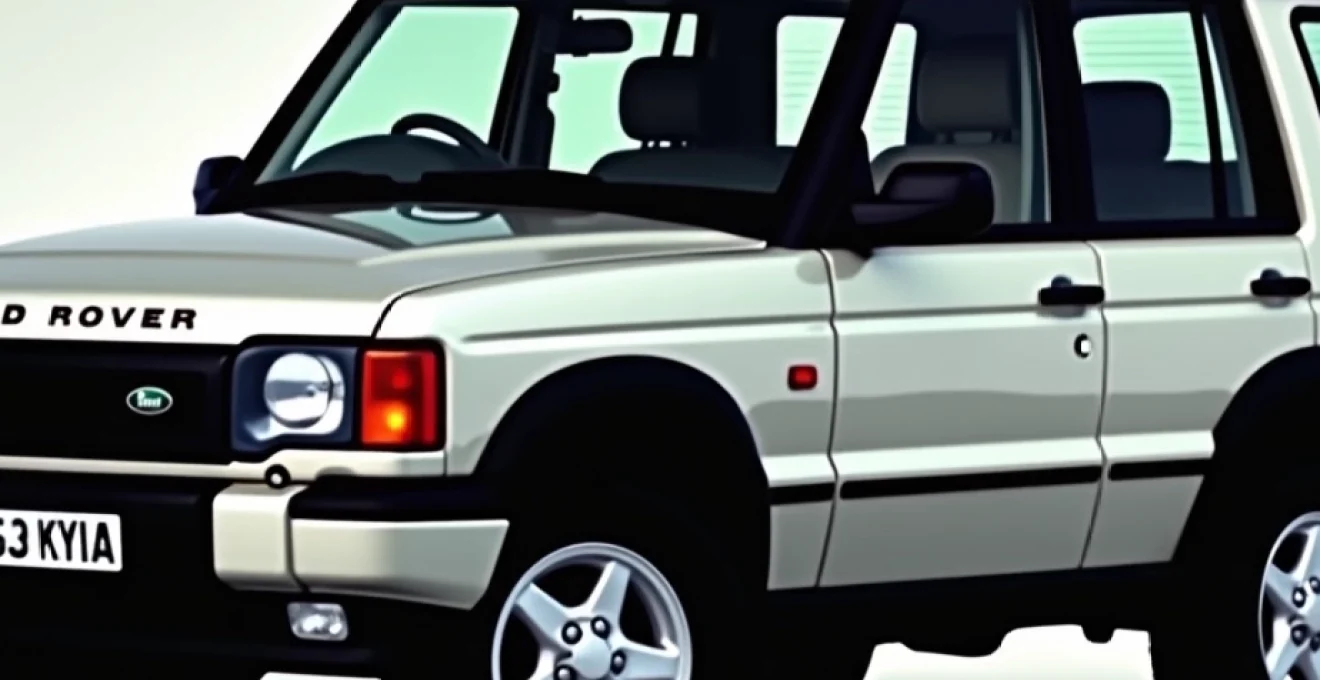
The Land Rover Discovery V8 from the year 2000 represents a compelling proposition for enthusiasts seeking a capable off-road vehicle with refined road manners. As the final iteration of the first-generation Discovery before the significant updates that came with the Series 2, the 2000 model year offers a mature platform that has evolved considerably from its 1989 debut. This particular vintage combines the ruggedness that made the Discovery famous with meaningful improvements in comfort, reliability, and performance that were gradually introduced throughout the 1990s.
What sets the V8-powered Discovery apart from its diesel counterparts is the effortless power delivery and distinctive soundtrack that only a petrol engine can provide. The 4.0-litre Rover V8 engine fitted to the 2000 model year produces substantial torque across a wide rev range, making it particularly well-suited to towing duties and motorway cruising. However, prospective buyers must navigate a complex landscape of potential mechanical issues, varying specifications, and market valuations that can significantly impact the ownership experience.
Land rover discovery V8 2000 model specifications and engine performance analysis
4.0-litre V8 petrol engine technical specifications and power output
The heart of the Discovery V8 2000 is the venerable Rover V8 engine, enlarged to 4.0 litres for this application. This all-aluminium powerplant develops approximately 182 horsepower and 250 lb-ft of torque, figures that may seem modest by contemporary standards but prove more than adequate for the Discovery’s intended role. The engine employs multipoint fuel injection and features a compression ratio of 9.35:1, striking a balance between performance and fuel economy that was considered advanced for its time.
The V8’s architecture traces its roots back to the Buick 215 design of the early 1960s, which Rover acquired and subsequently developed for over three decades. By 2000, the engine had evolved significantly from its original specification, incorporating improved cylinder heads, revised camshaft profiles, and enhanced fuel injection systems. The all-aluminium construction keeps weight down whilst providing excellent heat dissipation characteristics, though this same lightweight design can present challenges in terms of liner stability and head gasket durability under extreme conditions.
Transmission options: R380 manual vs ZF 4HP22 automatic gearbox
Discovery V8 models from 2000 came equipped with either the R380 five-speed manual transmission or the ZF 4HP22 four-speed automatic. The R380 manual gearbox represents a significant improvement over the earlier LT77 unit, offering more precise gear selection and enhanced durability. The transmission features synchromesh on all forward gears and a reverse gear positioned below fifth, providing intuitive operation for most drivers familiar with modern manual gearboxes.
The automatic transmission option, whilst adding convenience, does impact performance and fuel economy. The ZF 4HP22 is a hydraulically controlled unit that provides smooth shifts but can feel somewhat sluggish compared to the manual alternative. Automatic-equipped models typically consume approximately 15-20% more fuel than their manual counterparts, an important consideration given the V8’s already substantial appetite for petrol. The automatic transmission does excel in off-road conditions, however, providing seamless power delivery when traction is limited.
Four-wheel drive system: transfer case T-Box and differential lock mechanisms
The Discovery’s four-wheel drive system employs a permanent setup with a two-speed transfer case, commonly referred to as the T-box in Land Rover terminology. This system provides high and low range options, with the low range offering approximately a 3.2:1 reduction ratio for serious off-road work. The centre differential can be locked manually via a lever in the cabin, whilst viscous coupling units in both front and rear differentials provide limited-slip functionality.
Electronic traction control was not available on the 2000 Discovery V8, meaning drivers must rely on mechanical systems and driving technique when traction becomes limited. The manual differential lock engagement requires the vehicle to be stationary or moving very slowly, and proper operation depends on regular maintenance of the transfer case oil. Many owners find the mechanical simplicity of this system preferable to later electronic alternatives, as diagnosis and repair tend to be more straightforward.
Suspension configuration: air springs vs coil springs performance comparison
The majority of Discovery V8 models from 2000 featured conventional coil spring suspension at all four corners, though some higher-specification variants received self-levelling air springs at the rear. The coil spring setup provides excellent off-road articulation and proves highly durable, with replacement springs readily available at reasonable cost. The system employs telescopic shock absorbers and anti-roll bars front and rear, delivering a compromise between comfort and control that suits the Discovery’s dual-purpose nature.
Air-suspended models offer the advantage of automatic load compensation, maintaining ride height regardless of cargo or passenger load. However, the complexity of the air suspension system introduces potential failure points that can prove expensive to rectify. Air springs themselves typically last 60,000-80,000 miles before requiring replacement, whilst the compressor and associated valving can fail without warning, leaving the vehicle with compromised handling and ride quality.
Common mechanical issues and known reliability concerns
Head gasket failure patterns and liner slippage diagnostics
The Rover V8 engine is notorious for head gasket failures and wet liner slippage, issues that can prove catastrophic if not addressed promptly. Head gasket failure typically manifests as coolant loss without external leaks, white exhaust smoke, and contamination of the engine oil with coolant. The problem often develops gradually, with early symptoms including reduced coolant levels and occasional overheating under load.
Liner slippage represents a more serious condition where the cylinder liners move within the block, disrupting the head gasket seal and potentially causing complete engine failure. This issue typically affects high-mileage engines or those that have experienced severe overheating. Diagnosis requires careful inspection of coolant loss patterns and, in some cases, pressure testing of the cooling system to identify the source of the problem.
ACE (active cornering enhancement) system malfunction symptoms
Some Discovery models from this period were equipped with the ACE system, Land Rover’s hydraulic anti-roll technology designed to reduce body roll during cornering. When functioning correctly, ACE provides remarkable improvements in on-road handling for such a tall vehicle. However, system failures are common and can be expensive to rectify, with replacement hydraulic rams costing several hundred pounds each.
ACE system problems typically present as warning lights on the dashboard, unusual handling characteristics, or visible oil leaks from the hydraulic components. The system operates at high pressure and requires specialised knowledge for diagnosis and repair. Many owners choose to convert failed ACE systems to conventional anti-roll bars, a modification that eliminates the complexity whilst maintaining reasonable handling characteristics.
Electrical problems: BCU (body control unit) and WABCO ABS module failures
Electronic systems in the Discovery 2000 model can present significant challenges, particularly as components age and moisture ingress becomes more likely. The Body Control Unit, responsible for managing various electrical functions including central locking and alarm systems, is prone to failure and can cause seemingly random electrical faults. Symptoms may include intermittent operation of electric windows, central locking problems, or complete electrical shutdown.
ABS module failures are equally problematic, often resulting from corrosion of internal components or software corruption. The WABCO ABS system fitted to these vehicles requires specialised diagnostic equipment for proper fault identification, and replacement modules can be expensive. Many owners report success with module rebuilding services, though these repairs may not prove as durable as original equipment.
Cooling system vulnerabilities: radiator and water pump deterioration
The Discovery’s cooling system operates under considerable stress, particularly when towing or during extended off-road use. The plastic radiator tanks are prone to cracking, especially where they join the aluminium core, whilst the water pump bearings can fail without warning. Regular coolant changes are essential for preventing corrosion and maintaining system integrity, yet many vehicles receive inadequate maintenance in this area.
Prevention is always better than cure when it comes to cooling system maintenance, as overheating can cause irreversible engine damage within minutes.
Pre-purchase inspection checklist and diagnostic procedures
Engine bay assessment: oil leaks, coolant loss and compression testing
A thorough engine bay inspection should begin with the vehicle cold, allowing you to identify any oil or coolant leaks that might be masked by operating temperatures. Pay particular attention to the valley gasket area between the cylinder banks, where oil leaks are common and can indicate more serious internal problems. The rocker covers should be dry, and any signs of oil seepage may suggest valve gear problems or incorrect gasket replacement procedures.
Coolant system inspection requires checking not only for external leaks but also for signs of contamination or pressure loss. Remove the radiator cap when the engine is cold and inspect the coolant for oil contamination or unusual deposits. A compression test, whilst not always practical during a viewing, can provide valuable information about engine condition and help identify potential liner slippage issues before they become catastrophic.
Chassis and undercarriage examination for corrosion and structural integrity
The Discovery chassis is generally robust, but certain areas are prone to corrosion that can compromise structural integrity. Focus particular attention on the rear crossmember, where the spare wheel carrier attaches, as this area sees considerable stress and is exposed to road salt and moisture. The fuel tank mounting points should also be inspected, as corrosion here can lead to dangerous fuel leaks.
Suspension mounting points require careful examination, particularly where the air suspension compressor mounts on air-sprung models. Look for evidence of previous accident damage or poor repair work, as the Discovery’s separate chassis construction makes it relatively easy to straighten after minor impacts, but proper repair requires specialised equipment and knowledge.
Electronic diagnostics: OBD scanner fault code analysis
OBD diagnostics on the Discovery 2000 can reveal hidden problems that might not be apparent during a normal inspection. The system stores fault codes for engine management, ABS, and other electronic systems, providing valuable insight into the vehicle’s maintenance history and current condition. However, code interpretation requires knowledge of Land Rover-specific systems, as generic OBD scanners may not provide complete information.
Pay particular attention to stored codes relating to the engine management system, as these can indicate expensive problems with sensors, fuel injection components, or ignition systems. ABS codes should also be investigated thoroughly, as repairs to this system can prove costly and may require replacement of expensive control modules.
Test drive evaluation: gearbox performance and Four-Wheel drive engagement
The test drive should encompass both on-road and off-road scenarios if possible, allowing evaluation of the transmission, four-wheel drive system, and general mechanical condition. Manual gearboxes should shift smoothly without grinding or excessive force, whilst automatic transmissions should provide seamless shifts without hunting or delayed engagement. Pay attention to any unusual noises from the transmission or transfer case, particularly when engaging low range.
Four-wheel drive engagement should be tested carefully , ensuring that both high and low range operate correctly and that the centre differential lock engages and disengages as expected. Listen for unusual noises from the drivetrain when turning sharply, as this can indicate worn universal joints or differential problems that may prove expensive to rectify.
Market valuation and pricing analysis for discovery V8 2000
Current market values for Discovery V8 models from 2000 vary considerably based on condition, specification, and maintenance history. Basic examples requiring attention can be found for £2,000-£4,000, though such vehicles often need substantial investment to bring them to roadworthy condition. These lower-priced examples frequently suffer from neglected maintenance, corrosion issues, or mechanical problems that make them suitable only for enthusiastic home mechanics or those seeking restoration projects.
Well-maintained examples with comprehensive service histories typically command £6,000-£10,000, representing the sweet spot for most buyers seeking a usable vehicle. At this price level, you can expect to find Discoveries with current MOT certificates, recent maintenance work, and generally sound mechanical condition. However, even these vehicles may require ongoing investment in maintenance and repairs, given their age and complexity.
Exceptional examples, particularly those with low mileage or special provenance, can achieve £12,000-£15,000 or more. These premium vehicles often feature comprehensive documentation, recent major mechanical work, or particularly desirable specifications such as manual transmissions or special edition trim levels. The market for such vehicles remains relatively niche, but appreciation potential is significant for well-chosen examples.
Essential maintenance requirements and service intervals
Regular maintenance is crucial for Discovery V8 ownership, with several key areas requiring particular attention to prevent expensive failures. Engine oil changes should be performed every 6,000 miles or annually, whichever comes first, using high-quality oil that meets Land Rover specifications. The cooling system requires attention every three years, with complete coolant replacement and system flushing to prevent corrosion and scaling that can lead to overheating problems.
Transmission servicing is often overlooked but equally important, with automatic gearboxes requiring fluid and filter changes every 60,000 miles or sooner if used for regular towing. Manual gearboxes are more robust but still benefit from periodic oil changes using the correct specification lubricant. The transfer case and differentials should receive fresh oil every 24,000 miles or as specified in the maintenance schedule.
Preventive maintenance costs are always lower than the expense of major component replacement, making regular servicing a sound financial investment.
Additional maintenance items include timing belt replacement every 72,000 miles or six years, brake fluid changes every two years, and regular inspection of suspension components and steering systems. Air suspension components, where fitted, require periodic inspection and may need replacement more frequently than conventional springs and shock absorbers.
Insurance considerations and running cost assessment
Insurance costs for Discovery V8 models can vary significantly based on the owner’s location, driving history, and intended use of the vehicle. Many insurers now classify these vehicles as modern classics, potentially offering reduced premiums for limited mileage policies. However, the Discovery’s reputation for theft and off-road use may result in higher premiums from some providers, making it worthwhile to obtain quotes from specialists in 4×4 or classic vehicle insurance.
Fuel consumption represents a significant ongoing cost, with the V8 engine typically achieving 15-20 mpg in mixed driving conditions. Motorway cruising may yield slightly better figures, whilst town driving or towing can reduce consumption to single digits. At current fuel prices, annual fuel costs for a vehicle covering 10,000 miles per year could easily exceed £2,000, making this an important consideration for budget-conscious buyers.
Parts availability for the Discovery V8 remains excellent , with both genuine Land Rover components and aftermarket alternatives widely available. However, some items can be expensive, particularly electronic components and engine internals. Labour costs for maintenance and repairs should also be factored into ownership costs, as the Discovery’s complexity means that many tasks require specialist knowledge and equipment. Budgeting £1,500-£3,000 annually for maintenance and repairs is realistic for most examples, though well-maintained vehicles may require less investment whilst neglected examples could demand considerably more.