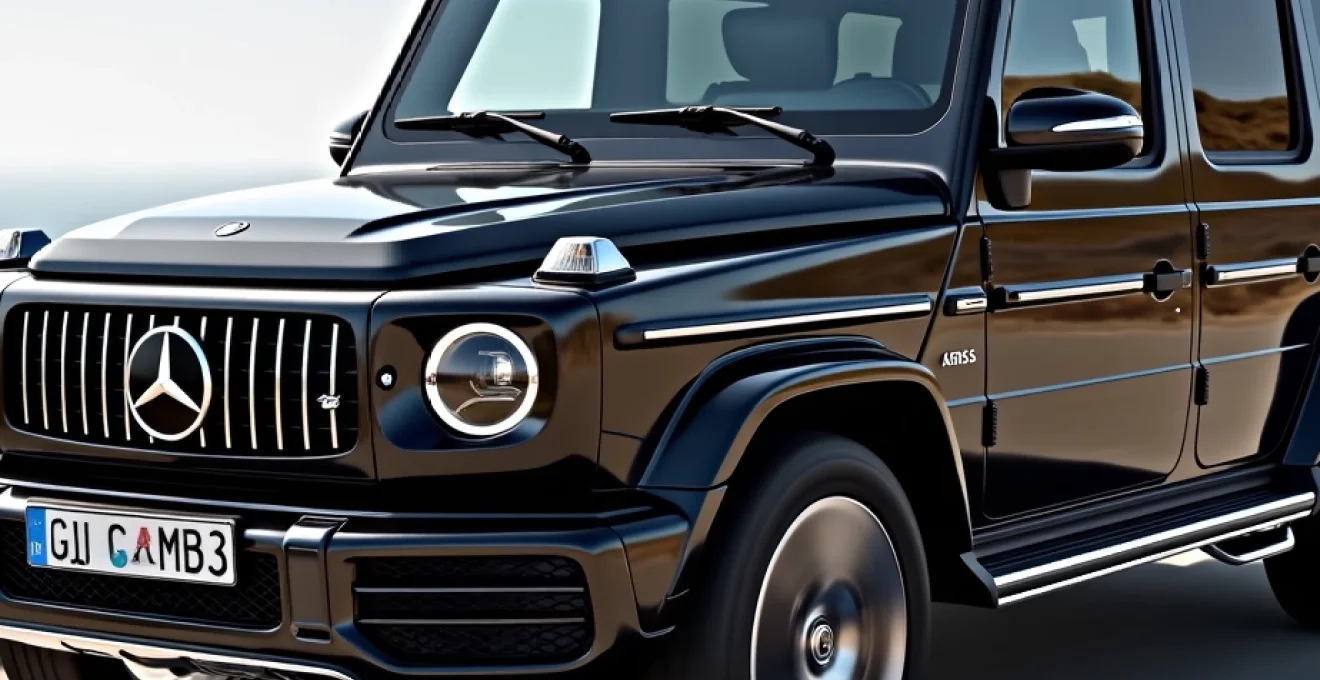
The Mercedes-Benz G-Class 2017 stands as one of the most polarising vehicles in the luxury SUV segment, commanding respect and criticism in equal measure. This iconic German off-roader, known colloquially as the G-Wagon, represents a fascinating paradox in automotive engineering – a military-derived utility vehicle transformed into a luxury statement piece. With its distinctive angular design language and uncompromising mechanical prowess, the 2017 G-Class continues a four-decade legacy of combining rugged capability with premium refinement.
Despite its controversial aesthetic and agricultural handling characteristics, the G-Class experienced remarkable commercial success in 2016, with sales increasing by 20 percent globally. This surge in popularity prompted Mercedes-Benz to implement significant mechanical refinements for the 2017 model year, including enhanced suspension systems, updated powertrains, and revised interior appointments. Understanding the nuances of the 2017 G-Class becomes essential for prospective buyers considering this unique proposition in the luxury SUV marketplace.
Mercedes-benz G-Class 2017 engine specifications and performance analysis
The 2017 Mercedes-Benz G-Class lineup presents buyers with three distinct powertrain configurations, each designed to satisfy different performance requirements and budget considerations. This comprehensive engine selection demonstrates Mercedes-Benz’s commitment to providing varied performance characteristics within the G-Class family, ranging from the relatively modest G 550 to the extraordinary G 65 AMG powerhouse.
AMG G 63 6.0L V8 biturbo powertrain assessment
The Mercedes-AMG G 63 represents the sweet spot in the 2017 G-Class performance hierarchy, featuring a hand-built 5.5-litre V8 biturbo engine that produces 563 horsepower and an impressive 560 lb-ft of torque. This powerplant enables the substantial G-Wagon to accelerate from standstill to 100 km/h in approximately 5.4 seconds, a remarkable achievement considering the vehicle’s considerable kerb weight of over 2,400 kilograms. The AMG-tuned engine delivers its power through a sophisticated exhaust note that transforms the utilitarian G-Class into an emotionally engaging driving experience.
However, the G 63’s performance capabilities come with significant fuel consumption penalties. Real-world testing reveals average fuel consumption figures approaching 18-20 litres per 100 kilometres in mixed driving conditions, with urban consumption potentially exceeding 25 litres per 100 kilometres during spirited driving. This thirsty nature reflects the engine’s substantial displacement and the vehicle’s challenging aerodynamic profile, characterised by a coefficient of drag measuring 0.54.
G 550 4.0L V8 Twin-Turbo engine configuration
The G 550 serves as the entry point into the 2017 G-Class range, equipped with Mercedes-AMG’s newly developed 4.0-litre V8 biturbo engine producing 416 horsepower and 450 lb-ft of torque. This powerplant represents a significant technological advancement over previous G-Class engines, incorporating advanced turbocharging technology and direct injection systems to optimise both performance and efficiency. The engine’s relatively compact dimensions and reduced displacement contribute to improved weight distribution compared to larger displacement alternatives.
Performance figures for the G 550 remain impressive despite being the least powerful variant, achieving 0-100 km/h acceleration in under six seconds. The engine’s torque delivery characteristics provide excellent mid-range performance, essential for both highway overtaking manoeuvres and off-road applications where low-end torque proves crucial for navigating challenging terrain.
7G-TRONIC PLUS automatic transmission system
All 2017 G-Class variants employ Mercedes-Benz’s 7G-TRONIC PLUS seven-speed automatic transmission, which provides smooth power delivery and optimised gear ratios for various driving conditions. The transmission features multiple driving modes, including Comfort, Sport, and Manual settings, allowing drivers to tailor the gearbox behaviour to their preferences. The system incorporates sophisticated shift logic that adapts to driving patterns and road conditions, optimising fuel efficiency during normal operation while providing rapid gear changes during aggressive acceleration.
The transmission’s torque converter design accommodates the substantial power outputs of AMG variants whilst maintaining refinement during low-speed manoeuvring. However, the gearbox occasionally exhibits hesitation during rapid throttle inputs, particularly when transitioning between driving modes. This characteristic becomes more pronounced in stop-and-go traffic situations where the transmission’s adaptive logic struggles to predict driver intentions.
4MATIC All-Wheel drive differential lock mechanism
The G-Class’s legendary off-road capability stems from its sophisticated 4MATIC all-wheel drive system, enhanced by three independently lockable differentials – front, rear, and centre. This configuration enables the G-Class to maintain traction in extremely challenging conditions where conventional all-wheel drive systems would fail. The differential lock system operates through electronic controls located in the cabin, allowing drivers to engage locks progressively based on terrain requirements.
When all three differentials are locked, the G-Class transforms into a virtual unstoppable force capable of climbing steep gradients and traversing obstacles that would challenge dedicated off-road vehicles. The system’s mechanical simplicity ensures reliability in harsh conditions, though it requires careful operation on paved surfaces to prevent drivetrain damage and excessive tyre wear.
G-wagon 2017 interior technology and luxury features evaluation
The 2017 G-Class interior represents a careful balance between traditional design elements and contemporary luxury appointments. Mercedes-Benz designers faced the challenge of modernising the cabin whilst preserving the utilitarian character that defines the G-Class identity. The result showcases premium materials and advanced technology systems integrated within a fundamentally functional layout that reflects the vehicle’s military heritage.
COMAND online infotainment system interface
The 2017 G-Class features Mercedes-Benz’s COMAND Online infotainment system, displayed through an 8-inch central screen that serves as the hub for entertainment, navigation, and vehicle settings. The system incorporates internet connectivity capabilities, enabling real-time traffic updates, weather information, and access to various online services. However, the interface design feels somewhat dated compared to contemporary Mercedes-Benz products, lacking the intuitive operation and visual sophistication found in newer MBUX systems.
Navigation functionality includes off-road specific features such as compass displays and inclinometer readings, acknowledging the G-Class’s adventurous capabilities. The system’s voice recognition technology provides hands-free operation for common functions, though accuracy can be inconsistent in noisy environments or when using complex commands.
designo leather upholstery and trim options
Premium interior appointments distinguish the 2017 G-Class from utilitarian competitors, with designo leather upholstery available in various colour combinations to suit individual preferences. The leather quality demonstrates exceptional grain patterns and suppleness, befitting the vehicle’s luxury positioning. Seat surfaces feature diamond quilting patterns that enhance visual appeal whilst providing improved comfort during extended journeys.
Trim options include genuine wood veneers, carbon fibre inserts, and brushed aluminium accents, allowing buyers to personalise their G-Class interior aesthetic. However, some interior elements retain distinctly functional characteristics, including the cup holder mounted on the transmission tunnel sidewall, serving as a reminder of the vehicle’s utilitarian origins.
Harman kardon logic 7 surround sound configuration
Audio enthusiasts can specify the optional Harman Kardon Logic 7 surround sound system, featuring 12 strategically positioned speakers and a 240-watt amplifier. The system delivers impressive audio quality considering the G-Class’s challenging acoustic environment, characterised by substantial wind and road noise at highway speeds. Digital signal processing helps compensate for the cabin’s boxy dimensions and hard surface materials.
Sound staging proves particularly effective during low-speed operation, though wind noise intrusion becomes problematic above 80 km/h due to the vehicle’s poor aerodynamic properties. The system includes various sound presets optimised for different musical genres, though custom equalisation options remain limited compared to premium audio systems in competing luxury SUVs.
Climate control and ambient lighting package
Dual-zone automatic climate control comes standard across the 2017 G-Class range, providing independent temperature settings for driver and passenger areas. The system incorporates air quality sensors and automatic recirculation functions to maintain cabin air purity in challenging environments. However, the climate control’s effectiveness can be compromised by the vehicle’s large glass areas and limited insulation, requiring higher fan speeds to maintain comfortable temperatures in extreme conditions.
Optional ambient lighting packages enhance the interior atmosphere during evening driving, with LED strips integrated into door panels, dashboard trim, and footwell areas. Multiple colour options allow personalisation of the lighting scheme, though the effect appears less sophisticated than similar systems in contemporary Mercedes-Benz products due to the G-Class’s angular interior architecture.
2017 G-Class Off-Road capability and chassis engineering
The 2017 Mercedes-Benz G-Class maintains its position as one of the most capable production off-road vehicles available, thanks to fundamental engineering decisions that prioritise capability over on-road refinement. The chassis architecture remains largely unchanged from the original military specification, featuring solid axles front and rear, extensive ground clearance, and robust construction designed to withstand extreme operating conditions.
Ground clearance measures an impressive 235 millimetres , whilst approach and departure angles of 31 degrees and 30 degrees respectively enable the G-Class to tackle steep inclines and obstacles that would challenge conventional SUVs. The vehicle’s wading depth reaches 600 millimetres, allowing confident navigation through substantial water crossings. These specifications place the G-Class among the most capable production vehicles for serious off-road adventures.
The solid axle configuration provides several advantages for off-road operation, including exceptional articulation capability and robust construction that resists damage from impacts with rocks or debris. However, this design choice significantly compromises on-road ride quality and handling precision compared to independent suspension systems used by most luxury SUVs. The trade-off becomes particularly apparent during highway driving, where the live axles contribute to a bouncing, unsettled ride quality that some drivers find objectionable.
The G-Class transforms novice off-road drivers into apparent experts through its exceptional traction and stability systems, making seemingly impossible obstacles appear manageable with minimal driver skill required.
Electronic assistance systems enhance the G-Class’s natural off-road prowess, including hill descent control that automatically regulates speed during steep downhill sections and various traction control modes optimised for different surface conditions. These systems work in conjunction with the differential locks to provide virtually unstoppable traction in challenging conditions. Even experienced off-road drivers frequently express amazement at the G-Class’s ability to maintain forward progress in conditions that would stop most other vehicles.
The 2017 model year brought suspension refinements aimed at reducing body roll during cornering without compromising off-road capability. Adaptive dampers adjust firmness based on driving conditions and selected drive modes, providing a more controlled on-road experience whilst maintaining the compliance necessary for off-road operation. Despite these improvements, the G-Class handling characteristics remain distinctly truck-like, requiring constant steering corrections and exhibiting substantial body movement during directional changes.
Mercedes G-Class 2017 safety systems and driver assistance technologies
Safety equipment in the 2017 G-Class reflects the vehicle’s dual nature as both luxury conveyance and serious off-road tool. Standard passive safety features include multiple airbags, reinforced passenger cell construction, and energy-absorbing crumple zones adapted to accommodate the vehicle’s ladder-frame chassis. However, the G-Class’s high centre of gravity and substantial weight present unique challenges for crash protection systems.
Electronic stability control works overtime to manage the G-Class’s inherent tendency toward body roll and weight transfer during aggressive manoeuvring. The system incorporates rollover mitigation technology that can apply individual wheel braking and reduce engine power when sensors detect potentially dangerous vehicle attitudes. Despite these safeguards, the G-Class’s high centre of gravity makes it more susceptible to rollover incidents compared to lower-sitting luxury SUVs.
Driver assistance technologies remain relatively basic compared to contemporary Mercedes-Benz products, reflecting the G-Class’s position as an older design adapted with modern convenience features. Available systems include blind spot monitoring, rear-view camera, and parking distance sensors. However, advanced features such as autonomous emergency braking, adaptive cruise control, and lane keeping assistance are either unavailable or offered as expensive optional equipment.
Visibility challenges plague the 2017 G-Class due to its upright seating position, thick pillars, and external spare tyre mounted on the rear door. The rear-view mirror provides limited utility due to the spare tyre obstruction, making the rear-view camera system essential for safe reversing manoeuvres. Side visibility suffers from small window openings and thick door frames, though the elevated driving position provides excellent forward vision in most circumstances.
Despite modern safety enhancements, the G-Class demands greater driver awareness and skill compared to conventional luxury SUVs, particularly during emergency manoeuvres where its truck-like dynamics become apparent.
G-wagon 2017 market pricing and depreciation analysis
The 2017 Mercedes-Benz G-Class commanded premium pricing that reflected both its exclusivity and hand-built construction at the Magna Steyr facility in Graz, Austria. Launch pricing positioned the G 550 as the entry point at approximately £90,000, whilst AMG variants commanded significantly higher prices reaching well into six-figure territory. These prices placed the G-Class among the most expensive SUVs available, competing directly with luxury offerings from Bentley and Land Rover’s Range Rover SVAutobiography.
Depreciation patterns for the 2017 G-Class differ markedly from conventional luxury SUVs due to the vehicle’s unique positioning and limited production numbers. Initial depreciation rates proved relatively modest, with well-maintained examples typically retaining 70-75 percent of their original value after the first year. This strong residual performance stems from consistent demand and the G-Class’s reputation for longevity and capability.
Market analysis reveals that AMG variants, particularly the G 63, demonstrate superior depreciation resistance compared to the base G 550 model. Buyers gravitate toward the enhanced performance and exclusivity offered by AMG models, creating stronger resale demand. Limited edition variants and models with desirable option packages command premium pricing in the used market, sometimes approaching or exceeding original retail prices for particularly rare configurations.
Regional variations significantly impact pricing and availability, with urban markets showing stronger demand for G-Class vehicles as status symbols rather than utilitarian tools. This phenomenon creates interesting pricing disparities where well-maintained examples in metropolitan areas command higher prices than similar vehicles in rural locations where off-road capability receives greater appreciation than luxury appointments.
Common mechanical issues and maintenance requirements for 2017 G-Class models
The 2017 G-Class generally demonstrates robust mechanical reliability, though certain components require attention due to the vehicle’s complex engineering and harsh operating environments. Air suspension systems, where fitted, represent the most common source of mechanical problems, with air springs and compressor units showing vulnerability to contamination and wear. Replacement costs for air suspension components can exceed £2,000 per corner, making this system a significant long-term ownership consideration.
Electrical systems occasionally present challenges, particularly in vehicles equipped with extensive option packages. The G-Class’s complex wiring harnesses, necessitated by the integration of luxury features into a fundamentally utilitarian platform, create potential failure points that can be expensive to diagnose and repair. Common electrical issues include malfunctioning door locks, intermittent infotainment system problems, and sensor failures related to the differential lock system.
Transmission maintenance proves crucial for long-term reliability, with the 7G-TRONIC PLUS gearbox requiring fluid changes every 80,000 kilometres under normal conditions or more frequently for vehicles subjected to severe duty cycles. Transmission replacement costs can exceed £8,000, making preventive maintenance essential. The transmission’s complexity requires specialised diagnostic equipment found primarily at Mercedes-Benz dealerships or qualified independent specialists.
- Brake system components experience accelerated wear due to the vehicle’s substantial weight, with front brake pads typically requiring replacement every 25,000-30,000 kilometres
- Differential and transfer case servicing becomes critical for vehicles used in off-road conditions, requiring specialised lubricants and careful attention to seal integrity
- Engine cooling systems demand regular attention due to the challenging thermal environment created by turbocharging and the vehicle’s poor aerodynamic characteristics
- Tyre wear patterns often reveal alignment issues caused by the solid axle suspension geometry and aggressive off-road use
Routine maintenance costs for the
2017 G-Class reflect the vehicle’s premium positioning, with annual servicing costs typically ranging between £1,500-£3,000 depending on required work and chosen service provider. Mercedes-Benz dealership rates command premium pricing but offer specialised knowledge and genuine parts availability. Independent specialists familiar with G-Class vehicles can provide cost-effective alternatives whilst maintaining service quality, though parts availability may occasionally present delays.
Long-term ownership costs escalate significantly for vehicles approaching 100,000 kilometres, as major components such as air suspension systems, transmission assemblies, and differential units reach service intervals requiring substantial investment. Prospective buyers should budget approximately £3,000-£5,000 annually for maintenance and repairs beyond the initial warranty period, with costs potentially doubling for vehicles subjected to extensive off-road use or inadequate maintenance histories.
The 2017 Mercedes-Benz G-Class represents a unique proposition in the luxury SUV marketplace, combining unparalleled off-road capability with premium appointments in a package that defies conventional automotive logic. Its polarising nature ensures strong emotional reactions from enthusiasts and critics alike, yet consistent sales growth demonstrates enduring market appeal for those seeking exclusivity and capability in equal measure.
While the G-Class demands compromises in fuel economy, on-road refinement, and acquisition costs, it delivers experiences unavailable elsewhere in the automotive landscape. The 2017 model year’s refinements address some traditional weaknesses whilst preserving the fundamental character that defines this automotive icon. For buyers prioritising uniqueness, capability, and luxury over conventional practicality, the 2017 G-Class remains an compelling choice that continues to justify its controversial existence through sheer force of character.