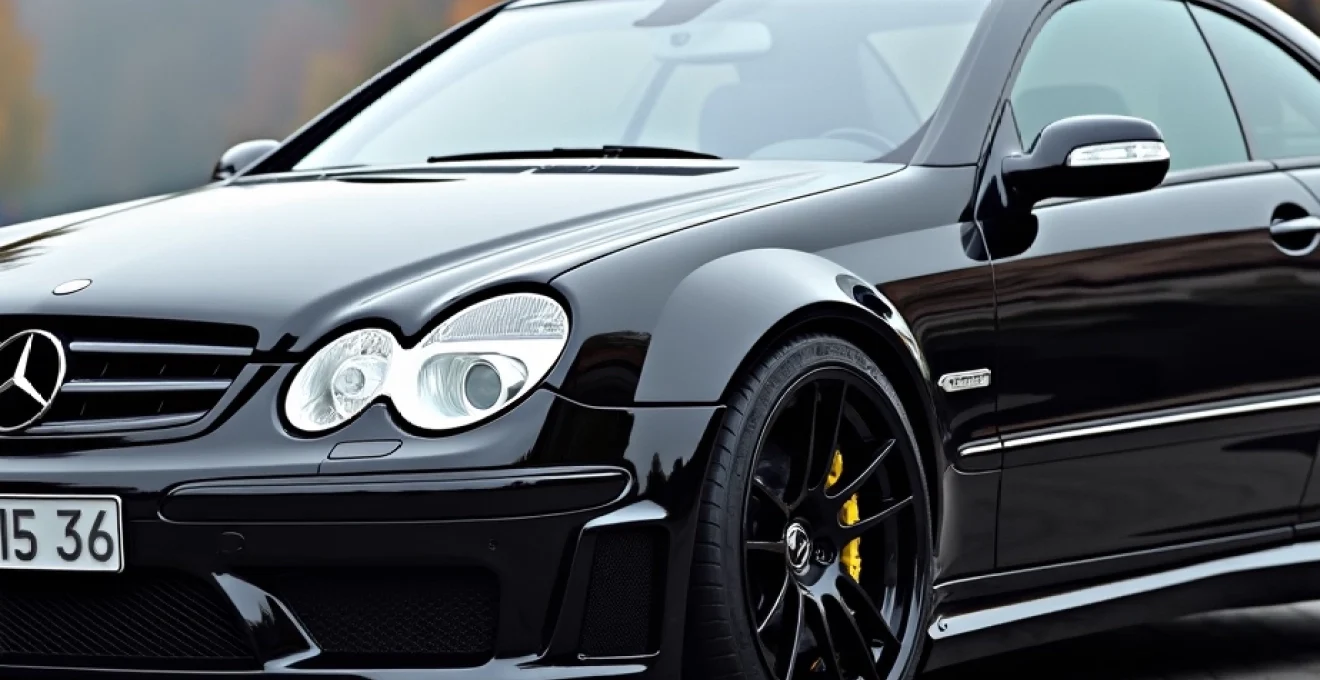
The Mercedes CLK Black Series represents one of the most uncompromising expressions of AMG’s engineering philosophy during the mid-2000s era. This extraordinary machine emerged from Affalterbach’s workshops as a testament to pure performance, combining raw power with track-focused dynamics in a package that redefined what a luxury coupe could achieve. With only 500 examples ever produced, the CLK Black Series has become a coveted collector’s piece that embodies the golden age of naturally aspirated AMG engines.
Beyond its limited production numbers, the CLK Black Series stands as a pivotal moment in Mercedes-AMG’s evolution. It showcased the brand’s commitment to creating vehicles that prioritised driver engagement over comfort, marking a departure from traditional Mercedes luxury philosophy. This machine represented AMG’s bold statement that performance could be uncompromising, even within the context of a Mercedes-Benz coupe. The vehicle’s significance extends beyond its specifications, serving as a bridge between AMG’s tuning house origins and its modern identity as a fully-integrated performance division.
Mercedes CLK black series evolution and model lineage
CLK 55 AMG black series C209 generation development
The CLK Black Series lineage began with the SLK55 AMG Black Series in 2006, which served as AMG’s initial exploration into creating track-focused variants of existing models. This predecessor established the fundamental philosophy that would define the Black Series approach: maximum performance through weight reduction, aerodynamic enhancement, and powertrain optimisation . The SLK55 Black Series featured a naturally aspirated 5.4-litre V8 producing 400 horsepower, demonstrating AMG’s commitment to atmospheric engines during an era increasingly dominated by forced induction.
The transition from SLK to CLK represented a significant scaling up of the Black Series concept. While the SLK Black Series targeted compact roadster enthusiasts, the CLK Black Series aimed to challenge established performance benchmarks like the Porsche 911 GT3. This ambitious goal required extensive re-engineering of the standard CLK63 AMG platform, transforming it from a grand touring coupe into a track-capable weapon. The development process involved collaboration between AMG’s performance engineers and external specialists, ensuring every component met the demanding requirements of track-focused driving.
CLK 63 AMG black series C209 final production specifications
The CLK63 AMG Black Series emerged as the definitive expression of the C209 platform’s potential. AMG engineers increased the M156 engine’s output from 474 horsepower in the standard CLK63 to 507 horsepower, achieved through enhanced intake and exhaust systems, revised engine management, and optimised internal components. The power increase represented more than simple tuning; it required comprehensive re-engineering of supporting systems to handle the additional stress and thermal loads.
Performance figures reflected the substantial engineering investment, with the Black Series achieving a 0-62 mph time of 4.2 seconds and a limited top speed of 186 mph. These numbers placed it firmly in supercar territory, yet the vehicle maintained the refinement expected from a Mercedes-Benz product. The engineering achievement becomes more impressive when considering the vehicle’s 1,760-kilogram kerb weight, which remained unchanged from the standard CLK63 despite extensive modifications.
AMG performance studio engineering philosophy
The Black Series programme represented AMG’s philosophy of creating vehicles that prioritised pure driving experience over comfort and convenience . This approach manifested in numerous design decisions that would be considered extreme by contemporary luxury car standards. The removal of rear seats, installation of fixed racing buckets, and extensive use of carbon fibre demonstrated AMG’s commitment to weight reduction and performance enhancement, even at the expense of practicality.
AMG’s engineering team approached the Black Series development with the mindset of creating a road-legal race car rather than a comfortable grand tourer. This philosophy influenced every aspect of the vehicle, from the track-tuned suspension setup to the aggressive aerodynamic package. The result was a machine that demanded driver skill and commitment, rewarding those who understood its capabilities while punishing those who didn’t respect its limits.
Limited production numbers and manufacturing timeline
Mercedes-AMG deliberately limited CLK Black Series production to 500 units worldwide, with only 25 examples configured for right-hand-drive markets. This exclusive production run ensured the model’s collectibility while allowing AMG to maintain strict quality control throughout the manufacturing process. Each vehicle required extensive hand-assembly, with skilled technicians spending significantly more time on each Black Series compared to standard production models.
The manufacturing timeline spanned from 2007 to 2009, coinciding with the global financial crisis that affected luxury car sales worldwide. Despite challenging market conditions, demand for the Black Series remained strong among collectors and enthusiasts who recognised its significance. The limited production run has contributed to the model’s strong residual values, with examples often trading for their original retail price or higher in today’s collector car market.
Hand-built M156 V8 engine technical architecture
6.2-litre naturally aspirated V8 internal components
The M156 engine represented AMG’s first completely in-house developed powerplant, marking a significant milestone in the division’s evolution from tuning house to full manufacturer. This 6.2-litre naturally aspirated V8 featured a cross-plane crankshaft configuration that provided the distinctive AMG exhaust note while maintaining optimal power delivery characteristics. The engine’s architecture incorporated advanced materials and manufacturing techniques, including forged aluminium pistons and a lightweight crankshaft designed to withstand the stresses of high-performance operation.
Internal components reflected race-inspired engineering principles, with strengthened connecting rods, enhanced bearing surfaces, and optimised oil circulation passages. The cylinder heads featured four valves per cylinder operated by dual overhead camshafts, allowing for precise valve timing and optimal airflow characteristics. Each engine underwent extensive testing and calibration, ensuring consistent performance across all production units while maintaining the reliability expected from Mercedes-Benz products.
Dry sump lubrication system configuration
The Black Series featured a sophisticated dry sump lubrication system that provided consistent oil pressure under extreme driving conditions. This system differed significantly from conventional wet sump designs, utilising a separate oil tank and multiple scavenge pumps to maintain oil circulation during high-g cornering and braking situations. The dry sump configuration also lowered the engine’s centre of gravity by allowing a reduced oil pan height, contributing to improved vehicle dynamics.
The lubrication system’s complexity required specialised maintenance procedures, as evidenced by service experiences where technicians unfamiliar with the system failed to properly drain all oil during changes. The main oil cooler could retain 1-2 litres of oil even after standard drain procedures, highlighting the importance of using qualified AMG specialists for maintenance. This complexity was justified by the system’s superior performance under track conditions, where conventional lubrication might fail.
Variable intake manifold and throttle body design
AMG engineers developed a sophisticated variable intake manifold system for the Black Series, optimising airflow characteristics across the engine’s entire rev range. The system featured electronically controlled runner length variation , allowing the engine to maximise torque at low RPMs while maintaining peak power at high engine speeds. This technology represented cutting-edge engineering for its era, providing the broad powerband characteristic that made the M156 so engaging to drive.
The throttle body design incorporated drive-by-wire technology with precise calibration for immediate throttle response. Unlike many contemporary systems that prioritised smoothness over responsiveness, the Black Series calibration provided direct connection between accelerator input and engine output. This approach aligned with the vehicle’s track-focused philosophy, giving drivers the precise control needed for performance driving situations.
AMG SPEEDSHIFT 7G-TRONIC transmission integration
The seven-speed automatic transmission represented a compromise between performance requirements and usability expectations. While many enthusiasts would have preferred a manual transmission, the 7G-TRONIC provided faster shift speeds and better consistency than human operation could achieve. The system featured paddle shifters mounted to the steering wheel, allowing drivers to maintain manual control over gear selection while benefiting from optimised shift programming.
Transmission calibration prioritised performance over comfort, with firm shifts and aggressive downshift programming. The system could be operated in fully automatic mode for relaxed driving or manual mode for maximum driver control. Despite criticism regarding shift speed compared to modern dual-clutch systems, the 7G-TRONIC provided reliable operation and adequate performance for its era, though it remains the Black Series’ most dated component by contemporary standards.
Carbon fibre aerodynamic package and weight reduction
Front splitter and canards downforce generation
The Black Series aerodynamic package represented a comprehensive approach to high-speed stability and cornering performance. The front splitter extended significantly beyond the standard CLK’s bumper line, creating substantial downforce while directing airflow around the vehicle’s flanks. Carbon fibre canards positioned at the splitter’s outer edges further enhanced downforce generation while providing visual drama that announced the car’s serious performance intentions.
Wind tunnel testing validated the aerodynamic modifications’ effectiveness, with the complete package generating measurable downforce at speeds above 80 mph. The front splitter’s aggressive design required careful attention to approach angles and speed bumps, reflecting the vehicle’s track-focused priorities over everyday usability. The carbon fibre construction provided strength while minimising weight addition, demonstrating AMG’s commitment to maintaining optimal weight distribution.
Rear wing adjustment mechanisms and angles
The rear aerodynamic treatment included a prominent boot lid spoiler and integrated diffuser that worked together to manage airflow separation and create rear downforce. The spoiler’s carbon fibre construction matched the front aerodynamic elements while providing adjustability for different driving conditions. Track enthusiasts could modify the wing angle to suit specific circuits, though most owners likely maintained the factory settings optimised for balanced performance.
The rear diffuser incorporated the exhaust outlets while managing underbody airflow to reduce drag and enhance stability. This component required precise manufacturing to achieve optimal aerodynamic performance, with any imperfections potentially disrupting the carefully designed airflow patterns. The integration of functional aerodynamics with visual drama exemplified AMG’s approach to the Black Series programme.
Side skirt underbody airflow management
Extended side skirts served dual purposes in the Black Series design, providing visual continuity with the widened wheel arches while managing airflow along the vehicle’s flanks. These components incorporated functional vents that allowed brake cooling air to escape while preventing turbulence that could affect high-speed stability. The underbody airflow management system represented sophisticated aerodynamic engineering disguised within aggressive visual styling.
The side skirts’ low mounting position made them vulnerable to damage from aggressive driving over kerbs or rough surfaces. This fragility reflected the Black Series’ track-focused priorities, where aerodynamic efficiency took precedence over durability concerns. Replacement costs for damaged carbon fibre components could be substantial, adding to the vehicle’s exotic ownership experience.
Lightweight body panel material composition
Despite extensive modifications, the Black Series maintained the same kerb weight as the standard CLK63 AMG through strategic use of lightweight materials. Carbon fibre components replaced conventional body panels wherever possible, including the front wings, which were constructed from lightweight composite materials rather than steel. This material substitution offset the weight of additional aerodynamic components and structural reinforcements.
The carbon fibre panels required specialised repair techniques and materials, making accident damage potentially expensive to rectify. However, the weight savings justified the additional complexity and cost, allowing AMG to enhance performance without compromising the vehicle’s power-to-weight ratio. The visible carbon fibre elements also provided visual evidence of the Black Series’ exotic construction methods.
Advanced suspension and chassis dynamics
The Black Series chassis modifications represented perhaps the most significant departure from standard CLK specifications. AMG engineers developed a completely bespoke suspension system featuring manually adjustable dampers and springs, allowing owners to tailor the vehicle’s behaviour to specific driving conditions or personal preferences. The system offered adjustability in compression, rebound, and ride height, providing a level of customisation typically reserved for race cars.
Track width increases of 75mm at the front and 66mm at the rear required new suspension geometry and components throughout. These modifications necessitated the distinctive flared wheel arches that became the Black Series’ visual signature. The wider track provided enhanced stability and cornering capability while accommodating the massive 285/30 ZR19 rear tyres that delivered the grip necessary to utilise the M156 engine’s power output.
The suspension calibration prioritised track performance over comfort, resulting in a firm ride that could feel harsh on poor road surfaces. However, the system’s adjustability allowed owners to find compromise settings suitable for road use while maintaining the capability for track-focused setups. The manual adjustment requirement meant that changes required tools and time, reinforcing the vehicle’s serious performance credentials.
Braking performance matched the enhanced chassis capabilities, with larger discs and more aggressive pad compounds providing the stopping power necessary for track use. The brake cooling ducts integrated into the front aerodynamic package directed cooling air to the discs, preventing fade during extended high-performance driving. The system’s track-focused calibration could feel grabby during normal driving but provided exceptional performance when pushed to its limits.
Track-focused interior configuration and safety systems
The Black Series interior represented a radical departure from Mercedes-Benz luxury traditions, prioritising function over comfort in every design decision. The removal of rear seats created additional storage space while reducing weight, though the weight savings were minimal due to the extensive trim panels required to finish the modified interior properly. Fixed-back Recaro bucket seats replaced the standard CLK’s comfort-oriented seating, providing superior lateral support during high-performance driving at the expense of adjustment capability.
Carbon fibre trim elements throughout the cabin reinforced the vehicle’s performance focus while providing visual continuity with the exterior aerodynamic components. The flat-bottomed steering wheel incorporated the necessary controls while allowing easier entry and exit from the low-mounted bucket seats. These modifications created an interior environment that constantly reminded occupants of the vehicle’s special nature, even during mundane driving situations.
Safety systems reflected 2007-era technology, with the Electronic Stability Program (ESP) offering simple on/off operation without intermediate sport modes. This binary approach aligned with the Black Series philosophy of providing drivers with maximum control over the vehicle’s behaviour. When disabled, the ESP allowed experienced drivers to explore the limits of the chassis and powertrain combination, though it demanded respect and skill to manage safely.
The interior’s track-focused modifications extended to details like the removal of convenience features and the installation of additional gauges for monitoring engine parameters. These changes created an environment that encouraged spirited driving while providing the information necessary for performance monitoring. However, the modifications also meant that the Black Series was less suitable for long-distance touring compared to standard CLK models.
Current market valuation and investment potential analysis
The CLK Black Series has demonstrated remarkable value retention since production ended in 2009, with examples regularly trading for their original retail price or higher. This performance reflects the model’s significance within AMG history and its limited production numbers, which have created strong demand among collectors and enthusiasts. Current market values typically range from £100,000 to £150,000 depending on mileage, condition, and specification, representing stable or appreciating values over the past decade.
Several factors contribute to the Black Series’ strong market position, including its status as the last naturally aspirated AMG V8 in this configuration and its limited production run. The vehicle represents a particular moment in automotive history when manufacturers could still produce uncompromising performance cars without extensive electronic intervention. This historical significance has become increasingly important as modern performance cars incorporate more sophisticated but less engaging technologies.
Investment potential remains strong for well-maintained examples, particularly those with comprehensive service histories and original specifications. The vehicle’s complexity means that deferred maintenance can be expensive, making documented care essential for value preservation. Examples that have been modified or track-used extensively may face value penalties, as collectors typically prefer original configurations with evidence of careful ownership.
Market trends suggest continued appreciation for significant AMG models from this era, particularly as newer generations move toward hybridisation and electrification. The Black Series represents the culmination of traditional AMG philosophy, making it increasingly relevant as the brand evolves toward different performance paradigms. For enthusiasts seeking to own a piece of AMG history, the CLK Black Series offers both driving satisfaction and reasonable investment security, provided they understand the commitment required for proper ownership and maintenance.