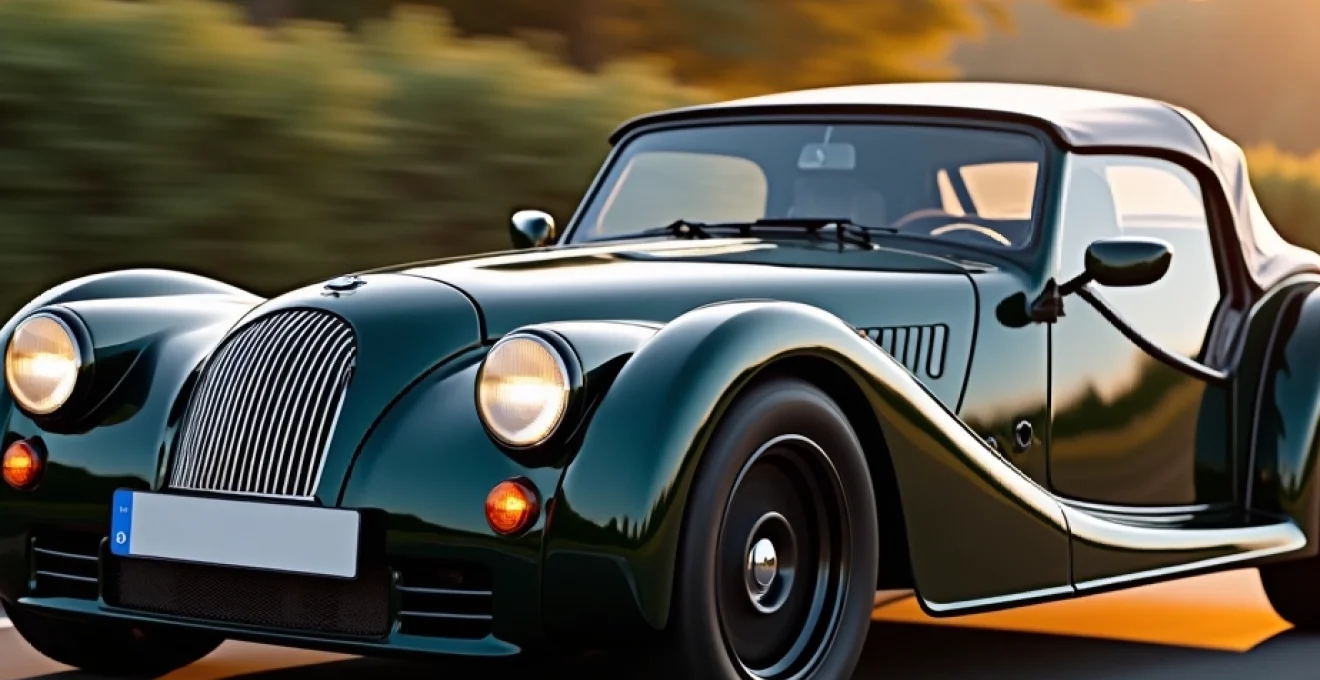
The Morgan Aero 8 stands as one of the most significant developments in the storied history of Britain’s oldest independent car manufacturer. Launched at the Geneva Motor Show in 2000, this revolutionary sports car marked Morgan’s bold departure from decades of traditional construction methods whilst maintaining the company’s distinctive aesthetic DNA. The Aero 8 represented not merely an evolution but a complete paradigm shift, incorporating cutting-edge BMW powertrains, advanced aluminium chassis technology, and sophisticated suspension systems wrapped in a controversial yet unmistakably Morgan body shell.
What makes the Aero 8 particularly compelling for today’s collectors and driving enthusiasts is its unique position as a bridge between Morgan’s artisanal heritage and modern automotive engineering. With production spanning from 2001 to 2019 across five distinct series, the model offers prospective buyers a fascinating array of specifications, performance levels, and collectibility factors. Understanding these nuances becomes crucial when navigating the current market, where pristine examples command premiums exceeding their original retail prices.
Morgan aero 8 evolution: series 1 through series 5 technical specifications
The first-generation Aero 8, produced from 2001 to 2004, established the foundational architecture that would define the model throughout its production run. This initial Series 1 variant featured BMW’s N62 4.4-litre V8 engine producing 286 brake horsepower, paired exclusively with a six-speed Getrag manual transmission. The controversial ‘cross-eyed’ appearance, created by incorporating Volkswagen New Beetle headlights, generated significant discussion among automotive journalists and enthusiasts alike. Despite the polarising aesthetics, the engineering underneath represented a quantum leap forward for Morgan, with the world’s first automotive application of Alcan pre-coated aluminium in a bonded chassis structure.
BMW V8 engine variants: 4.4L N62 vs 4.8L performance analysis
The transition from the original 4.4-litre N62 engine to subsequent variants marked significant performance milestones in Aero 8 development. Series 1 models delivered their 286 horsepower through a torque curve optimised for road driving, with peak torque of 440 Nm available from 3,600 rpm. This configuration enabled the 1,145kg sports car to achieve the benchmark 0-60mph sprint in 4.8 seconds, with a theoretical maximum velocity of 160mph. The N62’s lightweight construction, featuring Alusil cylinder liners and Valvetronic variable valve timing, contributed significantly to the Aero 8’s impressive power-to-weight ratio.
Series 2 and 3 models received the enhanced N62 variant producing 325 horsepower, whilst the Series 4 introduced BMW’s larger 4.8-litre N62B48 unit generating 362 horsepower. This final naturally-aspirated configuration represented the pinnacle of BMW’s traditional V8 development before the manufacturer’s transition to turbocharged architectures. The increased displacement and refined engine management systems delivered more linear power delivery and improved throttle response, characteristics particularly appreciated by driving purists who valued the immediate connection between accelerator input and engine output.
Aluminium space frame construction and carbon fibre body panel integration
Morgan’s collaboration with Radshape Engineering in Birmingham resulted in revolutionary chassis construction techniques that influenced the entire automotive industry. The bonded aluminium space frame utilised aerospace-grade adhesives and mechanical fasteners to create a structure weighing just 75kg whilst achieving torsional rigidity figures comparable to contemporary steel monocoque designs. This weight saving proved crucial to the Aero 8’s dynamic capabilities, allowing the relatively modest power outputs to deliver supercar-level performance figures.
The body panel manufacturing process represented equally significant innovation, with Superform Technologies in Worcester developing the superplastic forming techniques used to create the complex aluminium outer panels. Heated to 400°C and formed using compressed air pressure, these panels achieved dimensional accuracy impossible through traditional hand-beating methods whilst maintaining the subtle surface quality that distinguished Morgan craftsmanship. Later Series 4 and 5 models incorporated selective carbon fibre reinforcement in high-stress areas, further reducing weight whilst maintaining structural integrity.
Six-speed manual transmission: getrag 420G technical overview
The Getrag 420G six-speed manual transmission served as the primary interface between BMW’s sophisticated V8 engines and the Aero 8’s rear differential throughout the model’s production run. This robust unit, also employed in BMW’s own high-performance applications, featured closely-spaced ratios optimised for spirited driving rather than fuel economy considerations. First gear provided adequate launch capability for the lightweight chassis, whilst the overdrive sixth gear enabled relaxed high-speed touring despite the Aero 8’s fundamentally sporting character.
Synchronisation quality remained consistently high throughout the transmission’s operating life, though early Series 1 examples occasionally exhibited minor shift quality issues under aggressive use. These concerns were largely addressed through revised gear lever geometry and improved shift linkage bushings in subsequent series. The mechanical limited-slip differential, sourced from BMW’s M-division parts catalogue, provided predictable handling characteristics whilst maintaining sufficient lock-up to exploit the available power effectively.
Independent suspension setup: bilstein dampers and Anti-Roll bar configuration
The all-independent suspension system represented perhaps the most significant departure from traditional Morgan practice, abandoning the marque’s characteristic solid rear axle in favour of sophisticated double-wishbone arrangements front and rear. Bilstein monotube dampers, individually calibrated for Morgan’s specific application, provided damping control optimised for British road conditions whilst maintaining the direct feedback characteristics expected from a sporting machine. The inboard spring and damper mounting arrangement, inspired by Formula 1 practice, allowed for precise geometry control whilst packaging efficiently within the Aero 8’s sleek bodywork.
Anti-roll bar diameters were carefully matched to the spring rates and damper settings to achieve neutral handling characteristics across a wide range of driving conditions. Front and rear bars measured 22mm and 18mm respectively, providing roll stiffness distribution that encouraged gentle understeer transitions rather than the snap oversteer characteristics that could catch unwary drivers. This setup philosophy prioritised predictability and driver confidence over ultimate lap time performance, reflecting Morgan’s focus on road-going usability.
Morgan aero 8 market valuation: Series-Specific pricing analysis
Current market valuations for Morgan Aero 8 models reflect the complex interplay between production numbers, historical significance, and collector desirability that characterises low-volume British sports cars. Recent transaction data indicates median values of approximately £53,000 across all series, with significant premiums commanded by early Series 1 examples and exceptionally low-mileage specimens regardless of production year. The model’s appreciation trajectory has outperformed many contemporary alternatives, with well-maintained examples showing consistent value growth over the past five years.
The Aero 8’s unique position as Morgan’s first modern sports car creates a compelling investment proposition for collectors who appreciate both historical significance and genuine usability.
Series 1 collectibility factor and current market premiums
Series 1 Aero 8 models command the highest premiums in today’s marketplace, with exceptional examples reaching £80,000 or more depending on provenance and condition. The controversial cross-eyed headlight configuration, once criticised by period reviewers, has evolved into a distinctive period feature that actually enhances collectibility among enthusiasts who appreciate automotive design evolution. Only approximately 200 Series 1 examples were produced during the four-year production run, creating natural scarcity that underpins current valuations.
The most significant collectibility factor remains the Series 1’s status as the original vision for Morgan’s modernisation programme, complete with all the quirks and character traits that subsequent refinements would eliminate. Buyers seeking authentic first-generation examples should expect to pay premiums of 20-30% above later series, particularly for cars with comprehensive service histories and minimal modifications from factory specification.
Series 5 depreciation curves and future investment potential
Series 5 models, representing the final evolution of the original Aero 8 concept before the 2015 redesign, demonstrate more conventional depreciation patterns typical of modern sports cars. Current market prices range from £45,000 for higher-mileage examples to £70,000 for exceptional low-mileage specimens, reflecting the series’ relative abundance and modern reliability standards. However, the Series 5’s refined engineering and resolved development issues position these cars as excellent driver’s choices for enthusiasts prioritising usability over investment potential.
Future appreciation prospects for Series 5 models remain uncertain, largely dependent on collector recognition of the technical refinements that distinguished these final examples. The availability of automatic transmission options and comprehensive electronic systems may either enhance or diminish long-term desirability, depending on shifting collector preferences regarding driving purity versus convenience features.
Limited edition models: aero 8 GTN and competition variants
Special edition Aero 8 variants occupy the premium segment of the current market, with models like the AeroMax and Aero SuperSports commanding substantial premiums over standard production cars. The AeroMax, limited to just 100 examples worldwide, regularly achieves prices exceeding £120,000 when well-preserved examples become available. These cars benefit from unique bodywork, enhanced performance specifications, and the cachet associated with extremely limited production numbers.
Competition-prepared variants, including the handful of factory-supported GT racing cars, represent the apex of Aero 8 collectibility when they occasionally appear at auction. These machines combine the historical significance of Morgan’s return to international motorsport with the technical fascination of purpose-built racing machinery, creating desirability that transcends normal market valuations.
Mileage impact on valuation: Low-Mileage examples vs daily drivers
Mileage considerations play a particularly significant role in Aero 8 valuations, with sub-10,000-mile examples commanding premiums of 40-50% above equivalent higher-mileage cars. This phenomenon reflects both the car’s status as a weekend toy rather than daily transport and genuine concerns about the long-term durability of early BMW N62 engines when subjected to extended high-mileage service. However, well-maintained higher-mileage examples often represent superior value propositions for buyers prioritising driving experience over investment considerations.
The sweet spot for enthusiast buyers typically falls between 15,000-30,000 miles , where depreciation has moderated whilst mechanical components remain well within their design service lives. Cars within this mileage range often demonstrate that their owners appreciated the Aero 8’s capabilities without subjecting them to excessive wear or inappropriate usage patterns.
Pre-purchase inspection protocol for morgan aero 8 acquisitions
Conducting a thorough pre-purchase inspection becomes particularly crucial when evaluating Aero 8 examples, given the model’s complex integration of traditional Morgan craftsmanship with sophisticated BMW mechanical components. The inspection protocol should encompass both conventional sports car evaluation criteria and specific concerns unique to the Aero 8’s hybrid construction methodology. Professional inspection services familiar with both BMW powertrains and Morgan construction techniques provide the most comprehensive assessment of prospective purchases.
Engine bay inspection should focus primarily on BMW N62 engine-specific issues, including valve stem seal condition, cooling system integrity, and engine management system functionality. Early N62 engines occasionally develop valve stem seal deterioration, evidenced by blue smoke on startup or during aggressive throttle application. The complex cooling system, featuring multiple thermostats and electric cooling fans, requires careful evaluation of all components to prevent expensive overheating damage. Additionally, the sophisticated engine management system should undergo diagnostic scanning to identify any stored fault codes or pending issues that might not manifest during brief test drives.
Chassis and suspension components demand equally rigorous evaluation, particularly focusing on the bonded aluminium joint integrity and suspension component wear patterns. The bonded construction technique, whilst structurally superior to welded alternatives, can develop issues if exposed to excessive moisture or improper repair techniques. Inspection should include examination of all visible bonded joints for signs of separation or corrosion, particularly around the front subframe mounting points and door frame areas. Suspension component evaluation should encompass both standard wear items like bushings and ball joints, plus the more exotic inboard-mounted dampers and springs that characterise the Aero 8’s competition-derived architecture.
A comprehensive inspection protocol should allocate equal attention to BMW mechanical components and traditional Morgan craftsmanship elements, as both systems must function harmoniously to deliver the intended ownership experience.
Interior and electrical systems present unique challenges due to the combination of traditional leather craftsmanship and modern convenience features like air conditioning, navigation systems, and heated screens. The hand-stitched Connolly leather trim, whilst beautiful when maintained, can show wear patterns that prove expensive to restore authentically. Electronic systems should undergo functional testing of all features, including the often-problematic early navigation systems and climate control units that can develop intermittent faults.
Morgan factory service network and independent specialist recommendations
Morgan’s factory service network provides the most authoritative maintenance and repair services for Aero 8 models, though the limited number of authorised dealers can create logistical challenges for owners located distant from major urban centres. The factory’s commitment to supporting all production models ensures parts availability and technical expertise, though service costs reflect the specialised nature of the work and the premium positioning of the brand. Factory service records significantly enhance resale values and provide prospective buyers with confidence regarding maintenance quality and component authenticity.
Independent specialists with specific Morgan expertise offer alternative servicing options that often provide superior value whilst maintaining technical competence. Several independent facilities have developed particular expertise with Aero 8 models, combining deep knowledge of BMW powertrains with understanding of Morgan’s unique construction techniques. These specialists typically offer more flexible scheduling and competitive pricing compared to factory facilities, making them attractive options for owners prioritising cost-effectiveness over factory authentication.
BMW dealership networks can provide competent service for engine and transmission components, though their technicians may lack familiarity with the Aero 8’s unique integration requirements and chassis-specific considerations. This approach works well for routine maintenance items like oil changes and scheduled inspections, but complex diagnostic work or chassis-related repairs typically require Morgan-specific expertise. Some owners successfully combine BMW dealership services for mechanical components with specialist Morgan facilities for chassis and body work, optimising both cost and technical competence.
Insurance classifications and running cost analysis for morgan aero 8 ownership
Insurance classification for Aero 8 models typically falls within specialist or classic car categories, reflecting both the vehicle’s limited production numbers and its appeal to experienced driving enthusiasts rather than general consumers. Most mainstream insurers lack the expertise to properly evaluate Aero 8 risks and values, making specialist classic car insurers the preferred option for comprehensive coverage. These specialists understand the model’s appreciation potential and can provide agreed value policies that protect against market volatility whilst offering competitive premium structures for limited-mileage usage patterns.
Running costs beyond insurance encompass several categories that potential owners should carefully consider when evaluating total ownership expenses. Fuel consumption typically averages 15-18 mpg depending on driving patterns and series specifications, with the more powerful Series 4 and 5 models consuming slightly more fuel during spirited driving. This consumption level, whilst predictable for a high-performance sports car, creates meaningful fuel expenses for owners who regularly exercise their car’s capabilities.
Routine maintenance costs reflect the BMW powertrain’s sophisticated engineering, with scheduled services typically costing £800-1,200 depending on service requirements and provider selection. Major service intervals occur every 12,000 miles or annually, whichever comes first, with intermediate oil changes recommended every 6,000 miles for engines subjected to enthusiastic driving. Component replacement costs can prove significant, particularly for items like high-performance tyres, brake components, and engine management sensors that reflect the car’s performance-oriented specification.
Depreciation considerations vary significantly based on series, condition, and mileage , with early Series 1 models showing minimal depreciation or even appreciation in recent years. Later series continue depreciating at moderate rates typical of low-volume sports cars, though the pace has slowed considerably as the model establishes its position in the collector car marketplace. Buyers focusing on driving enjoyment rather than investment returns often find Series 2-4 models offering the best balance of performance, refinement, and value retention.
Morgan aero 8 vs contemporary alternatives: TVR tuscan and noble M12 GTO comparison
Comparing the Aero 8 against contemporary British sports cars like the TVR Tuscan and Noble M12 GTO reveals distinct philosophical approaches to high-performance motoring that continue influencing buyer preferences today. The TVR Tuscan, with its dramatic styling and thunderous Speed Six engine, offered raw performance and emotional engagement that arguably exceeded the Aero 8’s more refined approach. However, TVR’s notorious reliability challenges and the company’s subsequent demise have significantly impacted long-term ownership prospects, making well-maintained Tuscans increasingly rare whilst highlighting the Aero 8’s superior engineering integration.
The Noble
M12 GTO represented a more focused approach to sports car engineering, prioritising lightweight construction and aerodynamic efficiency over luxury appointments or traditional craftsmanship elements. Noble’s mid-engined configuration and turbocharged Ford Duratec powerplant delivered exceptional performance per pound invested, with basic M12 GTO models offering supercar acceleration at approximately half the Aero 8’s acquisition cost. However, the Noble’s spartan interior and uncompromising ride quality limited its appeal to dedicated driving enthusiasts willing to sacrifice comfort for ultimate performance capability.
The Aero 8’s positioning between these extremes created a unique market niche that contemporary buyers either embraced enthusiastically or dismissed entirely. Morgan’s commitment to traditional craftsmanship elements, combined with BMW’s proven mechanical reliability, offered a compelling alternative to TVR’s temperamental brilliance and Noble’s uncompromising focus. This balanced approach has proven prescient in the current collector car market, where the Aero 8’s combination of usability, reliability, and distinctive character commands stronger values than either the Tuscan or M12 GTO in comparable condition.
Performance comparisons reveal interesting distinctions in engineering philosophy that continue influencing buyer preferences today. The Aero 8’s naturally aspirated BMW V8 delivered linear power characteristics and exceptional soundtrack quality, whilst the Noble’s turbocharged configuration provided more dramatic acceleration but less predictable power delivery. The TVR’s atmospheric straight-six offered perhaps the most characterful performance, though reliability concerns and parts availability issues have relegated most Tuscans to careful preservation rather than regular usage. For buyers prioritising long-term ownership satisfaction, the Aero 8’s superior mechanical integration and ongoing factory support create compelling advantages over these historically significant but practically challenging alternatives.
Current market dynamics further emphasise the Aero 8’s superior investment characteristics compared to contemporary British sports cars. TVR’s corporate instability and limited parts support have created significant ownership challenges that depress market values despite the cars’ undeniable emotional appeal. Noble M12 models, whilst mechanically robust, suffer from limited production numbers and specialist market appeal that restricts buyer pools when resale becomes necessary. The Aero 8 benefits from Morgan’s continued operation, comprehensive parts support, and growing recognition as a pivotal model in British automotive history, creating market conditions that favour value retention over extended ownership periods.
The Aero 8’s unique combination of traditional British sports car character with modern BMW reliability creates an ownership proposition that contemporary alternatives struggle to match in today’s collector car marketplace.
Driving experience comparisons reveal the fundamental philosophical differences that distinguished these three approaches to British sports car engineering. The Noble M12 GTO’s mid-engined configuration and race-derived suspension provided ultimate handling precision but demanded complete driver attention and commitment. The TVR Tuscan offered intoxicating performance and dramatic styling but required mechanical sympathy and regular maintenance attention that exceeded many owners’ capabilities. The Aero 8 struck a middle ground that prioritised driver confidence and daily usability whilst maintaining genuine sports car performance capabilities, creating an ownership experience that appealed to broader demographic segments than either alternative.
These distinctions become particularly relevant when evaluating the models as potential acquisitions today. Prospective buyers seeking weekend sports car enjoyment with minimal mechanical drama will find the Aero 8’s BMW powertrain reliability and Morgan factory support create ownership experiences that TVR and Noble alternatives cannot match. However, enthusiasts prioritising ultimate performance or maximum exclusivity might find the more focused engineering approaches of the Tuscan or M12 GTO better suited to their specific requirements, despite the associated ownership challenges and market limitations.