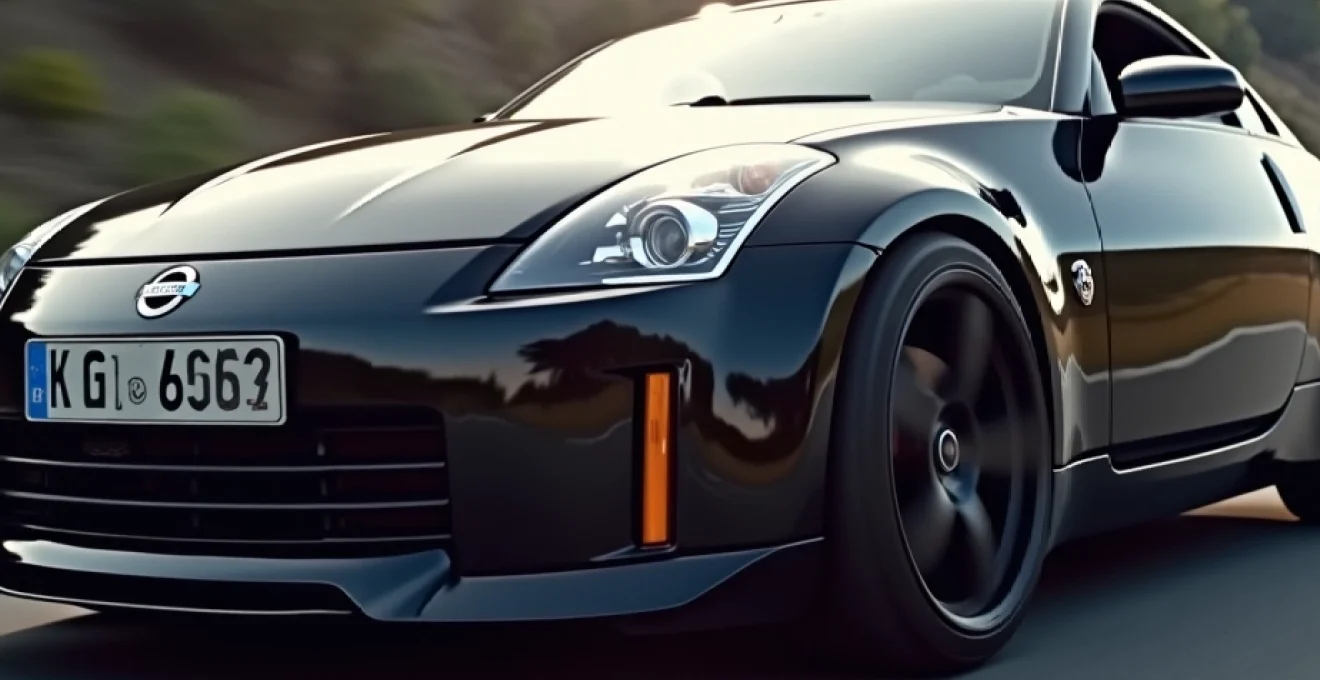
The Nissan 350Z stands as one of the most significant sports cars of the early 21st century, reviving the legendary Z-car lineage after a seven-year hiatus. Launched in 2002 as a spiritual successor to the original 240Z, this rear-wheel-drive coupe captured enthusiasts’ hearts with its muscular V6 engine, engaging manual transmission, and purposeful design that prioritised driving enjoyment over refinement. Today, with values continuing to appreciate and pristine examples becoming increasingly scarce, understanding the intricacies of 350Z ownership has never been more crucial for potential buyers.
The 350Z’s enduring popularity stems from its position as the last generation of naturally aspirated Z-cars, offering an authentic driving experience that modern turbocharged alternatives struggle to replicate. From the early DE-series models to the more powerful HR variants, each iteration brought meaningful improvements whilst maintaining the car’s core character. Whether you’re seeking a weekend canyon carver, track day weapon, or appreciating classic, this comprehensive guide will equip you with the knowledge needed to make an informed purchase decision.
Nissan 350Z technical specifications and engine variants analysis
VQ35DE and VQ35HR engine performance characteristics
The heart of every 350Z lies in Nissan’s renowned VQ35 V6 engine family, which evolved significantly throughout the model’s production run. The original VQ35DE engine, fitted to 2003-2006 models, produces 276-296 horsepower depending on specification, with peak torque figures ranging from 260-268 lb-ft. This naturally aspirated powerplant features aluminium construction, dual overhead camshafts, and continuously variable valve timing on the intake side, delivering power in a linear, predictable manner that suits both novice and experienced drivers.
The later VQ35HR engine, introduced for the 2007 model year, represents a substantial engineering advancement over its predecessor. With output increased to 306 horsepower at 6,800 rpm and 268 lb-ft of torque at 4,800 rpm, the HR variant incorporates dual throttle bodies, revised intake manifold geometry, and enhanced breathing capability. The higher-revving nature of this engine, with its 7,500 rpm redline compared to the DE’s 6,600 rpm limit, transforms the driving character and provides greater flexibility in track applications.
Performance differences between these engines extend beyond raw power figures. The HR’s improved torque curve delivers stronger mid-range acceleration, whilst its enhanced breathing capability responds more favourably to modifications. However, the earlier DE engines possess their own advantages, including simpler architecture that can prove more cost-effective to maintain over time.
Manual transmission 6MT versus automatic 5AT drivetrain comparison
Transmission choice fundamentally alters the 350Z ownership experience, with the six-speed manual representing the enthusiast’s preference for maximum engagement. The CD009 transmission, fitted to later models, offers precise gear changes with satisfying mechanical feedback, though early examples may exhibit notchiness when cold. Clutch travel is deliberately long to accommodate the engine’s torque characteristics, whilst the gear ratios provide excellent spacing for both street driving and track use.
The alternative five-speed automatic transmission appeals to those prioritising comfort and convenience, particularly in urban environments where traffic conditions make manual operation tiresome. This unit features adaptive shift logic and manual mode capability, though the torque converter’s characteristics introduce a degree of disconnection from the drivetrain that purists may find objectionable. Acceleration performance suffers marginally, with automatic models typically recording 0-60 mph times approximately 0.5 seconds slower than manual equivalents.
Manual transmission 350Z models command higher values in the used car market, reflecting enthusiast preference for the authentic driving experience they provide.
Brembo brake system and sport package differences
Brake system specification varies considerably across 350Z trim levels, with base models receiving conventional single-piston sliding callipers whilst performance-oriented variants benefit from four-piston Brembo units. The Brembo system, identifiable by its red-painted callipers and cross-drilled rotors, provides superior stopping power and fade resistance essential for spirited driving or track use. These systems utilise 324mm front discs with four-piston callipers and 322mm rear discs with two-piston units.
Standard brake systems, whilst adequate for normal driving conditions, may struggle under repeated hard use due to their smaller disc dimensions and less aggressive pad compounds. The difference becomes particularly apparent during track driving, where brake temperatures can exceed the standard system’s thermal capacity. Upgrading from standard to Brembo brakes represents a significant expense, making factory-equipped cars more desirable for performance-minded buyers.
VLSD Limited-Slip differential and traction control systems
Most 350Z models feature Nissan’s Viscous Limited Slip Differential (VLSD), which uses silicone fluid to transfer torque between rear wheels during traction loss scenarios. This system provides reasonable performance for street driving and light track use, though its temperature-sensitive nature can lead to reduced effectiveness after prolonged use. The VLSD’s progressive engagement characteristics suit the 350Z’s power delivery, maintaining predictable handling whilst allowing controlled power slides when desired.
Traction control and Vehicle Dynamic Control (VDC) systems complement the limited-slip differential on appropriately equipped models. These electronic aids can be partially or fully disabled, allowing experienced drivers to explore the car’s natural handling balance. However, the systems prove valuable for less experienced drivers or adverse weather conditions, providing an additional safety margin without excessively intruding on the driving experience.
Model year evolution and trim level identification guide
2003-2006 DE series production changes and updates
Early production 350Z models, spanning the 2003-2005 model years, established the foundational characteristics that would define the entire range. These cars feature the original VQ35DE engine producing 287 horsepower in most markets, paired with either the six-speed manual or five-speed automatic transmission. Exterior styling remained largely consistent throughout this period, though detail changes including revised wheel designs and colour options occurred annually.
The 2005 model year introduced the “Rev-Up” engine variant, producing 300 horsepower through modifications including revised camshafts, altered intake geometry, and recalibrated engine management. However, this engine variant proved problematic, developing a reputation for excessive oil consumption that prompted many owners to seek warranty replacements. Consequently, Rev-Up equipped cars may require additional scrutiny during pre-purchase inspections.
Interior appointments evolved gradually during the early production period, with Nissan addressing initial quality concerns through improved materials and revised assembly procedures. Later DE-series cars generally exhibit superior build quality compared to very early examples, making 2004-2005 model years particularly attractive for buyers seeking the original engine specification without early production issues.
2007-2009 HR series revisions and performance enhancements
The introduction of the VQ35HR engine for 2007 marked the most significant mechanical evolution in 350Z history. Beyond increased power output, this engine featured numerous refinements including dual throttle bodies, revised intake manifold design, and enhanced internal components capable of sustained high-rpm operation. The taller deck height necessitated a distinctive hood bulge, providing visual identification for HR-equipped models.
Chassis improvements accompanied the engine upgrade, with revised spring rates, damper tuning, and anti-roll bar specifications enhancing handling precision. Brake systems received attention as well, with larger rotors and improved cooling becoming standard across the range. These changes transformed the 350Z from an impressive but occasionally crude sports car into a more refined and capable machine.
Final production models, built through early 2009, represent the pinnacle of 350Z development. These cars incorporate all evolutionary improvements whilst maintaining the mechanical simplicity that defines the platform. With production ending in December 2008, these later models have achieved particular significance among collectors and enthusiasts.
Track edition, touring, and enthusiast package distinctions
Nissan offered multiple trim levels to accommodate varying buyer preferences and budgets, with each providing distinct equipment levels and capabilities. The base Enthusiast trim provided essential performance features including the limited-slip differential, manual transmission, and basic convenience equipment. This specification appeals to buyers prioritising mechanical capability over luxury appointments , often representing excellent value in today’s market.
Touring models emphasised comfort and convenience, featuring leather upholstery, heated seats, premium Bose audio systems, and comprehensive climate control. These cars suit buyers seeking grand touring capability alongside sports car performance, though the additional weight slightly impacts acceleration and handling precision. The electrical complexity of Touring models can present maintenance challenges as components age.
Track Edition models, available exclusively with manual transmission, prioritised performance through lightweight Rays forged wheels, Brembo brake systems, aerodynamic enhancements, and sport-tuned suspension. These cars represent the factory’s attempt to create a track-focused variant, though many examples have since been modified beyond recognition by enthusiastic owners.
Nismo 350Z factory modifications and rarity assessment
The Nismo 350Z, introduced for 2007, represents the ultimate factory expression of the platform’s potential. Limited production numbers, estimated at fewer than 1,800 units for the North American market, ensure these cars command premium values today. The Nismo package included extensive aerodynamic modifications, lowered suspension with Nismo-tuned dampers, lightweight forged wheels, and enhanced braking capability.
Beyond visual modifications, Nismo models received chassis stiffening through additional seam welding, creating a more rigid platform that benefits both handling precision and crash safety. The interior featured unique trim elements, Recaro seating, and Nismo-branded instrumentation. These details, combined with the car’s rarity, make authentication crucial when evaluating potential purchases.
Nismo 350Z models represent less than 1% of total production, making them highly sought-after collectibles with values continuing to appreciate.
Pre-purchase inspection checklist and common failure points
Oil consumption issues and gallery gasket problems
Oil consumption represents the most significant mechanical concern across all 350Z variants, though the severity varies considerably between engine types. DE-series engines, particularly Rev-Up variants, can consume oil at alarming rates, with some examples requiring top-ups every 1,000-2,000 miles. This issue stems from oil control ring design and combustion chamber characteristics that allow oil to migrate past the pistons during high-rpm operation.
HR engines face different oil-related challenges, most notably internal gallery gasket failure that can cause catastrophic oil pressure loss. This problem typically manifests as gradually decreasing oil pressure at idle, eventually leading to engine bearing damage if left unaddressed. Repair requires complete engine disassembly, making prevention through regular oil changes and quality lubricants essential.
During pre-purchase inspections, examine the oil level and condition carefully, looking for signs of regular maintenance and appropriate oil grades. Start the engine when cold and observe exhaust emissions, watching for blue smoke that indicates oil burning. Check service records for frequent oil additions or pressure-related repairs, as these may signal underlying mechanical problems.
Window motor failure and convertible top mechanism inspection
Electric window systems represent a common failure point, particularly in higher-mileage examples or cars exposed to harsh weather conditions. Window motor failure typically presents as slow operation, intermittent function, or complete failure of one or more windows. The driver’s side window experiences the heaviest use and consequently fails most frequently, though all windows should be tested during inspection.
Roadster models introduce additional complexity through their power convertible top mechanisms, which incorporate multiple motors, sensors, and hydraulic components. Common issues include top alignment problems, slow operation, and complete failure to raise or lower. The fabric roof itself may develop tears, fading, or water penetration that requires professional repair or replacement.
Test all electrical systems thoroughly during inspection, operating each window multiple times and checking for smooth, consistent movement. For Roadster models, cycle the convertible top completely, observing proper alignment and listening for unusual noises that might indicate impending failure.
Clutch slave cylinder and CSC bearing replacement history
Manual transmission models frequently experience clutch hydraulic system problems, particularly with the concentric slave cylinder (CSC) fitted to HR engines. This component combines the traditional slave cylinder and release bearing into a single unit located within the transmission bell housing, making replacement labour-intensive and expensive. CSC failure typically causes clutch pedal softness, difficulty engaging gears, or complete clutch system failure.
Earlier DE-series cars use external slave cylinders that prove more reliable and cost-effective to service. However, clutch master cylinder failure can affect all manual transmission models, causing similar symptoms through loss of hydraulic pressure. Regular clutch fluid replacement helps prevent these issues, though high-mileage examples may require component replacement regardless of maintenance history.
During test drives, pay attention to clutch pedal feel, engagement point consistency, and any difficulty selecting gears. A spongy pedal or erratic engagement characteristics may indicate hydraulic system problems that could prove expensive to rectify.
Suspension bushings and control arm wear assessment
The 350Z’s performance-oriented suspension places significant stress on bushings and control arms, leading to predictable wear patterns that affect handling precision and ride quality. Lower control arm bushings experience the greatest stress and typically require replacement between 60,000-100,000 miles, depending on driving style and road conditions. Symptoms include knocking noises over bumps, imprecise steering response, and uneven tire wear patterns.
Rear suspension components face similar challenges, with differential mounting bushes and suspension arm bushings requiring periodic attention. These components’ deterioration can cause vibration, noise, and handling degradation that transforms the driving experience from precise and engaging to vague and unsettling.
Many enthusiasts upgrade to polyurethane or solid bushings during replacement, improving longevity and performance at the expense of some ride comfort. During inspection, listen for knocking or squeaking noises over irregular surfaces, and examine tires for unusual wear patterns that might indicate suspension geometry problems.
Market valuation and investment potential analysis
Current 350Z values reflect the model’s growing recognition as a modern classic, with pristine examples commanding increasingly strong prices whilst high-mileage or modified cars remain relatively affordable. Average values for clean, unmodified examples range from £8,000-£15,000 for standard models, with Nismo variants and low-mileage Track Edition cars reaching £20,000-£30,000 or more. These figures represent substantial appreciation from their sub-£5,000 values just five years ago.
Several factors drive this value appreciation, including the 350Z’s position as the final naturally aspirated Z-car, increasing rarity of unmolested examples, and growing appreciation for early 2000s Japanese sports cars. The model’s starring role in popular media, particularly the Fast and Furious franchise, has introduced younger enthusiasts to the platform whilst maintaining visibility among mainstream audiences.
Investment potential appears strongest for exceptional examples with comprehensive service history, original specification, and minimal modifications. HR-engined models command premium values due to their superior performance and later production status, though early DE-series cars with proven maintenance records can represent better value propositions. The key lies in finding cars that have avoided the modification epidemic that affected many examples during their depreciation phase.
Well-maintained, original specification 350Z models have appreciated by 150-200% over the past five years, establishing them as legitimate investment vehicles for automotive enthusiasts.
Regional variations significantly impact pricing, with clean examples commanding higher premiums in areas where rust-free cars are scarce. Import options exist for particularly desirable specifications unavailable in domestic markets, though these transactions require careful attention to legal requirements and potential modifications needed for local compliance.
Insurance classifications and maintenance cost projections
Insurance considerations vary considerably based on the buyer’s age, driving record, and intended usage, with most insurers classifying the 350Z as a high-performance sports car subject to corresponding premium rates. Young drivers may face prohibitive costs, whilst mature enthusiasts with clean records can often secure reasonable coverage through specialist providers who understand the collector car market.
Many insurance companies offer agreed-value policies for exceptional examples, providing protection against appreciation whilst ensuring adequate coverage for restoration or replacement costs. These policies typically require professional appraisals and may restrict annual mileage, though they can provide peace of mind for owners of pristine or modified examples.
Annual maintenance costs for well-maintained examples typically range from £800-£1,500, excluding major repairs or modifications. This figure encompasses routine servicing, consumable items like tires and brake pads, and periodic component replacement. However, deferred maintenance or mechanical problems can
significantly escalate costs, particularly for engines requiring rebuild or replacement. Regular preventive maintenance proves far more economical than reactive repairs, making service history a crucial evaluation criterion for potential buyers.Parts availability remains generally good for common service items, though some specialist components may require sourcing from breaker yards or specialist suppliers. Genuine Nissan parts typically command premium prices, whilst quality aftermarket alternatives often provide better value for routine maintenance items. Labour costs vary considerably by region and specialist expertise, with main dealers charging premium rates compared to independent specialists familiar with the platform.
Aftermarket modification compatibility and tuning potential
The 350Z’s exceptional aftermarket support stems from its popularity within the enthusiast community and relatively simple mechanical architecture that responds well to modifications. Engine tuning options range from basic bolt-on modifications providing modest power gains to comprehensive forced induction conversions capable of doubling stock output. The naturally aspirated VQ35 engine responds particularly well to breathing modifications, with intake, exhaust, and ECU tuning combinations typically yielding 20-40 additional horsepower.
Suspension modifications represent another popular enhancement avenue, with coilover conversions providing adjustable damping and ride height control essential for track use or aesthetic preferences. The 350Z’s suspension geometry accommodates substantial lowering without compromising handling, though extreme modifications may impact daily usability. Brake upgrades prove essential for track-focused builds, with numerous big brake kit options available to complement increased performance.
Forced induction conversions, whilst complex and expensive, can transform the 350Z into a genuinely rapid machine capable of competing with modern supercars. Both turbocharger and supercharger kits exist, each offering distinct characteristics and installation requirements. However, such modifications demand supporting upgrades including fuel system enhancement, engine management recalibration, and drivetrain strengthening to ensure reliability.
The extensive aftermarket ecosystem surrounding the 350Z ensures that virtually any performance goal can be achieved, from subtle street enhancements to full race car specification.
Aesthetic modifications enjoy equally comprehensive support, with body kits, aerodynamic components, and wheel options available to suit every taste and budget. However, potential buyers should exercise caution when evaluating heavily modified examples, as poor quality modifications or improper installation can compromise both performance and reliability. Original specification cars often represent better long-term investments, particularly as unmolested examples become increasingly scarce.
The modification potential extends beyond performance enhancements to include modern convenience upgrades such as updated infotainment systems, smartphone integration, and advanced driver assistance features. These modifications can significantly improve the ownership experience whilst maintaining the car’s essential character and mechanical integrity.