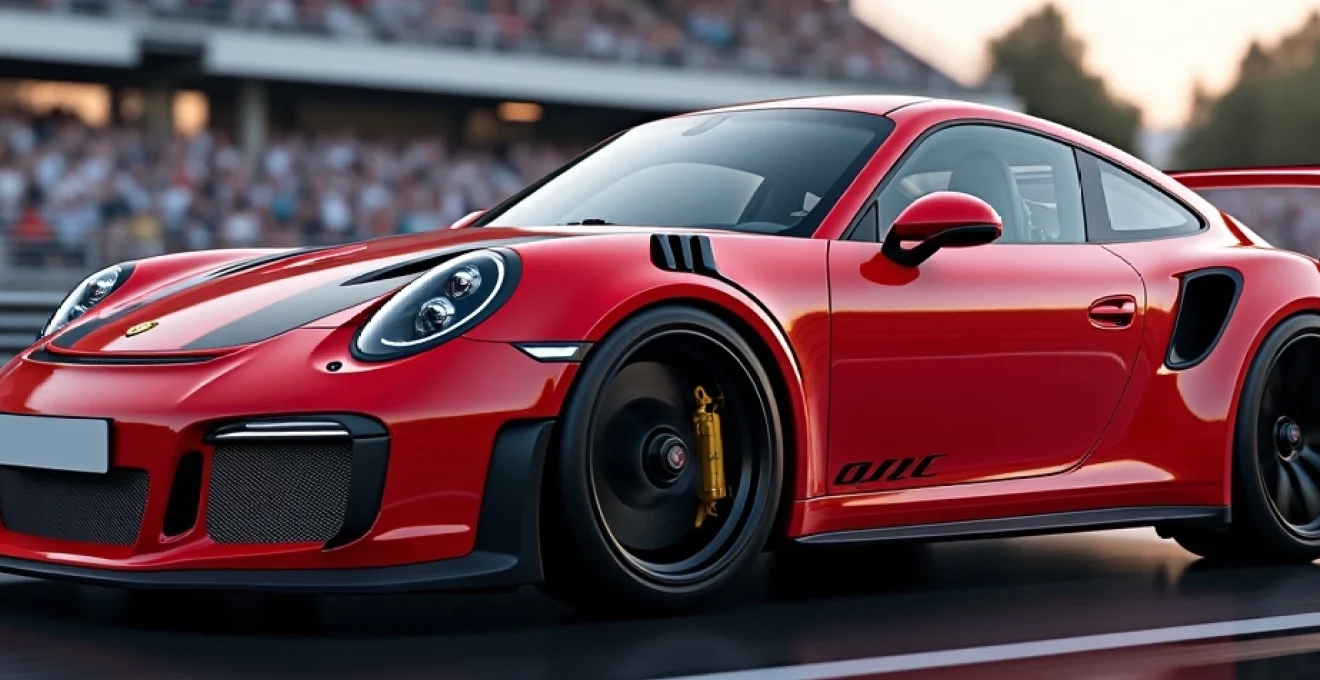
The Porsche 911 GT3 RS represents the pinnacle of track-focused engineering within Stuttgart’s legendary sports car lineup. This extraordinary machine combines decades of motorsport heritage with cutting-edge technology to deliver one of the most exhilarating driving experiences available in a road-legal vehicle. From its naturally aspirated flat-six engine that screams to 9,000 rpm to its sophisticated aerodynamic package that generates substantial downforce, every component has been meticulously engineered for maximum performance on the circuit.
With a starting price of approximately EUR 253,454, the GT3 RS commands a significant premium over its standard GT3 sibling, yet this investment delivers tangible benefits in lap time performance. The model’s track-focused design philosophy permeates every aspect of its construction, from the extensive use of carbon fibre components to reduce weight, to the advanced suspension systems that provide exceptional handling precision. Understanding the comprehensive specifications and capabilities of this remarkable machine requires examining its technical components in detail.
Porsche 911 GT3 RS engine specifications and performance metrics
4.0-litre naturally aspirated Flat-Six engine architecture
The heart of the GT3 RS lies in its 4.0-litre naturally aspirated flat-six engine , a masterpiece of internal combustion engineering that prioritises atmospheric breathing over forced induction. This horizontally opposed six-cylinder configuration maintains the traditional Porsche layout whilst incorporating advanced materials and manufacturing techniques to achieve exceptional performance levels. The engine block utilises lightweight construction methods, with specific attention paid to reducing reciprocating mass throughout the rotating assembly.
Engineers have extensively redesigned the cylinder heads to optimise airflow characteristics, incorporating larger intake and exhaust ports that facilitate improved breathing at high engine speeds. The compression ratio has been carefully calibrated to maximise power output whilst maintaining reliability under extreme operating conditions. This naturally aspirated approach delivers immediate throttle response characteristics that turbocharged alternatives cannot match, providing drivers with instantaneous connection between accelerator input and engine output.
Power output and torque delivery characteristics
The GT3 RS produces an impressive 525 horsepower at 8,500 rpm, demonstrating the effectiveness of its high-revving naturally aspirated design philosophy. Peak torque delivery reaches 465 Newton-metres at 6,300 rpm, providing substantial pulling power throughout the upper portion of the rev range. These figures represent significant improvements over the standard GT3, with the additional displacement and refined engine management systems contributing to enhanced performance metrics.
The power delivery curve exhibits a distinctive characteristic that builds progressively throughout the rev range, encouraging drivers to explore the engine’s full potential. Unlike turbocharged alternatives that deliver peak torque at lower engine speeds, this naturally aspirated unit rewards commitment to higher rpms with increasingly dramatic acceleration. The engine management system incorporates sophisticated mapping to optimise fuel delivery and ignition timing across all operating conditions.
Rev range and redline performance parameters
One of the most thrilling aspects of the GT3 RS involves its extraordinary rev range, with the engine capable of reaching 9,000 rpm before the rev limiter intervenes. This exceptional redline figure allows drivers to experience the full drama of naturally aspirated performance, with engine note and acceleration continuing to intensify as rpms climb toward the maximum. The sound characteristics transform dramatically throughout the rev range, beginning with a purposeful growl at idle and building to a spine-tingling wail at peak revs.
The engine’s ability to rev freely to such heights requires exceptional engineering precision throughout the entire rotating assembly. Lightweight pistons, connecting rods, and crankshaft components enable rapid acceleration through the rev range whilst maintaining structural integrity under extreme loads. Advanced valve train components, including titanium valves and optimised camshaft profiles, contribute to the engine’s ability to breathe effectively at maximum rpm.
PDK Seven-Speed Dual-Clutch transmission system
Power transmission occurs through Porsche’s sophisticated PDK seven-speed dual-clutch automatic transmission, specifically calibrated for track performance applications. This advanced gearbox provides lightning-fast gear changes that complement the engine’s high-revving characteristics, with shift speeds measured in milliseconds rather than the fractions of seconds required by traditional automatic transmissions. The dual-clutch design pre-selects the next gear ratio whilst the current gear remains engaged, enabling seamless power delivery during acceleration.
The transmission incorporates multiple driving modes that alter shift patterns and response characteristics to suit different driving situations. Track mode delivers the most aggressive shift programming, holding gears longer and executing upshifts at optimal points for maximum acceleration. The system also features launch control functionality that manages clutch engagement and power delivery for consistent standing start performance.
Aerodynamic package and Track-Focused design elements
Active rear wing and DRS functionality
The GT3 RS features Porsche’s most advanced aerodynamic package, centred around a large active rear wing that automatically adjusts its angle based on driving conditions and selected mode settings. This Porsche Active Aerodynamics (PAA) system can position the wing element to optimise either minimum drag for straight-line speed or maximum downforce for cornering stability. The wing’s substantial surface area generates significant aerodynamic load at speed, pressing the rear tyres into the track surface for enhanced traction.
The DRS (Drag Reduction System) functionality allows drivers to temporarily reduce aerodynamic drag on long straights, similar to Formula One applications. When activated, the rear wing adjusts to its minimum drag position, reducing air resistance and enabling higher top speeds. This system proves particularly beneficial on circuits with extended straight sections where aerodynamic efficiency becomes crucial for competitive lap times.
Front splitter and dive planes configuration
The front aerodynamic package incorporates an aggressive splitter design that extends well forward of the bumper line, creating a low-pressure zone beneath the vehicle whilst generating downforce over the front axle. Small dive planes positioned at the outer edges of the front bumper direct airflow around the front wheels, reducing turbulence and maintaining aerodynamic efficiency. These elements work in conjunction with the rear wing to balance aerodynamic loads front-to-rear.
The splitter design requires careful consideration of approach angles and ground clearance, as the extended lip sits very close to the road surface. A front axle lift system addresses this concern by raising the vehicle’s nose when negotiating speed bumps or steep driveways. The aerodynamic elements are constructed from carbon fibre to minimise weight whilst providing the structural strength necessary to withstand aerodynamic loads.
Underbody aerodynamics and diffuser technology
Beneath the GT3 RS, extensive underbody panelling creates a smooth airflow path that culminates in a large rear diffuser section. This diffuser features multiple vertical fins that help organise airflow as it exits from beneath the vehicle, creating a low-pressure zone that effectively pulls the car toward the track surface. The underbody aerodynamics work in harmony with the external elements to maximise total downforce generation.
The rear diffuser integrates seamlessly with the exhaust system outlet, with the tailpipes positioned to avoid disrupting the critical airflow patterns. Advanced computational fluid dynamics analysis has optimised every surface and angle to achieve maximum aerodynamic efficiency. The complete underbody package contributes significantly to the vehicle’s total downforce figure, which can exceed 860 pounds at maximum speed.
Side blade airflow management system
Distinctive side blade elements serve both aesthetic and functional purposes, channelling air around the vehicle’s flanks whilst providing cooling airflow to various components. These blades direct fresh air toward the brake systems and other heat-sensitive areas, maintaining optimal operating temperatures during extended track sessions. The design also reduces turbulence around the rear wheel wells, contributing to overall aerodynamic efficiency.
The side blade configuration has been extensively wind tunnel tested to ensure optimal performance across a wide range of speeds and yaw angles. Each element’s shape and positioning has been refined to maximise beneficial airflow whilst minimising drag penalties. The integration of these aerodynamic elements with the vehicle’s cooling requirements demonstrates the sophisticated engineering approach applied throughout the GT3 RS development programme.
Chassis dynamics and suspension technology
Front axle lift system and ground clearance management
The GT3 RS incorporates a front axle lift system that addresses the practical challenges of operating a track-focused vehicle on public roads. This hydraulic system can raise the front of the vehicle by approximately 30 millimetres, providing additional clearance when navigating speed bumps, steep driveways, or parking garage entrances. The system operates quickly and can be activated at speeds up to 50 kilometres per hour.
The lift system includes memory functionality that can automatically raise the vehicle when approaching previously programmed locations, such as the driver’s home or workplace. GPS coordinates are stored within the system, triggering automatic activation without driver intervention. This practical feature significantly reduces the risk of expensive damage to the front splitter and underbody aerodynamic components during daily driving situations.
Anti-roll bar setup and camber adjustment
The suspension system features adjustable anti-roll bars front and rear, allowing precise tuning of the vehicle’s roll stiffness characteristics to suit different circuit layouts and driving preferences. These bars can be adjusted through multiple settings, with stiffer configurations reducing body roll during cornering whilst softer settings may improve traction over uneven surfaces. The adjustment range provides significant flexibility for track day enthusiasts and professional drivers alike.
Camber adjustment capabilities enable fine-tuning of tyre contact patch optimisation for specific circuit applications. The suspension geometry allows for substantial negative camber settings that maximise tyre performance during aggressive cornering manoeuvres. Professional alignment equipment becomes essential for achieving optimal settings, as precise camber angles directly influence lap time performance and tyre wear characteristics.
Michelin pilot sport cup 2 R tyre specifications
The GT3 RS comes equipped with Michelin Pilot Sport Cup 2 R tyres as standard equipment, representing some of the most advanced track-focused rubber available for road-legal vehicles. These tyres feature a compound formulation that prioritises grip and performance over longevity, with tread patterns optimised for maximum contact patch area during cornering. The front tyres measure 275/35 R20, whilst the rears span 335/30 R21, providing substantial grip potential.
The Cup 2 R compound operates most effectively within specific temperature ranges, requiring proper warm-up procedures to achieve optimal performance levels. Cold tyre grip remains limited compared to conventional tyres, necessitating cautious driving until operating temperatures are achieved. The tread pattern incorporates large contact patches with minimal siping, maximising dry weather performance whilst sacrificing wet weather capability.
Ball joint suspension and track alignment
The suspension system utilises ball joint connections throughout, providing the precise articulation necessary for track-focused applications. These joints offer superior strength and durability compared to rubber bushings whilst eliminating compliance that could compromise handling precision. The ball joint design enables more accurate wheel positioning under load, maintaining optimal geometry throughout suspension travel.
Track-specific alignment settings require consideration of factors including tyre temperature management, camber curve optimisation, and aerodynamic balance maintenance. Professional alignment procedures must account for the vehicle’s intended use, with aggressive settings appropriate for circuit applications potentially compromising road driving comfort. The suspension geometry allows for substantial adjustment ranges to accommodate various circuit layouts and driving styles.
Weight reduction measures and carbon fibre implementation
Porsche’s commitment to weight reduction permeates every aspect of the GT3 RS design, with the manufacturer employing extensive carbon fibre construction throughout the vehicle’s structure. The body panels, aerodynamic elements, interior components, and even structural elements utilise carbon fibre construction to achieve meaningful mass reductions without compromising strength or rigidity. The total weight saving compared to standard 911 models exceeds 50 kilograms, representing a significant improvement in power-to-weight ratio.
The carbon fibre implementation extends beyond cosmetic applications to include load-bearing structural components that maintain chassis rigidity whilst reducing overall mass. The manufacturing processes employed ensure consistent quality and strength characteristics across all carbon fibre elements. Advanced resin systems and curing techniques produce components that exceed the strength requirements of their metal counterparts whilst weighing substantially less.
Lightweight glazing technology contributes additional weight savings through thinner glass construction in non-critical areas. The side windows and rear glass utilise reduced thickness materials that maintain structural integrity whilst reducing overall vehicle mass. Sound deadening materials have been minimised throughout the interior, with only essential noise control measures retained to maintain reasonable comfort levels during road driving.
The seats represent another significant area of weight reduction, with carbon fibre bucket seats that provide exceptional support whilst weighing considerably less than conventional alternatives. These fixed-back seats eliminate adjustment mechanisms and heavy framework, concentrating on essential support and safety functions. The weight reduction measures collectively contribute to enhanced acceleration, braking, and handling performance across all driving situations.
The pursuit of weight reduction in the GT3 RS demonstrates how modern manufacturing techniques can achieve substantial mass savings without compromising structural integrity or safety performance.
Track performance benchmarks and lap time analysis
The GT3 RS has established impressive performance benchmarks across numerous international racing circuits, with lap times that demonstrate its exceptional capabilities. At the Nürburgring Nordschleife, the vehicle achieved a lap time of 7 minutes and 20 seconds, representing a significant improvement over previous generation models and competing vehicles in its class. This performance figure places the GT3 RS among the fastest road-legal vehicles ever to complete the challenging German circuit.
Acceleration figures prove equally impressive, with 0-100 kilometres per hour achieved in just 3.2 seconds and 0-200 kilometres per hour requiring approximately 10.6 seconds. These figures demonstrate the effectiveness of the naturally aspirated engine and PDK transmission combination, with consistent performance delivery across multiple acceleration runs. The launch control system enables repeatable standing start performance, crucial for track day applications and competitive events.
Braking performance benefits from large carbon-ceramic disc brakes that provide exceptional stopping power with minimal fade characteristics during extended track sessions. The brake system can repeatedly decelerate the vehicle from high speeds without significant performance degradation, essential for circuit applications where consistent braking performance determines lap time capability. Brake cooling systems maintain optimal operating temperatures even during aggressive track driving.
Top speed capability reaches 296 kilometres per hour, limited primarily by aerodynamic drag rather than engine power availability. The aerodynamic package generates substantial downforce that improves cornering capability but creates drag that limits ultimate straight-line speed. This trade-off reflects the track-focused design philosophy, prioritising cornering performance over maximum velocity. Professional drivers consistently achieve lap times that approach the theoretical limits of the vehicle’s capabilities across diverse circuit layouts.
The GT3 RS lap time achievements demonstrate the successful integration of aerodynamic enhancement, weight reduction, and powertrain optimisation into a cohesive performance package.
Interior configuration and Driver-Focused cockpit design
The interior of the GT3 RS prioritises driver engagement and track functionality over luxury appointments, creating an environment that enhances the connection between driver and machine. The cabin features extensive use of lightweight materials, including carbon fibre trim elements and Alcantara upholstery that provide both aesthetic appeal and functional benefits. The steering wheel incorporates multiple controls for various vehicle systems, allowing drivers to make adjustments without removing their hands from the wheel during track sessions.
The instrument cluster combines traditional analogue gauges with modern digital displays, providing comprehensive information about vehicle performance and system status. The central tachometer remains prominently positioned, with the redline clearly marked to encourage full utilisation of the engine’s rev range. Additional displays provide real-time information about tyre pressures, oil temperatures, and aerodynamic system status, essential data for track performance optimisation.
Carbon fibre bucket seats provide exceptional lateral support during aggressive cornering manoeuvres whilst maintaining reasonable comfort for extended driving sessions. The seat design eliminates unnecessary adjustment mechanisms, focusing on optimal positioning for track driving applications. Six-point racing harness mounting points come pre-installed for drivers who wish to upgrade from the standard three-point seatbelts for track day applications.
The centre console has been simplified to eliminate non-essential controls, focusing on frequently used functions during performance driving. Climate control systems maintain effectiveness whilst reducing complexity, with automatic temperature regulation that requires minimal driver attention. The infotainment system includes track-focused applications such as lap timing functions and performance data logging, tools that enhance the track day experience for enthusiast drivers.
Storage solutions have been minimised throughout the interior to reduce weight and eliminate items that could become projectiles during aggressive driving. Essential storage areas remain functional, but the overall philosophy emphasises performance over convenience. The result creates an interior environment that immediately communicates the vehicle’s serious performance intentions whilst maintaining the refinement expected from a premium manufacturer.