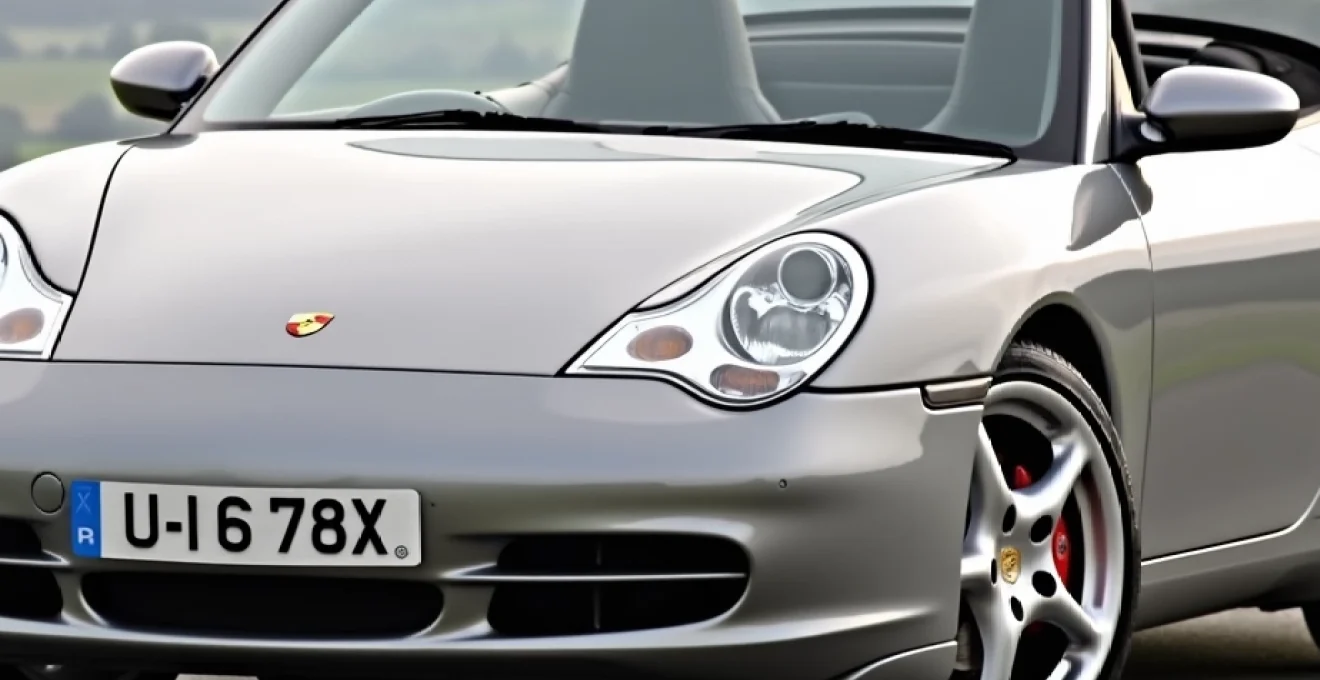
The Porsche 996 Carrera 4S stands as one of the most compelling yet undervalued propositions in the modern 911 lineage. Introduced during the controversial shift from air-cooled to water-cooled engines, this particular variant combines the aggressive aesthetics of the Turbo model with the naturally aspirated reliability that many enthusiasts prefer. With production spanning from 2002 to 2005, the Carrera 4S represents Porsche’s attempt to create the ultimate daily driver 911, offering Turbo-inspired presence without the complexity of forced induction.
Today’s market presents an intriguing opportunity for discerning buyers. While the 996 generation initially faced scepticism from purists, time has revealed its true character as a refined and capable sports car . The Carrera 4S variant, in particular, offers exceptional value proposition when compared to its contemporary rivals, combining proven mechanicals with distinctive styling that has aged remarkably well.
Porsche 996 carrera 4S production years and model variants
2002-2005 manufacturing timeline and VIN identification
Production of the 996 Carrera 4S commenced in late 2001 as a 2002 model year vehicle, continuing until the end of the 996 generation in 2005. Understanding the production timeline becomes crucial when evaluating potential purchases, as Porsche implemented several improvements throughout the manufacturing run. The VIN structure for these vehicles follows Porsche’s standard format, with positions 10-17 indicating the model year and sequential production number.
Early 2002 models can be identified by VIN codes beginning with WP0AA299 for Coupé variants and WP0AB299 for Cabriolet models. The tenth digit indicates the model year, with ‘2’ representing 2002, ‘3’ for 2003, and so forth. Verifying VIN authenticity against Porsche’s internal databases remains essential, particularly given the model’s increasing collector appeal.
Carrera 4S vs standard carrera 4 specification differences
The distinction between the Carrera 4S and standard Carrera 4 extends far beyond mere nomenclature. The 4S variant adopts the wider bodyshell from the 996 Turbo, increasing overall width from 1,765mm to 1,830mm. This transformation involves completely different rear quarter panels, wider rear track, and distinctive flared wheel arches that create a more aggressive stance.
Suspension components differ significantly between the variants. The Carrera 4S receives the M030 sport suspension package as standard equipment, lowering ride height by 10mm and incorporating firmer damper settings. The brake system upgrades to larger 330mm discs front and rear, borrowed directly from the Turbo model. These enhancements contribute to superior handling characteristics and increased stopping power compared to the standard Carrera 4.
Tiptronic S transmission vs manual gearbox options
Transmission choices for the Carrera 4S include either a six-speed manual gearbox or the five-speed Tiptronic S automatic. The manual transmission, designated G96.31 , features cable-operated shift linkages that provide precise engagement when properly maintained. However, these gearboxes suffered from synchroniser issues in early production, with Porsche implementing design improvements throughout the production run.
The Tiptronic S option, while less engaging for enthusiasts, offers remarkable refinement for daily driving scenarios. Unlike its predecessor, this transmission provides smooth operation without the hesitation characteristic of earlier automatic 911s. Market preference typically favours manual transmission examples, though well-maintained Tiptronic models can represent excellent value propositions.
Cabriolet and coupe body style variations
Porsche offered the Carrera 4S in both Coupé and Cabriolet configurations, with the convertible variant arriving in 2003. The Cabriolet features extensive structural reinforcement to maintain chassis rigidity, adding approximately 70kg to the overall weight. Despite this increase, performance differences remain minimal, with the convertible achieving identical acceleration figures to its fixed-roof counterpart.
Cabriolet models include a colour-matched hardtop as standard equipment, seamlessly integrating with the car’s silhouette when installed. The fabric soft-top operates electrically and can be lowered at speeds up to 50km/h, taking approximately 20 seconds for complete deployment. Build quality of the convertible mechanism proves exceptionally robust, though regular maintenance of the hydraulic system remains essential.
Technical specifications and performance analysis
3.6-litre Flat-Six engine M96.03 characteristics
The heart of every Carrera 4S consists of Porsche’s M96.03 flat-six engine, displacing 3,596cc and producing 320bhp at 6,800rpm. This represents a significant evolution from earlier M96 variants, incorporating lessons learned from initial water-cooled engine development. Peak torque output reaches 370Nm at 4,250rpm, providing strong mid-range performance that suits both spirited driving and everyday usability.
Internal engine architecture features aluminium construction throughout, with Nikasil cylinder linings providing excellent wear characteristics when properly maintained. The engine management system utilises Bosch Motronic ME7.2 engine control, offering sophisticated fuel injection and ignition timing maps. Regular oil changes using approved specifications become absolutely critical, as these engines demonstrate particular sensitivity to oil quality and change intervals.
Variocam plus variable valve timing system
Perhaps the most significant technical advancement in the M96.03 engine involves the implementation of VarioCam Plus variable valve timing technology. This system operates on both intake and exhaust camshafts, providing optimised valve timing across the entire rev range. The technology contributes significantly to the engine’s broad powerband and improved fuel economy compared to earlier naturally aspirated 911 variants.
The system functions through hydraulically-operated cam phasers, controlled by the engine management system based on throttle position, engine speed, and load conditions. When functioning correctly, VarioCam Plus provides seamless power delivery from low revs to the 7,200rpm redline. However, the system’s complexity introduces potential maintenance considerations, particularly regarding oil cleanliness and hydraulic actuator operation.
PSM porsche stability management integration
Standard equipment on all Carrera 4S models includes Porsche Stability Management, representing the manufacturer’s sophisticated approach to electronic stability control. The system integrates anti-lock braking, traction control, and stability management functions into a cohesive package that enhances safety without completely eliminating the characteristic 911 driving experience .
PSM operation proves particularly effective given the Carrera 4S’s all-wheel-drive architecture, working in conjunction with the mechanical centre differential to optimise traction distribution. The system can be partially disabled for spirited driving, though complete deactivation requires specific procedures. Most owners find the system’s intervention subtle and well-calibrated, rarely interfering with enthusiastic driving while providing crucial assistance in emergency situations.
The integration of PSM with the all-wheel-drive system creates a safety net that allows drivers to explore the car’s capabilities with greater confidence, particularly in challenging weather conditions.
Brembo brake system with 330mm discs
Braking performance receives significant attention in the Carrera 4S specification, with 330mm ventilated discs fitted front and rear. The system utilises Brembo four-piston callipers at the front and single-piston sliding callipers at the rear, providing substantial stopping power appropriate for the car’s performance capabilities. Brake disc thickness should measure no less than 28mm front and 24mm rear when evaluating used examples.
Porsche offered the optional Porsche Ceramic Composite Brake system for buyers seeking ultimate stopping performance. These carbon-ceramic discs, identifiable by their distinctive yellow callipers, provide superior fade resistance and longevity but command premium pricing for replacement components. Standard steel disc systems prove more than adequate for road use while offering significantly lower maintenance costs.
18-inch turbo twist alloy wheels and tyre specifications
Standard wheel specification consists of distinctive 18-inch Turbo Twist alloy wheels, measuring 8J x 18 front and 11J x 18 rear. These wheels feature the classic five-spoke design borrowed from the 996 Turbo, finished in painted silver with machined rim edges. Tyre sizes correspondingly measure 225/40 ZR18 front and 285/30 ZR18 rear, providing the contact patch necessary for the car’s performance envelope.
Wheel condition significantly impacts both aesthetics and running costs, with refurbishment typically costing £150-200 per wheel for standard repairs. Original equipment tyres bore Porsche’s ‘N’ specification marking, indicating specific compound and construction optimisations for 911 applications. While non-N specification tyres function adequately, maintaining proper specifications ensures optimal handling characteristics and safety margins.
Common mechanical issues and inspection points
Intermediate shaft bearing failure symptoms and prevention
The most significant concern affecting 996-generation engines involves potential intermediate shaft bearing failure, commonly abbreviated as IMS bearing issues. This component supports the intermediate shaft that drives the timing chains, and its failure can result in catastrophic engine damage. Symptoms include metallic debris in the oil, unusual engine noises, or timing chain irregularities, though the bearing can fail without obvious warning signs.
Prevention strategies include regular oil changes using appropriate specifications, avoiding extended storage periods, and ensuring the engine reaches full operating temperature during each use. Several aftermarket companies offer upgraded IMS bearing solutions, though installation requires significant engine disassembly. Prospective buyers should verify whether any IMS bearing work has been completed and request documentation of such modifications.
Regular mechanical sympathy, including proper warm-up procedures and consistent maintenance intervals, significantly reduces the likelihood of experiencing IMS bearing-related problems.
Rear main seal oil leak detection methods
Rear main seal deterioration represents another common issue affecting 996 engines, typically manifesting as oil accumulation around the bellhousing area. Detection requires careful inspection of the engine bay and undercarriage, looking for oil residue between the engine and transmission. Fresh oil leaks appear wet and black, while older leaks create brownish staining on surrounding components.
Replacement involves removing the transmission and flywheel, making this a substantial repair project. However, minor seepage proves relatively common and doesn’t necessarily require immediate attention if oil loss remains minimal. Severe leaks can contaminate the clutch assembly in manual transmission cars, requiring additional component replacement and increasing overall repair costs.
Coolant tank cracking and expansion issues
The plastic coolant expansion tank frequently develops stress cracks, particularly around mounting points and connection fittings. These failures typically occur between 80,000-120,000 miles and can result in coolant loss and potential overheating. Visual inspection should focus on the tank’s corners and junction points, looking for hairline cracks or evidence of coolant weepage.
Replacement represents a relatively straightforward maintenance item, though genuine Porsche components command premium pricing compared to aftermarket alternatives. Cooling system maintenance should include regular coolant changes using appropriate G12+ specification antifreeze, as incorrect coolant types can accelerate component degradation and internal corrosion.
MAF sensor and throttle body cleaning requirements
Mass airflow sensor contamination commonly affects 996 engines, resulting in irregular idle quality, hesitation, and reduced performance. The MAF sensor’s delicate platinum wire elements collect oil vapours and debris over time, requiring periodic cleaning with appropriate solvents. Symptoms include erratic engine behaviour at idle and sluggish throttle response, particularly noticeable during cold starts.
Throttle body carbon accumulation similarly affects engine performance, creating rough idle conditions and reduced throttle sensitivity. Professional cleaning involves removing the throttle body and using specialised solvents to remove carbon deposits from the butterfly valve and housing. Both procedures require careful handling to avoid component damage, making professional service advisable for inexperienced owners.
Market valuation and pricing trends
Current market conditions present compelling opportunities for 996 Carrera 4S acquisition, with values remaining significantly below their air-cooled predecessors despite superior performance and refinement. Well-maintained examples typically trade between £25,000-40,000 depending on mileage, condition, and specification. Low-mileage examples with comprehensive service histories command premiums, while higher-mileage cars offer excellent entry-level opportunities into 911 ownership.
Market trends suggest gradual appreciation for well-preserved examples, particularly as the 996 generation gains recognition for its engineering accomplishments rather than initial controversy. Cabriolet variants typically command slight premiums over Coupé models, though this gap remains narrower than with other 911 generations. Special editions, such as the 40th Anniversary model, demonstrate stronger value retention and collector appeal.
Geographic variations affect pricing significantly, with European markets generally offering broader selection and competitive pricing compared to other regions. Import considerations, including compliance costs and documentation requirements, should factor into total acquisition costs for international purchases. Professional pre-purchase inspections prove particularly valuable given the technical complexity and potential major component costs.
Pre-purchase inspection checklist
Comprehensive pre-purchase evaluation should commence with documentation verification, ensuring the vehicle identification number matches registration documents and service records. Complete service history documentation proves essential, particularly evidence of major service intervals and any significant repairs or modifications. Missing service books should raise immediate concerns, as these vehicles require meticulous maintenance to ensure longevity.
Mechanical inspection must focus on the engine’s IMS bearing condition, though definitive assessment often requires specialist diagnostic equipment. Oil analysis can reveal metallic contamination indicating bearing wear, while borescope inspection through the oil filler neck may identify debris accumulation. Compression and leakdown testing provide valuable insights into internal engine condition, particularly cylinder seal integrity.
- Verify all electrical systems function correctly, including air conditioning, navigation, and convertible mechanisms where applicable
- Inspect suspension components for wear, particularly ball joints, wishbone bushes, and shock absorber condition
- Check brake disc thickness and calliper condition, noting any corrosion or binding issues
- Assess interior wear patterns, focusing on seat bolster condition and electronic component operation
- Examine paint condition for evidence of accident damage or extensive stone chip repair
Professional diagnostic scanning using Porsche-specific equipment can reveal stored fault codes and system irregularities not apparent during visual inspection. This process proves particularly valuable for identifying intermittent electronic issues or sensor degradation that might not manifest during brief test drives.
Ownership costs and maintenance requirements
Annual maintenance costs for the Carrera 4S typically range between £1,500-3,000 depending on mileage and service requirements. Major service intervals occur every 20,000 miles or two years, involving comprehensive inspection and fluid changes. Independent specialist workshops often provide more competitive pricing than main dealer networks while maintaining equivalent service quality and expertise.
Common wear items include brake pads and discs, typically requiring replacement every 30,000-50,000 miles depending on driving style. Tyre replacement costs vary significantly based on specification choice, with premium brands commanding £200-300 per tyre for correct sizes. Clutch replacement on manual transmission models typically occurs around 80,000-100,000 miles, representing a £2,000-3,000 service including labour.
Budgeting approximately 10-15% of the car’s value annually for maintenance and repairs provides realistic ownership cost expectations while ensuring proper care and preservation.
Insurance costs reflect the vehicle’s performance capabilities and replacement values, though the 996 generation typically attracts lower premiums than equivalent air-cooled models. Agreed value policies prove beneficial for well-preserved examples, protecting against market value fluctuations and ensuring adequate coverage for genuine replacement costs. Storage considerations, particularly for occasional-use vehicles, should include proper preparation procedures to prevent component degradation during extended periods of inactivity.