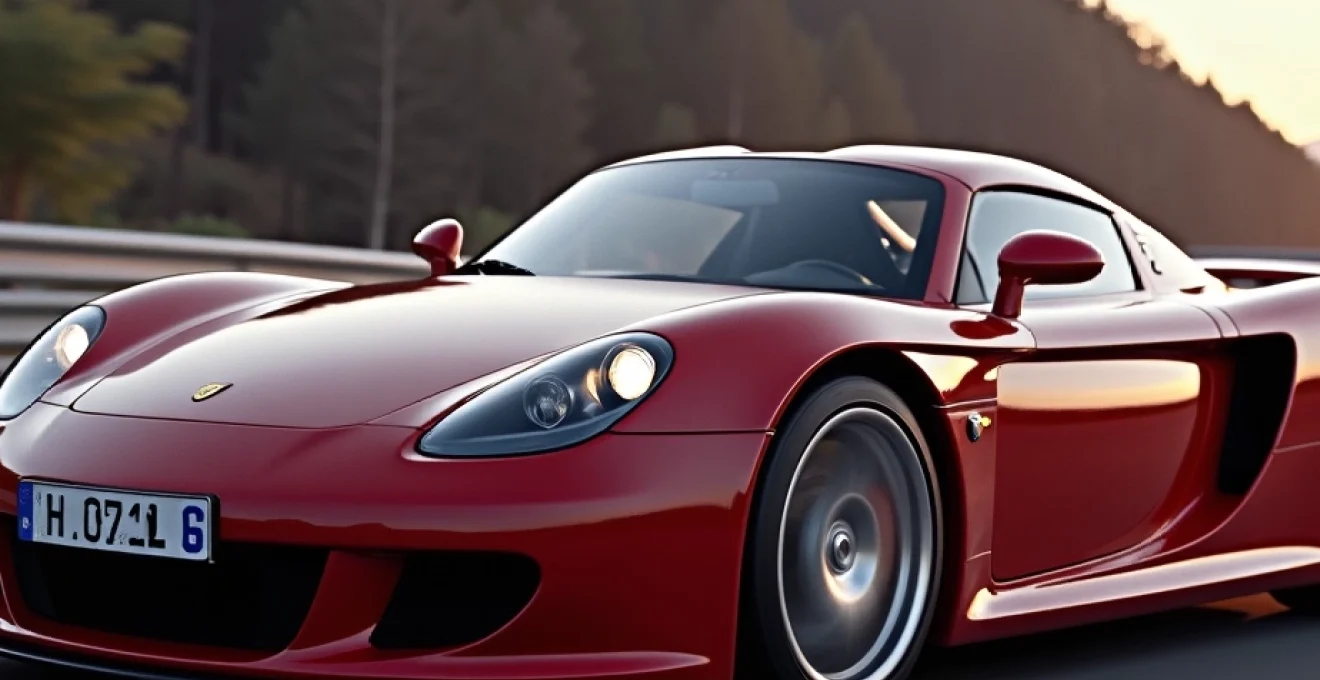
The Porsche Carrera GT represents one of the most extraordinary automotive achievements of the early 21st century, standing as a testament to German engineering excellence and racing heritage. Originally conceived as a Le Mans prototype before regulations changes shifted its destiny towards road-legal production, this remarkable supercar emerged from Stuttgart’s competition department with an uncompromising focus on performance and authenticity. With only 1,270 units produced between 2004 and 2007, the Carrera GT has transcended its initial role as a halo model to become one of the most coveted collector cars in contemporary automotive history, commanding substantial premiums at auction houses worldwide.
What distinguishes the Carrera GT from its contemporaries isn’t merely its exceptional performance figures or exotic construction materials, but rather its unfiltered driving experience that connects the pilot directly to the mechanical symphony beneath. Unlike many modern supercars that rely heavily on electronic assistance systems, the Carrera GT demands respect, skill, and understanding from its driver, offering rewards proportional to the commitment invested in mastering its character.
Porsche carrera GT engine specifications and V10 performance architecture
At the heart of the Carrera GT lies one of the most remarkable powerplants ever developed for a road car: a naturally aspirated 5.7-litre V10 engine that traces its lineage directly to Porsche’s aborted LMP1 racing programme. This extraordinary powerplant represents the culmination of decades of motorsport experience, delivering an intoxicating blend of raw power and mechanical sophistication that few engines can match.
5.7-litre V10 naturally aspirated engine configuration
The M80.01 engine designation might seem clinical, but the reality is far more exciting. This naturally aspirated masterpiece features a 90-degree V-angle configuration with individual cylinders displacing 573.3 cubic centimetres each, resulting in a total displacement of 5,733 cc. The engine’s architecture follows traditional racing principles, with a relatively short stroke of 76mm combined with a generous 98mm bore diameter, creating an oversquare configuration that favours high-rpm operation over low-end torque production.
The cylinder heads showcase Porsche’s commitment to performance through their four-valve-per-cylinder design, controlled by dual overhead camshafts operating through lightweight titanium valvetrain components. This configuration allows the engine to breathe efficiently at extreme rotational speeds, contributing significantly to the powerplant’s remarkable 8,000 rpm operational ceiling. The compression ratio of 12:1 represents an aggressive specification that demands high-octane fuel but delivers exceptional thermal efficiency and power density.
612 BHP power output and 435 lb-ft torque characteristics
The Carrera GT’s power delivery characteristics reveal the engine’s racing DNA through its high-rpm bias and progressive torque curve. Maximum power output of 612 brake horsepower arrives at 8,000 rpm, while peak torque of 435 lb-ft (590 Nm) develops at 5,750 rpm. These figures translate to an impressive specific output of 106.8 horsepower per litre, demonstrating the engine’s remarkable efficiency in extracting power from each unit of displacement.
The torque curve’s shape reflects the engine’s naturally aspirated character, building steadily from 3,000 rpm and maintaining strong output through the upper reaches of the rev range. This characteristic demands active engagement from the driver, rewarding those willing to explore the engine’s full potential with an increasingly dramatic soundtrack and acceleration that intensifies with rising engine speeds. The power-to-weight ratio of 443.5 horsepower per tonne places the Carrera GT firmly in hypercar territory, enabling performance figures that remain impressive by contemporary standards.
Dry sump lubrication system and Racing-Derived components
Professional racing applications demand lubrication systems capable of maintaining oil pressure under extreme lateral and longitudinal forces, leading Porsche to specify a sophisticated dry sump system for the Carrera GT. This configuration eliminates the traditional oil pan in favour of a remote reservoir and multiple scavenge pumps, ensuring consistent oil pressure regardless of the vehicle’s attitude or acceleration forces.
The dry sump system offers additional benefits beyond reliability, including a lower centre of gravity achieved by mounting the engine lower in the chassis. The 10.5-litre oil capacity provides thermal stability during extended high-performance driving, while the remote mounting of the oil tank allows for optimal weight distribution. Internal engine components reflect racing-grade specifications, with forged pistons, titanium connecting rods, and a lightweight crankshaft contributing to the engine’s ability to sustain high rotational speeds without mechanical distress.
Ceramic composite clutch and Six-Speed manual transmission
The connection between the V10 powerplant and the road surface relies on a purpose-built transmission system that prioritises engagement and mechanical precision over convenience. The ceramic composite clutch represents a significant departure from conventional automotive applications, offering superior heat resistance and reduced rotational inertia at the expense of user-friendliness during low-speed manoeuvres.
This racing-derived clutch system requires deliberate operation and rewards smooth, progressive engagement techniques while punishing aggressive or inexperienced inputs. The six-speed manual transmission features close-ratio gearing optimised for track performance, with the beautiful wooden gear knob serving both aesthetic and functional purposes through its comfortable ergonomics and direct mechanical connection to the transmission internals. The transmission’s placement ahead of the rear axle line contributes to the vehicle’s exceptional weight distribution and handling characteristics.
Carbon fibre monocoque construction and advanced materials technology
The Carrera GT’s structural foundation represents a masterclass in advanced materials application, utilising construction techniques borrowed directly from Formula 1 racing to achieve exceptional rigidity while maintaining minimal weight. The central monocoque tub weighs merely 120 kilograms yet provides structural integrity sufficient to support the considerable forces generated by the vehicle’s performance envelope.
Carbon fibre reinforced plastic chassis architecture
Carbon fibre reinforced plastic (CFRP) construction forms the backbone of the Carrera GT’s impressive performance capabilities, with the material’s superior strength-to-weight ratio enabling structural rigidity that would be impossible to achieve using conventional steel or aluminium construction. The monocoque design integrates the passenger compartment, engine bay, and fuel tank mounting points into a single, incredibly stiff structure that eliminates the flexibility inherent in traditional ladder-frame or space-frame designs.
The manufacturing process involves hand-laying carbon fibre sheets in precise orientations to optimise strength characteristics for the specific loading requirements of each section. This labour-intensive approach ensures that structural integrity remains uncompromised while achieving weight targets that contribute significantly to the vehicle’s exceptional power-to-weight ratio. The monocoque’s design incorporates integrated mounting points for suspension components, eliminating the weight penalty and compliance issues associated with bolt-on attachment methods.
Magnesium space frame integration and weight distribution
Beyond the central carbon fibre tub, the Carrera GT incorporates extensive use of magnesium alloys throughout its construction, particularly in areas where complex shapes and manufacturing efficiency take precedence over absolute weight minimisation. The instrument panel structure, for example, utilises magnesium castings to achieve both structural requirements and aesthetic objectives while contributing to the vehicle’s optimal weight distribution .
The final weight distribution of 44% front and 56% rear reflects careful attention to component placement and materials selection, creating handling characteristics that favour neutral cornering behaviour with a slight tendency toward natural oversteer under aggressive driving conditions. This balance point represents an ideal compromise for experienced drivers seeking maximum engagement and feedback from their vehicle’s dynamic behaviour.
Carbon ceramic brake disc technology and porsche ceramic composite brake system
The Carrera GT’s braking system represents another significant advancement in automotive technology, featuring Porsche Ceramic Composite Brake (PCCB) discs that provide exceptional stopping power while dramatically reducing unsprung weight compared to traditional iron discs. The front discs measure 380mm in diameter, while the rears span 350mm, both featuring distinctive cross-drilled patterns that aid cooling and weight reduction.
Carbon ceramic disc construction offers remarkable resistance to thermal degradation, maintaining consistent performance characteristics even under the extreme thermal cycling experienced during track driving sessions. The reduced rotational inertia of these lightweight discs contributes noticeably to the vehicle’s acceleration and handling characteristics, as the wheels and brakes represent significant components of the total unsprung mass that must be accelerated and decelerated during dynamic driving manoeuvres.
The ceramic brake discs alone save approximately 50% of the weight compared to equivalent iron discs, while providing superior thermal stability and longevity under extreme operating conditions.
Michelin pilot sport cup tyres and lightweight magnesium wheels
The contact patch between the Carrera GT and the road surface relies on specially developed Michelin Pilot Sport Cup tyres mounted on lightweight magnesium wheels that represent the pinnacle of automotive wheel technology. The front wheels measure 9.5 inches in width and 19 inches in diameter, while the rears expand to 12.5 inches wide and 20 inches in diameter, providing the footprint necessary to transmit the engine’s considerable output to the tarmac.
The tyre compound represents a compromise between ultimate grip and reasonable longevity, with the Pilot Sport Cup specification offering track-worthy performance while remaining legal for road use. The asymmetric sizing reflects the rear-wheel-drive layout’s requirements, with the wider rear tyres providing the grip necessary for effective power delivery under acceleration. The magnesium wheel construction offers significant weight savings compared to aluminium alternatives while providing the strength necessary to withstand the forces generated during high-performance driving.
Aerodynamic engineering and active suspension systems
The Carrera GT’s aerodynamic development programme focused on achieving functional efficiency rather than dramatic visual impact, with every external surface contributing to the vehicle’s high-speed stability and cooling requirements. The front air dam incorporates carefully sized openings to feed the radiators and brake cooling ducts, while the rear diffuser and deployable spoiler work together to manage airflow separation and downforce generation.
The active rear spoiler represents a sophisticated piece of engineering that automatically deploys at 120 km/h to provide additional downforce and stability, while retracting during low-speed driving to maintain the vehicle’s clean aesthetic lines. The spoiler’s deployment angle and timing have been optimised through extensive wind tunnel testing and computational fluid dynamics analysis to provide maximum benefit without creating excessive drag or lift characteristics that could compromise handling balance.
Suspension geometry follows racing principles with double wishbone arrangements front and rear, utilising adaptive damping characteristics that adjust automatically based on driving conditions and vehicle speed. The system’s ability to vary damping rates in real-time allows the Carrera GT to maintain composure over surface irregularities while providing the precise control necessary for aggressive cornering manoeuvres. Ground clearance measures just 110mm, emphasising the vehicle’s track-focused nature and aerodynamic efficiency priorities.
Production history and limited edition manufacturing details
The Carrera GT’s production story reflects Porsche’s commitment to exclusivity and manufacturing excellence, with each of the 1,270 vehicles assembled by hand at the company’s Leipzig facility using techniques more commonly associated with aerospace manufacturing than automotive production. The limited production run was predetermined rather than market-driven, ensuring that each vehicle would represent a significant investment in materials and labour costs that could never be justified for mass production applications.
Manufacturing began in 2004 following extensive development and testing programmes that included validation at the Nürburgring Nordschleife, where the prototype achieved lap times that placed it among the fastest road-legal vehicles ever to tackle the legendary circuit. The production process required approximately 120 hours of assembly time per vehicle, with skilled technicians hand-fitting components and conducting extensive quality control procedures at each stage of construction.
Each Carrera GT required over 120 hours of hand assembly, with master craftsmen ensuring that every component met Porsche’s exacting standards for fit, finish, and performance capabilities.
The vehicle’s pricing strategy reflected its exotic construction and limited availability, with the original manufacturer’s suggested retail price of $440,000 in the United States representing a significant premium over contemporary competitors such as the Ferrari Enzo and Lamborghini Murciélago. This pricing positioned the Carrera GT as an exclusive halo model designed to showcase Porsche’s technological capabilities rather than generate significant profit margins through volume sales.
Performance metrics and nürburgring nordschleife testing data
The Carrera GT’s performance credentials extend far beyond simple acceleration figures, encompassing a comprehensive suite of capabilities that demonstrate its racing heritage and uncompromising engineering philosophy. The sprint from standstill to 100 km/h requires just 3.9 seconds, while the continuation to 200 km/h takes an additional 6 seconds, placing the vehicle firmly in hypercar territory alongside contemporary exotics costing significantly more.
Maximum velocity reaches 330 km/h under optimal conditions, though achieving this figure requires considerable commitment and skill from the driver due to the vehicle’s increasing sensitivity to aerodynamic forces and road surface irregularities at extreme speeds. The braking performance proves equally impressive, with the carbon ceramic discs providing consistent stopping power that enables remarkable deceleration rates without fade or degradation during repeated applications.
Nürburgring Nordschleife testing revealed lap times that positioned the Carrera GT among the fastest production vehicles of its era, though Porsche never officially published specific timing data. Independent testing by automotive journalists consistently achieved lap times in the low seven-minute range, demonstrating the vehicle’s exceptional capability on one of the world’s most demanding racing circuits. These results validate the engineering team’s decision to prioritise track performance over comfort or convenience features that might compromise ultimate capability.
| Performance Metric | Specification | Comparative Context |
|---|---|---|
| 0-100 km/h | 3.9 seconds | Equivalent to Ferrari Enzo |
| 0-200 km/h | 9.9 seconds | Top 5% of production cars |
| Maximum Speed | 330 km/h | Limited by aerodynamics |
| Power-to-Weight | 443 hp/tonne | Hypercar territory |
Market value evolution and contemporary collector car status
The Carrera GT’s transition from exclusive supercar to blue-chip collector investment reflects broader trends in the automotive market while highlighting the vehicle’s unique position as the last of the analogue hypercars. Values have appreciated consistently since production ended, with exceptional examples now commanding prices that exceed the original retail cost by substantial margins, particularly for low-mileage vehicles with comprehensive service histories and original specifications.
Market analysis reveals that the Carrera GT’s value appreciation has outpaced inflation and many traditional investment vehicles, with average annual increases ranging from 8% to 15% depending on specification and condition. This performance reflects growing recognition of the vehicle’s historical significance as well as its limited production numbers and the practical impossibility of creating a similar vehicle under contemporary safety and emissions regulations. The absence of electronic driving aids and the manual transmission further enhance its appeal among collectors seeking authentic driving experiences.
Contemporary auction results demonstrate the market’s appetite for exceptional examples, with pristine, low-mileage vehicles regularly achieving prices exceeding €600,000 at major international sales. The vehicle’s reputation for mechanical complexity and potentially expensive maintenance requirements has not deterred serious collectors, who recognise that proper care and expert servicing preserve both the driving experience and investment potential of these remarkable machines. Insurance companies now classify the Carrera GT as a collectible vehicle, reflecting its transition from supercar to automotive artifact worthy of preservation for future generations.