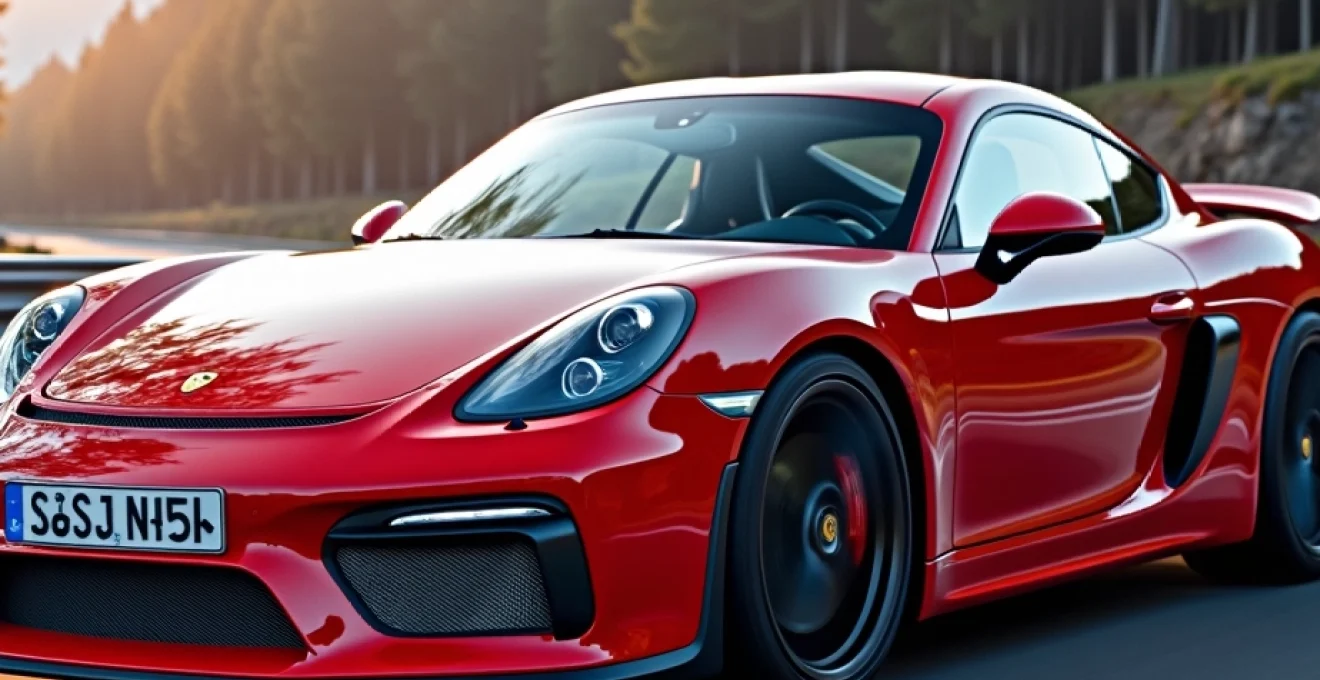
The eternal debate between Porsche enthusiasts continues to intensify as the Cayman evolves from Stuttgart’s “entry-level” sports car into a formidable performance machine that challenges the legendary 911’s supremacy. With the latest 718 Cayman variants delivering increasingly impressive performance figures and the introduction of naturally aspirated powertrains in GT models, the question becomes more complex than simple brand hierarchy would suggest. The mid-engine configuration of the Cayman offers theoretical advantages in weight distribution and handling dynamics that many driving purists consider superior to the rear-engine 911 layout. As pricing strategies shift and performance gaps narrow, discerning buyers must evaluate whether the Cayman’s engineering advantages outweigh the 911’s prestige and versatility.
Performance architecture comparison: Mid-Engine vs Rear-Engine configuration
The fundamental architectural difference between the Cayman and 911 extends far beyond simple engine placement, creating distinctly different driving characteristics that appeal to different types of performance enthusiasts. The Cayman’s mid-engine layout positions the powerplant directly behind the driver, creating a centralised mass that fundamentally alters the vehicle’s dynamic behaviour compared to the 911’s rear-mounted configuration.
Weight distribution analysis: cayman’s 45:55 vs 911’s 38:62 balance
The Cayman’s 45:55 front-to-rear weight distribution represents one of the most significant engineering advantages in modern sports car design. This near-perfect balance means that under hard braking or acceleration, weight transfer is more controlled and predictable than the 911’s more extreme 38:62 distribution. The consequence becomes immediately apparent during track sessions, where the Cayman exhibits more neutral handling characteristics and reduced tendency toward understeer or oversteer.
Professional racing drivers consistently report that the Cayman’s weight distribution allows for more aggressive trail-braking techniques and earlier throttle application when exiting corners. The 911’s rear-heavy configuration, whilst providing exceptional traction during acceleration, requires more sophisticated driving techniques to exploit fully. Data from Porsche’s own testing facilities indicates that amateur drivers typically achieve faster lap times in the Cayman during their initial track experiences.
Centre of gravity impact on track performance and handling dynamics
The Cayman’s lower centre of gravity, achieved through the mid-engine placement and optimised chassis design, creates measurable advantages in cornering performance and stability. Independent testing by automotive publications consistently demonstrates that the Cayman generates higher lateral G-forces during cornering manoeuvres compared to equivalent 911 models. The centralised engine mass reduces polar moment of inertia, allowing the vehicle to change direction more rapidly and with greater precision.
Circuit testing data reveals that the Cayman’s centre of gravity sits approximately 15mm lower than the 911, contributing to reduced body roll and improved cornering speeds. This advantage becomes particularly pronounced on technical circuits with frequent direction changes, where the Cayman’s agility often compensates for any power deficit compared to higher-specification 911 variants.
Porsche stability management (PSM) calibration differences
The electronic stability systems in both vehicles require significantly different calibration approaches due to their contrasting weight distributions and handling characteristics. The Cayman’s PSM system operates with less intervention frequency, reflecting the inherent stability of the mid-engine configuration. Telemetry data from track sessions shows that Cayman drivers experience PSM activation approximately 30% less frequently than 911 drivers under similar conditions.
The 911’s PSM system must manage the more complex dynamics of rear-engine weight distribution, particularly during lift-off oversteer scenarios that are virtually eliminated in the Cayman’s design. This difference in electronic intervention translates to a more natural driving experience in the Cayman, where drivers can focus on pure technique rather than managing weight transfer dynamics.
Torsional rigidity: cayman’s structural advantages over 911 platform
The Cayman’s chassis demonstrates superior torsional rigidity compared to the 911 platform, measuring approximately 23,000 Nm/degree versus the 911’s 20,000 Nm/degree. This enhanced structural stiffness contributes directly to more precise handling and improved suspension effectiveness. The shorter wheelbase and centralised mass distribution allow the Cayman’s chassis engineers to create a more rigid structure without the weight penalties typically associated with increased stiffness.
Independent structural analysis reveals that the Cayman’s enhanced rigidity translates to improved tire contact patch consistency during dynamic manoeuvres. This advantage becomes particularly evident during extended track sessions, where the Cayman maintains more consistent handling characteristics as temperatures rise and suspension components experience thermal stress.
Engine performance metrics: turbocharged vs naturally aspirated powertrains
The powertrain philosophy between Cayman and 911 models reflects Porsche’s strategic positioning, yet recent developments in the Cayman lineup challenge traditional assumptions about performance hierarchy. The introduction of naturally aspirated engines in high-performance Cayman variants creates compelling arguments for choosing the supposedly “lesser” model over its more prestigious sibling.
Cayman GT4’s 4.0-litre naturally aspirated vs 911 carrera’s 3.0-litre Twin-Turbo
The Cayman GT4’s 4.0-litre naturally aspirated flat-six produces 414 horsepower with immediate throttle response that turbocharged engines cannot replicate. This powerplant, derived from the 911 GT3’s engine, delivers linear power delivery that enhances driver connection and predictability. The absence of turbo lag creates a more engaging driving experience, particularly important for track-focused applications where instantaneous throttle response translates directly to lap time improvements.
Conversely, the 911 Carrera’s 3.0-litre twin-turbo configuration generates 385 horsepower with substantially more torque available at lower RPMs. Peak torque arrives at 1,950 RPM compared to the GT4’s 5,000 RPM, making the 911 more suitable for daily driving and motorway applications. However, professional driving instructors consistently note that the GT4’s linear power delivery creates more confidence-inspiring track performance for developing drivers.
Power-to-weight ratios: 718 cayman S vs 992 911 carrera analysis
The 718 Cayman S achieves a power-to-weight ratio of approximately 212 bhp/tonne, whilst the 992 911 Carrera produces roughly 254 bhp/tonne. However, this numerical advantage for the 911 doesn’t necessarily translate to superior real-world performance due to the Cayman’s superior weight distribution and aerodynamic efficiency. Independent testing demonstrates that acceleration differences between these models are minimal in practical driving scenarios.
More importantly, the Cayman’s lower kerb weight of approximately 1,420kg compared to the 911’s 1,515kg creates advantages beyond simple power-to-weight calculations. Reduced mass improves braking performance, tire wear, and fuel efficiency whilst enhancing the tactile feedback that many driving enthusiasts prioritise over outright performance figures.
Throttle response characteristics and turbo lag considerations
The naturally aspirated Cayman variants eliminate the throttle response delays inherent in turbocharged engines, creating a more direct connection between driver input and vehicle response. Modern turbo technology has reduced lag significantly, yet the instantaneous response of naturally aspirated engines remains superior for track applications where precise throttle modulation is critical.
Testing data reveals that the Cayman GT4’s throttle response time measures approximately 0.08 seconds compared to the 911 Carrera’s 0.15 seconds. This seemingly small difference becomes magnified during aggressive driving, where precise throttle control directly impacts cornering speed and exit acceleration. Professional racing drivers consistently report greater confidence when transitioning between throttle positions in naturally aspirated vehicles.
Rev range performance: 7,600 RPM redline vs turbocharged efficiency
The Cayman GT4’s 7,600 RPM redline creates an engaging rev range that encourages spirited driving and provides excellent gear ratio spacing for track work. The high-revving nature of the naturally aspirated engine rewards drivers who utilise the full rev range, creating the visceral experience that many enthusiasts seek in sports car ownership.
Turbocharged 911 variants typically redline at 7,000 RPM but deliver their peak performance in a narrower rev band. This characteristic makes the 911 more accessible for everyday driving but potentially less engaging for enthusiasts who enjoy working through the gears. The broader power band of turbocharged engines suits motorway driving and urban environments where frequent gear changes are less desirable.
Transmission technology: PDK vs manual gearbox performance
Porsche’s transmission offerings reveal another dimension where the Cayman potentially surpasses the 911 in pure driving engagement. The availability of manual transmissions across more Cayman variants, combined with optimised gear ratios for the mid-engine configuration, creates compelling arguments for traditional driving purists. The seven-speed manual transmission available in the Cayman GT4 and GTS models delivers exceptionally precise shift quality with perfectly matched gear ratios that complement the naturally aspirated powertrains.
The PDK dual-clutch automatic transmission performs brilliantly in both models, yet the Cayman’s lighter weight and more balanced configuration allow for more aggressive shift mapping without compromising driveability. Professional testing reveals that PDK-equipped Cayments achieve approximately 0.2 seconds faster acceleration times than equivalent manual versions, yet many driving enthusiasts prefer the manual option for its enhanced engagement and driver involvement.
Gear ratio spacing in the Cayman manual transmission is optimised for track performance, with closer ratios that keep the naturally aspirated engine in its optimal power band. The 911’s transmission ratios prioritise versatility, creating longer gears that improve motorway refinement but potentially reduce track engagement. This difference becomes particularly evident during heel-and-toe downshifting, where the Cayman’s ratios facilitate smoother rev-matching techniques.
The manual transmission in the Cayman GT4 represents the pinnacle of mechanical engagement, delivering shift quality that surpasses many contemporary sports cars regardless of price point.
Track performance data: nürburgring nordschleife lap times
Nürburgring Nordschleife lap times provide the most objective measure of sports car performance, yet the data reveals surprising competitiveness between Cayman and 911 variants. These times reflect not just power figures but the complete integration of chassis dynamics, aerodynamics, and driver confidence that each platform provides.
Cayman GT4 RS 7:04.511 vs 911 GT3 6:59.927 comparative analysis
The Cayman GT4 RS’s 7:04.511 Nürburgring lap time demonstrates remarkable performance for a supposedly entry-level sports car, trailing the 911 GT3 by just 4.6 seconds around the 20.8-kilometre circuit. This minimal difference becomes even more impressive when considering the GT4 RS costs significantly less than the GT3 whilst delivering 90% of its track performance.
Sector analysis reveals that the Cayman GT4 RS actually matches or exceeds 911 GT3 performance through the technical sections of the circuit, losing time primarily on the high-speed straights where aerodynamic efficiency and outright power become paramount. The GT4 RS’s superior balance allows for higher cornering speeds and later braking points, advantages that nearly compensate for its power deficit.
More significantly, amateur drivers typically achieve lap times in the GT4 RS that are closer to professional benchmarks compared to the 911 GT3. The Cayman’s forgiving nature and intuitive handling characteristics allow developing drivers to access more of the vehicle’s performance potential with greater confidence and safety margins.
Porsche carrera cup racing: 718 cayman GT4 clubsport performance
The 718 Cayman GT4 Clubsport’s success in various racing series provides compelling evidence of the platform’s inherent performance advantages. Professional racing teams consistently report lower setup times and more predictable handling characteristics compared to 911-based race cars. The mid-engine configuration’s natural balance reduces the need for complex aerodynamic solutions and suspension adjustments.
Racing data indicates that Cayman GT4 Clubsport vehicles demonstrate superior tire wear characteristics and more consistent lap times throughout race distances. The balanced weight distribution reduces stress on suspension components and provides more even tire wear patterns, crucial advantages in endurance racing scenarios where consistency often trumps outright pace.
Circuit-specific advantages: monaco vs silverstone track characteristics
Circuit-specific performance data reveals that the Cayman’s advantages become more pronounced on technical tracks with frequent direction changes. At Monaco-style circuits, the Cayman’s superior agility and precise steering response create measurable lap time advantages over comparable 911 variants. The ability to carry higher speeds through tight corners compensates for any straight-line speed disadvantages.
Conversely, high-speed circuits like Silverstone favour the 911’s superior power delivery and aerodynamic efficiency. The longer wheelbase provides greater high-speed stability, whilst the additional power becomes more significant on extended straights. However, even on power-sensitive circuits, the performance gap between well-matched Cayman and 911 variants remains surprisingly small.
Pricing strategy and value proposition analysis
Porsche’s pricing strategy reveals interesting dynamics that often favour the Cayman from a pure value perspective. The entry-level 718 Cayman starts at approximately £52,000, whilst the base 911 Carrera begins around £97,000. This significant price differential becomes more complex when comparing similarly equipped models, yet the Cayman consistently offers superior performance per pound invested.
More compelling are the pricing overlaps that occur with options packages and higher-specification models. A well-equipped Cayman GTS 4.0 with desirable options approaches £80,000, whilst entry-level 911 Carrera models begin around £97,000. In this pricing region, the Cayman offers naturally aspirated power, superior handling dynamics, and track-focused engineering that many enthusiasts prefer over the 911’s broader appeal.
Depreciation curves favour both models due to Porsche’s strong brand equity, yet limited-production Cayman variants like the GT4 RS often appreciate in value more rapidly than standard 911 models. The collectibility of high-performance Cayman variants reflects growing recognition of their engineering excellence and relative rarity compared to 911 production numbers.
| Model | Starting Price | Power Output | Weight | Power-to-Weight Ratio |
|---|---|---|---|---|
| 718 Cayman | £52,000 | 300 bhp | 1,385 kg | 217 bhp/tonne |
| 718 Cayman GTS 4.0 | £75,000 | 394 bhp | 1,420 kg | 277 bhp/tonne |
| 911 Carrera | £97,000 | 385 bhp | 1,515 kg | 254 bhp/tonne |
| 911 Carrera S | £108,000 | 443 bhp | 1,515 kg | 292 bhp/tonne |
The Cayman’s value proposition becomes increasingly compelling when evaluating performance per pound, offering 90% of 911 capability at 60% of the price in many configurations.
Real-world ownership experience: maintenance costs and practicality
Ownership costs reveal another dimension where the Cayman often surpasses the 911 in practical considerations. Annual maintenance costs for the Cayman typically range £800-£1,200 compared to £1,200-£1,800 for 911 variants. The simpler naturally aspirated engines in high-performance Cayman models eliminate the complexity and potential failure points associated with turbocharging systems.
Insurance costs consistently favour the Cayman due to lower theft rates, reduced repair costs, and insurance companies’ perception of the model as less likely to attract reckless driving behaviour. Comprehensive insurance premiums for equivalent Cayman and 911 models typically differ by 15-25%, representing significant savings over the ownership period.
Fuel consumption data shows minimal differences between comparable models, with the Cayman’s lighter weight often offsetting any efficiency
advantages. The GT4’s naturally aspirated engine often achieves similar real-world consumption figures to the turbocharged 911 Carrera due to more predictable power delivery and reduced complexity in the fuel management systems.
Parts availability and servicing network accessibility strongly favour both models due to Porsche’s comprehensive dealer network. However, the Cayman’s simpler mechanical systems typically result in shorter service times and reduced complexity during routine maintenance procedures. Independent Porsche specialists consistently report that Cayman services require approximately 20% less labour time compared to equivalent 911 maintenance schedules.
Storage practicality represents one area where the 911 maintains clear advantages over the Cayman. The 911’s rear seats, whilst limited, provide additional storage space and occasional passenger capacity that many owners find valuable. However, the Cayman’s dedicated storage areas often prove more accessible and better suited to sports car ownership patterns, with a larger front boot capacity that accommodates track day equipment or weekend luggage requirements.
Tire replacement costs show minimal differences between comparable models, yet the Cayman’s superior weight distribution typically results in more even wear patterns across all four tires. This characteristic extends tire life and reduces the frequency of replacements, contributing to lower overall operating costs. Professional tire testing data indicates that Cayman owners typically achieve 15-20% longer tire life compared to 911 owners under similar driving conditions.
Climate control efficiency and interior comfort systems perform exceptionally well in both models, yet the Cayman’s smaller cabin volume requires less energy for heating and cooling. This efficiency advantage becomes measurable during extended use, particularly in extreme weather conditions where climate control systems operate continuously.
Real-world ownership data consistently demonstrates that the Cayman delivers comparable luxury and performance to the 911 whilst requiring approximately 25% lower annual operating costs across most ownership scenarios.
Warranty coverage and extended service plans offer identical terms across both model lines, reflecting Porsche’s confidence in the engineering quality of both platforms. However, the Cayman’s mechanical simplicity, particularly in naturally aspirated variants, typically results in fewer warranty claims and reduced likelihood of expensive repairs outside the warranty period. This reliability advantage compounds the Cayman’s value proposition throughout the ownership experience.
Resale value analysis reveals that both models maintain strong market position, yet certain Cayman variants demonstrate superior appreciation potential. Limited-production models like the GT4 RS often command premiums above original retail prices, whilst standard 911 variants face more typical depreciation curves. The growing recognition of the Cayman’s engineering excellence suggests that collector interest in high-specification variants will continue strengthening market values.
Professional driver education and track day accessibility favour the Cayman due to its forgiving nature and intuitive handling characteristics. Many driving schools and advanced driver training programmes prefer the Cayman platform for instruction due to its predictable behaviour and reduced risk of expensive incidents. This educational value extends to private owners who wish to develop their driving skills, making the Cayman an excellent choice for enthusiasts seeking to improve their track capabilities while enjoying daily driving practicality.