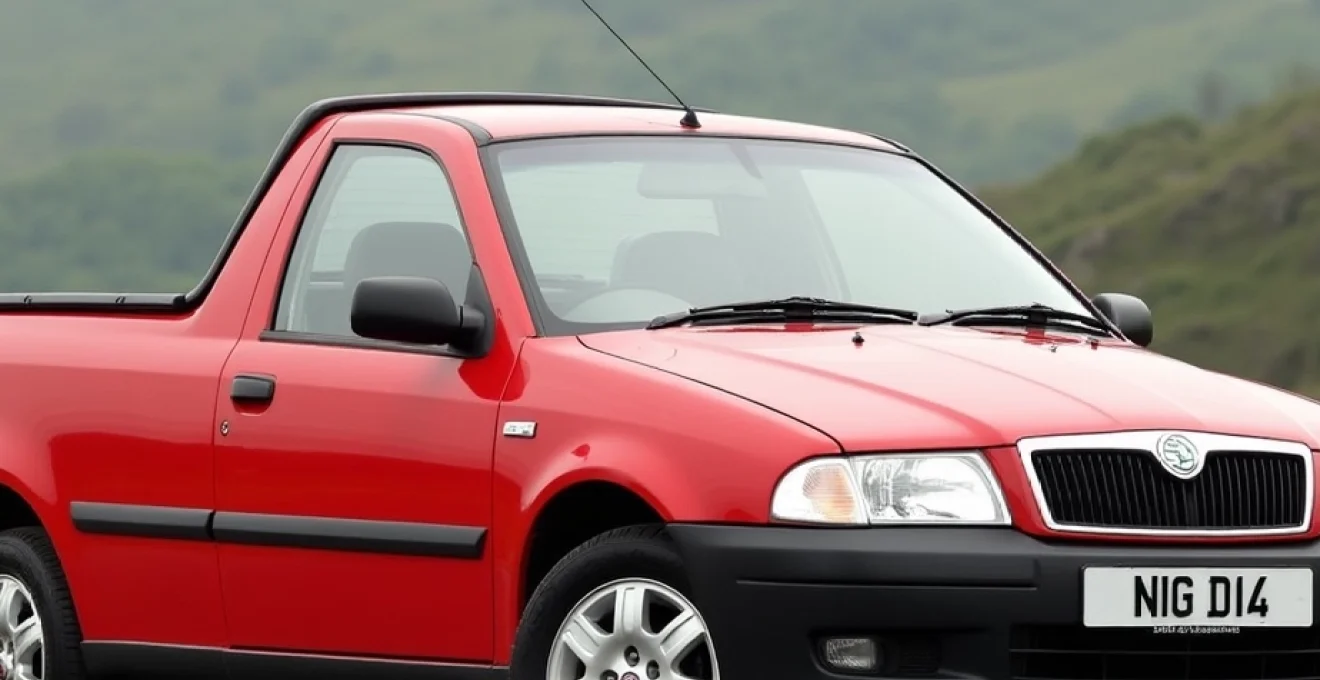
The Škoda Felicia pick-up represents a fascinating chapter in Czech automotive history, embodying the transition period when Volkswagen’s influence began transforming the traditional Škoda brand. Produced between 1996 and 2001, this compact commercial vehicle emerged as an affordable alternative in the European light commercial vehicle market, offering practical utility wrapped in increasingly refined engineering. Built on the foundations of the Felicia passenger car platform, the pick-up variant demonstrated Škoda’s commitment to diversifying beyond conventional passenger cars whilst maintaining the brand’s reputation for value-driven motoring solutions.
Understanding the Felicia pick-up requires appreciating its position within the broader commercial vehicle landscape of the late 1990s. This was an era when manufacturers recognised the growing demand for compact, car-based commercial vehicles that could serve dual purposes – providing professional capability during the week whilst offering recreational versatility at weekends. The Felicia pick-up, particularly in its memorable “Fun” variant, captured this zeitgeist perfectly, becoming a cult favourite among enthusiasts who appreciated its quirky character and honest engineering approach.
Škoda felicia pick-up technical specifications and variant analysis
The technical foundation of the Škoda Felicia pick-up centres on robust yet straightforward engineering principles that prioritised reliability and cost-effectiveness over cutting-edge technology. Built on a modified version of the Felicia passenger car platform, the pick-up featured a reinforced chassis designed to handle commercial loads whilst maintaining acceptable ride quality. The wheelbase measured 2,450mm, providing adequate stability for load-carrying duties, whilst the overall length of 4,295mm ensured manoeuvrability in urban environments remained practical for commercial operators.
Load capacity represented a critical specification for potential buyers, with the Felicia pick-up offering a maximum payload of 635kg when properly configured. The load bed dimensions measured 1,430mm in length and 1,220mm in width, providing sufficient space for most small commercial applications. Towing capacity reached 800kg for braked trailers, making the vehicle suitable for light commercial operations requiring occasional trailer usage. These specifications positioned the Felicia pick-up competitively against rivals such as the Volkswagen Caddy and Ford Courier.
1.3 MPI petrol engine performance metrics and fuel economy
The entry-level powerplant consisted of Škoda’s indigenous 1.3-litre multi-point injection petrol engine, producing 68 horsepower at 5,500 rpm and 108 Nm of torque at 3,000 rpm. This engine represented the final evolution of Škoda’s traditional powerplant technology, incorporating lessons learned from decades of development whilst benefiting from Volkswagen’s quality control improvements. The relatively modest power output proved adequate for urban commercial duties, though highway performance remained leisurely by modern standards.
Fuel consumption figures for the 1.3 MPI engine averaged 8.5 litres per 100 kilometres in mixed driving conditions, making it one of the more economical options in the light commercial vehicle segment. The engine’s simplicity contributed to its reliability, with many examples achieving high mileages without major mechanical intervention. However, the limited torque output meant fully-loaded acceleration remained sluggish, particularly when climbing gradients or overtaking slower traffic on rural roads.
1.6 GLXi power unit characteristics and torque delivery
The premium engine option featured Volkswagen’s proven 1.6-litre petrol unit, delivering 75 horsepower at 5,000 rpm and 135 Nm of torque at 3,500 rpm. This powerplant, shared with contemporary Volkswagen Polo models, provided noticeably improved performance characteristics compared to the smaller engine. The additional displacement and more sophisticated engine management systems resulted in smoother power delivery and enhanced drivability across various operating conditions.
Torque delivery characteristics proved particularly beneficial for commercial applications, with the 1.6-litre engine providing sufficient low-end grunt for loaded starts and hill climbing. Fuel consumption increased modestly to approximately 9.2 litres per 100 kilometres, but the improved performance capabilities often justified the additional running costs for operators requiring better load-carrying performance. The engine’s Volkswagen heritage also contributed to improved long-term reliability and parts availability considerations.
Payload capacity and towing specifications for commercial applications
Commercial viability depended heavily on the Felicia pick-up’s load-carrying capabilities, which varied depending on specification and configuration. The standard pick-up variant offered a maximum gross vehicle weight of 1,800kg, translating to a usable payload of approximately 635kg when accounting for driver, fuel, and basic equipment. This capacity proved adequate for typical small business applications, including tool transportation, light delivery duties, and general commercial hauling requirements.
Towing specifications allowed for 800kg braked trailer capacity or 400kg unbraked, positioning the Felicia pick-up as suitable for operators requiring occasional trailer usage. The vehicle’s relatively light kerb weight of approximately 1,100kg meant towing larger loads could impact performance significantly, particularly with the smaller engine option. Load distribution became critical for maintaining acceptable handling characteristics, with excessive rear loading potentially affecting steering precision and braking performance on wet surfaces.
Wheelbase dimensions and load bay configuration analysis
The load bay configuration reflected practical commercial requirements whilst maintaining manufacturing cost efficiency. Internal dimensions measured 1,430mm length by 1,220mm width, with side panel heights of 380mm providing reasonable containment for loose materials. The tailgate design featured a simple drop-down mechanism, though quality control issues occasionally affected the tailgate’s long-term durability, particularly in high-usage commercial applications.
Wheelbase positioning at 2,450mm provided adequate weight distribution for normal commercial loads, though the relatively short rear overhang meant load placement required careful consideration. The suspension setup, featuring MacPherson struts at the front and a simple torsion beam rear axle, offered acceptable ride quality for a commercial vehicle whilst maintaining load-carrying capability. Ground clearance of 160mm proved sufficient for most applications, though severe off-road usage could expose the vehicle’s limitations.
Model year evolution and production timeline assessment
The Škoda Felicia pick-up’s production run from 1996 to 2001 encompassed significant technological and quality improvements as Volkswagen’s influence permeated throughout Škoda’s manufacturing processes. Early production models reflected the transitional nature of the brand, combining traditional Škoda engineering approaches with gradually improving quality control standards and component specifications. These initial examples often exhibited typical Eastern European automotive characteristics, including variable build quality and occasional component reliability issues.
Production volume remained relatively modest throughout the vehicle’s lifecycle, with approximately 15,000 units manufactured across all variants and markets. This limited production run reflected the niche nature of the compact pick-up segment in European markets, where larger commercial vehicles or car-derived vans typically dominated commercial vehicle sales. The relatively low production numbers also contribute to the vehicle’s current collectibility, particularly for well-preserved examples of the distinctive “Fun” variant.
1996-2001 manufacturing changes and component updates
Significant manufacturing improvements occurred progressively throughout the production run, with 1998 representing a notable milestone for quality enhancement. Early production models sometimes suffered from inconsistent panel gaps, variable paint quality, and occasionally problematic electrical systems. Volkswagen’s increasing quality control influence gradually addressed these issues, with later production models demonstrating notably improved build standards and component durability.
Component updates included improved door seals, upgraded electrical connectors, and enhanced corrosion protection treatments applied to critical structural areas. The introduction of revised brake components in 1999 addressed earlier concerns about braking performance under commercial loading conditions. Engine management systems also received updates, improving cold-start reliability and overall drivability characteristics, particularly beneficial for commercial operators requiring consistent performance across varying operating conditions.
Facelift modifications and interior equipment upgrades
The 1998 model year introduced subtle exterior styling refinements, including revised front grille designs and updated lighting configurations that aligned more closely with contemporary Volkswagen design language. Interior improvements focused primarily on enhanced material quality and improved ergonomics, addressing earlier criticism regarding the spartan cabin appointments and uncomfortable seating positions during extended driving periods.
Equipment upgrades included the introduction of central locking as standard equipment, improved radio systems with better sound quality, and enhanced heating and ventilation performance. The dashboard layout received minor revisions to improve switch accessibility and reduce the incidence of rattles and squeaks that plagued earlier production models. These improvements significantly enhanced the ownership experience whilst maintaining the vehicle’s competitive pricing position within the segment.
Regional market variations between european and export models
European market models typically featured more comprehensive equipment specifications compared to export variants destined for developing markets. European specifications included catalytic converters, enhanced safety equipment, and improved corrosion protection treatments that reflected more stringent regulatory requirements and consumer expectations. Interior trim quality and equipment levels also varied significantly between regional markets, with Western European models receiving superior materials and more comprehensive instrumentation.
Export models often featured simplified mechanical specifications, including carburettor engines in some markets rather than the fuel injection systems standard in European applications. These variations reflected local fuel quality considerations, maintenance capability limitations, and cost sensitivity in developing markets. Understanding these regional differences becomes crucial when evaluating used examples, as specification levels can vary dramatically depending on the vehicle’s original market destination.
Limited edition variants and special package options
The most notable special variant was undoubtedly the Felicia “Fun” model, introduced in 1998 as a lifestyle-oriented pick-up targeting recreational users rather than commercial operators. This distinctive variant featured bright yellow paintwork with contrasting colour accents, special alloy wheels, and unique interior trim elements that emphasised its leisure-focused positioning. The Fun variant also incorporated a sliding rear bulkhead system, allowing transformation from a two-seat commercial vehicle to a four-seat recreational vehicle.
Production of the Fun variant remained extremely limited, with only approximately 4,200 examples manufactured across all markets. This scarcity has contributed to the variant’s current collector appeal, with well-preserved examples commanding premium prices compared to standard commercial specifications. The Fun variant’s quirky character and unique practicality have earned it a cult following among enthusiasts who appreciate its honest engineering and distinctive visual appeal.
Common mechanical issues and Pre-Purchase inspection protocol
Prospective buyers must understand the typical mechanical vulnerabilities associated with Škoda Felicia pick-ups to make informed purchasing decisions and budget appropriately for ownership costs. Age-related deterioration affects these vehicles predictably, with certain components showing consistent patterns of failure that experienced buyers can identify during pre-purchase inspections. Understanding these common issues enables buyers to negotiate appropriate purchase prices whilst avoiding examples with potentially expensive hidden problems.
The vehicle’s relatively simple mechanical specification generally contributes to manageable maintenance requirements, though certain components require particular attention due to their criticality for safe operation. Regular inspection intervals become increasingly important as these vehicles age, with preventive maintenance proving more cost-effective than reactive repairs for major component failures. Establishing a relationship with a knowledgeable independent specialist can significantly reduce long-term ownership costs through early problem identification and appropriate maintenance scheduling.
Gearbox synchromesh wear patterns and transmission reliability
The five-speed manual transmission fitted to Felicia pick-ups generally provides reliable service, though synchromesh wear becomes increasingly common in high-mileage examples, particularly those subjected to heavy commercial usage. Second gear synchromesh typically shows first signs of deterioration, manifesting as difficulty engaging gear when downshifting at speed or crunching noises during gear changes. This condition often develops gradually, allowing continued operation whilst planning for eventual transmission attention.
Transmission fluid condition provides valuable insights into internal component condition, with clean, correct-specification fluid indicating conscientious maintenance practices. Contaminated or incorrect fluid often suggests deferred maintenance, potentially accelerating internal wear rates and reducing remaining service life. Complete transmission replacement typically costs between £800-1,200 including labour, making pre-purchase transmission assessment particularly important for maintaining realistic ownership budgets.
Suspension component degradation and shock absorber assessment
Front suspension components, particularly MacPherson strut assemblies and associated bushings, commonly require attention in higher-mileage examples. Worn shock absorbers manifest through reduced damping effectiveness, excessive body roll during cornering, and potentially dangerous handling characteristics under emergency braking conditions. Visual inspection often reveals fluid leakage from worn shock absorber seals, providing clear evidence of component degradation requiring immediate attention.
Rear suspension problems typically centre on torsion beam bushings and shock absorber deterioration, with symptoms including excessive rear-end movement over undulating surfaces and reduced load-carrying stability. Replacement costs remain relatively modest for individual components, though simultaneous replacement of related items often proves more cost-effective than piecemeal repairs. Professional inspection becomes essential for identifying potentially dangerous suspension deterioration that might compromise vehicle safety.
Electrical system diagnostics and alternator performance testing
Electrical system reliability improved significantly throughout the production run, though earlier examples occasionally exhibit typical period characteristics including intermittent connections, degraded wiring harnesses, and component failures. Alternator performance becomes particularly critical for commercial operators requiring reliable starting capability, with charging system problems potentially stranding vehicles at inconvenient locations and disrupting business operations.
Battery drain issues sometimes occur due to aging electrical components or aftermarket accessory installations that bypass proper electrical isolation systems. Testing the charging system output under load conditions provides valuable information about alternator condition and remaining service life. Electrical component replacement typically utilises Volkswagen Group parts, ensuring reasonable availability and competitive pricing for most items requiring attention.
Rust prevention treatment and bodywork corrosion evaluation
Corrosion protection improved substantially during the production run, with later examples demonstrating significantly better resistance to structural rust compared to early models. However, age and usage patterns inevitably contribute to bodywork deterioration, particularly in areas subject to road salt exposure or poor drainage design. Critical inspection areas include door frames, rear quarter panels, and load bed mounting points where structural integrity affects safety and legal compliance.
Surface rust treatment remains relatively straightforward when addressed promptly, though structural corrosion often requires expensive professional attention or renders vehicles economically irreparable. Understanding the distinction between cosmetic and structural corrosion enables realistic assessment of restoration costs versus vehicle value. Professional bodywork assessment becomes essential for high-value examples or vehicles intended for long-term retention.
Current market valuation and price range analysis
Current market valuations for Škoda Felicia pick-ups demonstrate significant variation depending on condition, specification, mileage, and variant type. Recent auction data indicates prices ranging from £1,120 for basic examples requiring attention to £22,441 for exceptional collectors’ items, typically representing rare Fun variants in pristine condition. The median price of approximately £3,888 reflects typical examples in reasonable condition suitable for either commercial use or casual recreational applications.
Market dynamics show strong demand for well-preserved examples, particularly the distinctive Fun variant, which commands substantial premiums over standard commercial specifications. The 95% sell-through rate at auctions indicates healthy collector interest and limited supply of quality examples entering the market. This strong market performance suggests continued appreciation potential for the best examples, making careful selection increasingly important for investment-minded buyers.
The Felicia pick-up market demonstrates classic collector car dynamics, with the best examples appreciating whilst poor condition vehicles become increasingly difficult to sell at any price.
Geographic variations affect pricing significantly, with examples in low-corrosion regions commanding premiums over vehicles from areas with harsh winter conditions or coastal salt exposure. Mileage affects valuation substantially, though well-maintained high-mileage examples often represent better value than neglected low-mileage vehicles. Service history documentation increasingly influences market values, with comprehensive maintenance records adding significant value to asking prices.
Professional valuation services recognise these vehicles’ collector potential, with insurance companies beginning to offer agreed-value policies for exceptional examples. This trend suggests growing mainstream recognition of the Felicia pick-up’s significance within automotive history. Current pricing trends indicate that quality examples will continue appreciating, making immediate acquisition advisable for those seeking ownership before prices rise further.
Parts availability and maintenance cost considerations
Parts availability remains generally satisfactory for Škoda Felicia pick-ups, benefiting from the model’s relationship to contemporary Volkswagen products and Škoda’s continued operation under Volkswagen Group ownership. Many mechanical components interchange with other Volkswagen Group vehicles from the period, including Volkswagen Polo and Seat Ibiza models, ensuring reasonable availability for common service items. However, specific pick-up body components and trim pieces can prove challenging to source, particularly for the distinctive Fun variant.
Maintenance costs typically remain modest compared to premium German alternatives, reflecting the vehicle’s original positioning as an affordable commercial vehicle. Engine service components, including filters, spark plugs, and routine consumables, cost significantly less than contemporary Mercedes-Benz or BMW equivalents. However, specialist items such as load bay trim pieces or Fun-specific interior components may require sourcing from breaker’s yards or specialist suppliers, potentially increasing restoration costs for comprehensive projects.
Independent specialists have developed significant expertise with these vehicles, often offering more cost-effective maintenance solutions
than main dealer services whilst maintaining appropriate quality standards. These specialists often maintain stocks of commonly required components and can advise on cost-effective alternatives for expensive original equipment items.
Annual maintenance budgets typically range from £300-600 for well-maintained examples, depending on mileage and usage patterns. Commercial operators often find that preventive maintenance schedules prove more economical than reactive repairs, particularly for critical items such as brakes, tyres, and suspension components. The availability of generic alternatives for many consumable items helps control ongoing ownership costs without compromising safety or reliability standards.
Insurance classification and registration requirements for commercial use
Insurance classification for Škoda Felicia pick-ups depends primarily on intended usage patterns, with significant premium differences between commercial and private use policies. Commercial vehicle insurance typically costs 15-25% more than private car equivalents, reflecting higher usage patterns and increased exposure to accidents. However, the vehicle’s modest performance capabilities and good safety record help maintain reasonable premium levels compared to more powerful alternatives in the light commercial vehicle sector.
Registration requirements vary significantly between commercial and private use applications. Commercial operators must comply with operator licensing requirements, regular safety inspections, and potentially restrictive urban access limitations that affect business operations. Private users generally face fewer regulatory requirements, though some jurisdictions impose restrictions on pick-up vehicle access to certain residential areas or parking facilities.
Historic vehicle classification becomes relevant for older examples, particularly those over 25 years old, which may qualify for reduced insurance premiums and relaxed emissions testing requirements. This classification can significantly reduce ownership costs for well-preserved examples used primarily for recreational purposes. However, commercial use typically precludes historic vehicle benefits, requiring operators to maintain full commercial insurance coverage regardless of vehicle age.
Vehicle modification regulations require careful consideration for owners planning performance or aesthetic improvements. Many jurisdictions require official approval for significant modifications, particularly those affecting safety systems, lighting, or structural integrity. The Fun variant’s factory modifications generally comply with contemporary regulations, though retrofitting similar modifications to standard pick-ups may require engineering approval and additional insurance coverage.
Current regulations increasingly favour low-emission vehicles, potentially affecting future ownership costs through taxation changes or access restrictions in urban areas. The Felicia pick-up’s petrol engines generally meet Euro 2 emission standards, which may face restrictions in some European city centres implementing stricter environmental regulations. Prospective buyers should consider these regulatory trends when evaluating long-term ownership viability, particularly for commercial applications requiring urban access.
Understanding insurance and regulatory requirements becomes crucial for making informed ownership decisions, particularly for commercial operators whose business viability depends on continued vehicle access and reasonable operating costs.
The Škoda Felicia pick-up represents a unique opportunity to own a distinctive commercial vehicle that bridges the gap between practical utility and recreational versatility. With current market values reflecting growing collector recognition, quality examples offer the potential for both enjoyable ownership and modest investment appreciation. However, successful ownership requires realistic expectations about the vehicle’s capabilities, honest assessment of condition, and appropriate budgeting for maintenance requirements.
Whether sought for commercial applications, recreational use, or collector interest, the Felicia pick-up rewards careful selection and conscientious maintenance with reliable service and distinctive character. The limited production numbers, particularly of the memorable Fun variant, ensure continued interest from enthusiasts who appreciate honest engineering and quirky automotive personality. For those willing to accept the compromises inherent in 1990s commercial vehicle technology, the Felicia pick-up offers an affordable entry point into distinctive motoring with genuine practical utility.