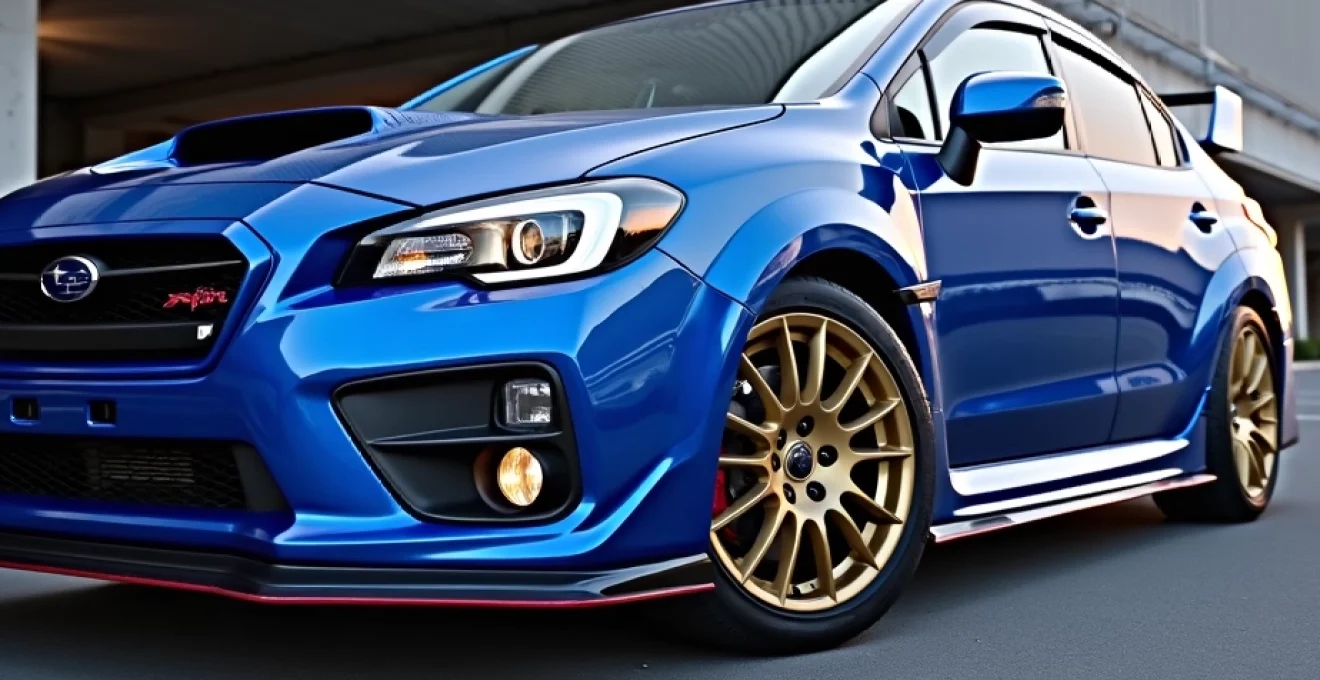
The Subaru Impreza WRX STI in its iconic World Rally Blue represents more than just a high-performance saloon – it embodies a legacy of motorsport excellence that has captivated enthusiasts for over three decades. This distinctive azure hue, paired with golden BBS wheels and aggressive aerodynamic elements, has become synonymous with rally-bred performance and engineering precision. From its humble beginnings as a homologation special to its evolution into a collector’s dream, the blue STI continues to command respect on both tarmac and gravel surfaces worldwide.
Evolution of the subaru impreza WRX STI blue legacy from 1994 to present
The journey of the World Rally Blue Subaru Impreza WRX STI represents one of the automotive industry’s most compelling evolution stories. Beginning in the early 1990s, Subaru’s decision to create a road-going version of their rally weapon would forever change the landscape of performance motoring. This blue-badged beast emerged from Subaru’s need to homologate their rally car for competition, creating an authentic connection between motorsport and mainstream motoring that few manufacturers have matched.
First generation GC8 world rally blue pearl introduction
The original GC8 chassis introduced the World Rally Blue Pearl finish that would become legendary among performance car enthusiasts. This wasn’t simply a marketing decision – the distinctive metallic blue shade was chosen to maximise visibility during televised rally coverage whilst maintaining the aggressive aesthetic demanded by the STI’s performance credentials. The paint formula contained special mica particles that created depth and brilliance under varying light conditions, making the car instantly recognisable whether parked in a service park or charging through forest stages.
Production numbers for the first-generation blue STI models were deliberately limited, creating immediate desirability among collectors. The combination of the 2.0-litre turbocharged boxer engine producing 280 horsepower and the striking visual presence established a template that Subaru would refine rather than revolutionise. Early models featured a simpler approach to aerodynamics, with the iconic rear spoiler serving both functional and aesthetic purposes.
Hawkeye and blobeye era blue paint variations
The second and third generation models, affectionately known as the “Blobeye” (2002-2005) and “Hawkeye” (2006-2007) variants, saw subtle but significant changes to the World Rally Blue formulation. Paint technology advances allowed for improved durability and colour consistency, addressing early concerns about fading and colour matching for repairs. These generations also introduced special edition variants that experimented with different blue tones, including the darker Obsidian Black Pearl that appeared on certain limited runs.
During this period, Subaru’s rally success reached its peak, with Colin McRae and Richard Burns delivering championship victories that directly influenced production car development. The blue paint became more than just a colour choice – it represented a direct lineage to championship-winning machinery. Production volumes increased slightly, though each model year maintained exclusivity through careful market planning and distribution strategies.
Modern VA and VB series lapis blue pearl evolution
Contemporary STI models introduced Lapis Blue Pearl, a modern interpretation of the classic World Rally Blue theme. This evolution reflects advances in paint technology whilst maintaining the visual DNA that makes an STI instantly recognisable. The new formulation offers superior UV resistance and environmental durability, addressing long-term ownership concerns that affected earlier generations.
The VA series (2015-2021) and current VB series models feature more sophisticated paint application processes, including multi-stage clearcoat systems that enhance both appearance and protection. Despite these technological improvements, Subaru has carefully preserved the emotional connection that the blue finish represents to enthusiasts worldwide.
Limited edition blue STI models: 22B and ts variants
Special edition models like the legendary 22B demonstrated how the blue finish could be elevated to even greater significance. Limited to just 424 examples, the 22B featured a unique two-tone blue scheme that combined World Rally Blue with darker accents, creating visual drama that matched its mechanical prowess. The wider bodywork and aggressive aerodynamics were perfectly complemented by the signature colour scheme.
More recent tS (tuned by STI) variants have continued this tradition, offering limited production runs with exclusive blue paint options. These models typically feature enhanced suspension tuning, aerodynamic packages, and interior upgrades that justify their premium positioning. The exclusivity factor has made these vehicles highly sought after, with some examples appreciating significantly from their original retail prices.
Technical specifications behind the iconic blue STI performance
The technical foundation supporting the STI’s legendary status extends far beyond its striking visual appearance. Every blue STI represents a carefully orchestrated marriage of advanced engineering and rally-proven technology, creating a driving experience that justifies its iconic status. Understanding these mechanical elements helps explain why the STI has maintained its position as a benchmark for affordable performance cars across multiple generations.
EJ257 turbocharged boxer engine configuration
The heart of most blue STI models lies in the EJ257 engine, a 2.5-litre turbocharged boxer configuration that delivers distinctive character alongside impressive performance figures. This horizontally-opposed engine architecture provides a lower centre of gravity compared to conventional inline or V-configured engines, contributing directly to the STI’s renowned handling characteristics. The turbocharger system utilises sophisticated intercooling and wastegate management to deliver consistent power delivery across a broad rev range.
Peak power output typically ranges from 300-310 horsepower depending on model year and market specifications, with torque figures reaching approximately 290-300 lb-ft. However, the engine’s real strength lies in its progressive power delivery and distinctive soundtrack that enthusiasts describe as unmistakable. The boxer configuration creates a unique exhaust note that’s immediately recognisable, particularly when combined with the STI’s performance exhaust systems.
Symmetrical All-Wheel drive system mechanics
Subaru’s Symmetrical All-Wheel Drive system represents one of the most sophisticated traction management solutions available in a production car. Unlike many competitors who offer all-wheel drive as an optional extra, every STI features permanent four-wheel drive as standard equipment. The system continuously monitors wheel slip, throttle position, steering angle, and numerous other inputs to distribute torque optimally between all four wheels.
The mechanical centre differential can be manually adjusted using the driver-controlled centre differential (DCCD) system, allowing experienced drivers to tailor the car’s behaviour for specific conditions or driving preferences. This level of mechanical sophistication, combined with the boxer engine’s low centre of gravity, creates handling characteristics that remain competitive even against modern performance cars with more advanced electronic systems.
Brembo brake package and gold wheel combinations
The iconic gold BBS wheels aren’t merely aesthetic choices – they represent carefully engineered components that contribute significantly to the STI’s performance capabilities. These forged alloy wheels offer substantial weight savings compared to cast alternatives whilst providing the strength necessary to handle the STI’s performance potential. The distinctive gold finish has become as recognisable as the blue paintwork, creating a visual combination that’s instantly associated with STI heritage.
Behind these wheels lies a comprehensive Brembo brake package featuring large ventilated discs and four-piston callipers. The brake system is specifically calibrated to provide consistent performance under the extreme conditions that STI models regularly encounter. The combination of high-performance pads, racing-derived brake fluid, and optimised cooling ensures that the braking system matches the engine’s impressive capabilities.
Sti-tuned suspension geometry and handling dynamics
STI’s suspension engineers have developed sophisticated solutions that balance comfort for daily driving with the precision required for spirited performance. The suspension geometry features carefully calculated caster and camber angles that maximise tyre contact patches during cornering whilst maintaining acceptable ride quality for regular use. Adjustable components allow enthusiasts to fine-tune handling characteristics for specific applications or personal preferences.
The suspension system incorporates rally-derived technology including robust mounting points and carefully selected spring and damper rates. This foundation provides exceptional body control and precise steering response that makes the STI rewarding to drive at any speed. The combination of mechanical grip from the all-wheel drive system and sophisticated suspension tuning creates handling dynamics that remain engaging and confidence-inspiring across a wide range of driving conditions.
Driver controlled centre differential technology
The DCCD system represents one of the STI’s most distinctive technical features, allowing drivers to manually adjust torque distribution between front and rear axles. This mechanical system provides three automatic modes plus manual adjustment capability, enabling experienced drivers to optimise the car’s behaviour for specific conditions. The system’s sophistication extends beyond simple torque splitting, incorporating electronic controls that monitor multiple vehicle parameters to enhance both performance and safety.
Understanding and utilising the DCCD system effectively requires knowledge and experience, making it a feature that rewards skilled drivers whilst remaining accessible to less experienced owners. The system’s flexibility allows the STI to excel in diverse conditions from snow-covered roads to dry tarmac racetracks, demonstrating the versatility that has made these cars popular with enthusiasts worldwide.
World rally championship heritage and motorsport DNA
The Impreza WRX STI’s rally heritage isn’t just marketing material – it represents genuine technological transfer from championship-winning competition cars to production vehicles available to enthusiasts worldwide.
Subaru’s World Rally Championship involvement from 1990 to 2008 created an unprecedented connection between motorsport success and production car development. The blue Impreza became synonymous with rally excellence during this period, securing three consecutive manufacturers’ championships between 1995 and 1997. This success wasn’t achieved through marketing budgets or corporate partnerships – it resulted from genuine engineering excellence and an unwavering commitment to performance development.
The technical knowledge gained through rally competition directly influenced production STI development, creating genuine homologation specials that retained meaningful connections to their competition counterparts. Features like the intercooler positioning, suspension mounting points, and aerodynamic elements were developed through extensive testing in rally conditions before being refined for road use. This development process ensured that every production STI benefited from hard-won competition experience .
Notable drivers like Colin McRae, Richard Burns, and Petter Solberg didn’t just represent Subaru’s competitive ambitions – they actively contributed to vehicle development through detailed feedback and testing programmes. Their input helped refine everything from gear ratios to suspension settings, creating production cars that genuinely reflected championship-winning DNA. The distinctive blue livery became globally recognisable through television coverage, creating emotional connections that transcended simple automotive appreciation.
Factory paint codes and authentic blue STI colour matching
Maintaining authenticity when restoring or repairing blue STI models requires understanding the specific paint codes and application processes used during production. Subaru has employed several variations of blue paint throughout the STI’s production history, each with distinct characteristics that affect both appearance and long-term durability. Professional restoration work demands precise colour matching using original manufacturer specifications rather than generic automotive paints.
The most commonly referenced paint code is 02C for World Rally Blue Pearl, though variations exist depending on model year and market destination. These codes represent specific formulations that include particular mica content, base coat specifications, and clearcoat requirements. Professional paint shops specialising in Japanese performance cars typically maintain databases of these specifications to ensure accurate colour reproduction.
Modern paint matching technology has simplified the restoration process, though achieving perfect results still requires expertise and attention to detail. The metallic content in genuine World Rally Blue Pearl creates unique light reflection properties that are difficult to replicate using standard automotive paints. Successful restoration projects often require multiple test panels to achieve acceptable colour matches, particularly when blending new paint with aged original finishes.
Collectors and enthusiasts frequently debate the merits of different paint applications, with some preferring the deeper metallic appearance of early formulations whilst others appreciate the durability improvements found in later versions. These discussions highlight the technical complexity behind what might appear to be a simple colour choice, demonstrating how even seemingly minor details contribute to the STI’s legendary status.
Market performance and collector value appreciation trends
The collector car market has embraced blue STI models with increasing enthusiasm, particularly as production has ceased in several markets and surviving examples become increasingly scarce. Market analysis indicates that well-maintained examples have experienced significant appreciation, with certain limited editions commanding prices that exceed their original retail values by substantial margins. This trend reflects broader collector interest in Japanese performance cars from the 1990s and 2000s.
Several factors contribute to STI value appreciation, including production numbers, condition, modification history, and provenance. Unmodified examples with comprehensive service histories typically command premium prices, though tastefully enhanced vehicles can also attract strong market interest. The key lies in understanding what modifications enhance rather than detract from a vehicle’s desirability among serious collectors.
Recent auction results demonstrate the market’s appetite for exceptional STI examples, with pristine low-mileage models achieving prices that would have seemed impossible just a few years ago. The 22B STI has emerged as a particular favourite among collectors, with examples regularly selling for six-figure sums at prestigious auction houses. This appreciation reflects both the model’s rarity and its significance within Subaru’s historical narrative.
Market trends suggest that the appreciation cycle for STI models is still in its early stages, particularly for well-preserved examples of more common variants. As emission regulations and electrification make traditional turbocharged performance cars increasingly rare, the STI’s combination of mechanical sophistication and authentic character positions it favourably for continued collector interest. Investment potential aside, these cars continue to deliver the driving satisfaction that originally made them desirable.
Enthusiast community and modified blue STI scene analysis
The global STI enthusiast community represents one of the most passionate and knowledgeable groups in automotive culture, united by appreciation for Subaru’s distinctive approach to performance car development. Online forums, social media groups, and regional clubs provide platforms for sharing technical knowledge, organising events, and preserving the heritage associated with these remarkable machines. The community’s depth of technical expertise often exceeds that found in official service documentation.
Modification culture surrounding blue STI models has evolved from simple power upgrades to sophisticated approaches that enhance rather than compromise the original engineering vision. Respected tuning companies have developed comprehensive upgrade packages that maintain reliability whilst delivering increased performance, creating vehicles that often exceed the capabilities of later factory models. The key lies in understanding which modifications complement rather than contradict the STI’s fundamental character.
Popular modifications include exhaust system upgrades, intake improvements, suspension refinements, and brake enhancements, though the most successful builds maintain the visual and auditory characteristics that make STI models distinctive. The modification scene has also contributed to parts availability and technical knowledge preservation, ensuring that maintaining these cars remains feasible as they age. Community expertise often provides solutions to problems that official service networks cannot address.
The STI modification community has developed an understanding of these cars that goes beyond simple performance enhancement – it represents genuine appreciation for engineering excellence and motorsport heritage.
Regional STI gatherings and track events provide opportunities for owners to experience their cars in appropriate environments whilst sharing knowledge and passion with like-minded enthusiasts. These events often feature technical seminars, parts exchanges, and driving opportunities that help preserve and celebrate the STI’s unique position in automotive history. The community’s commitment to education and preservation ensures that future generations will understand and appreciate what makes these blue machines special.
The modification scene has also influenced the collector market, with certain well-executed builds achieving recognition and value appreciation comparable to factory originals. This trend suggests that the enthusiast community’s technical expertise and aesthetic judgement has matured to the point where modified examples can be considered legitimate expressions of the STI philosophy rather than simple departures from factory specification. The most successful builds demonstrate how modification can enhance rather than diminish the fundamental qualities that make STI ownership rewarding.