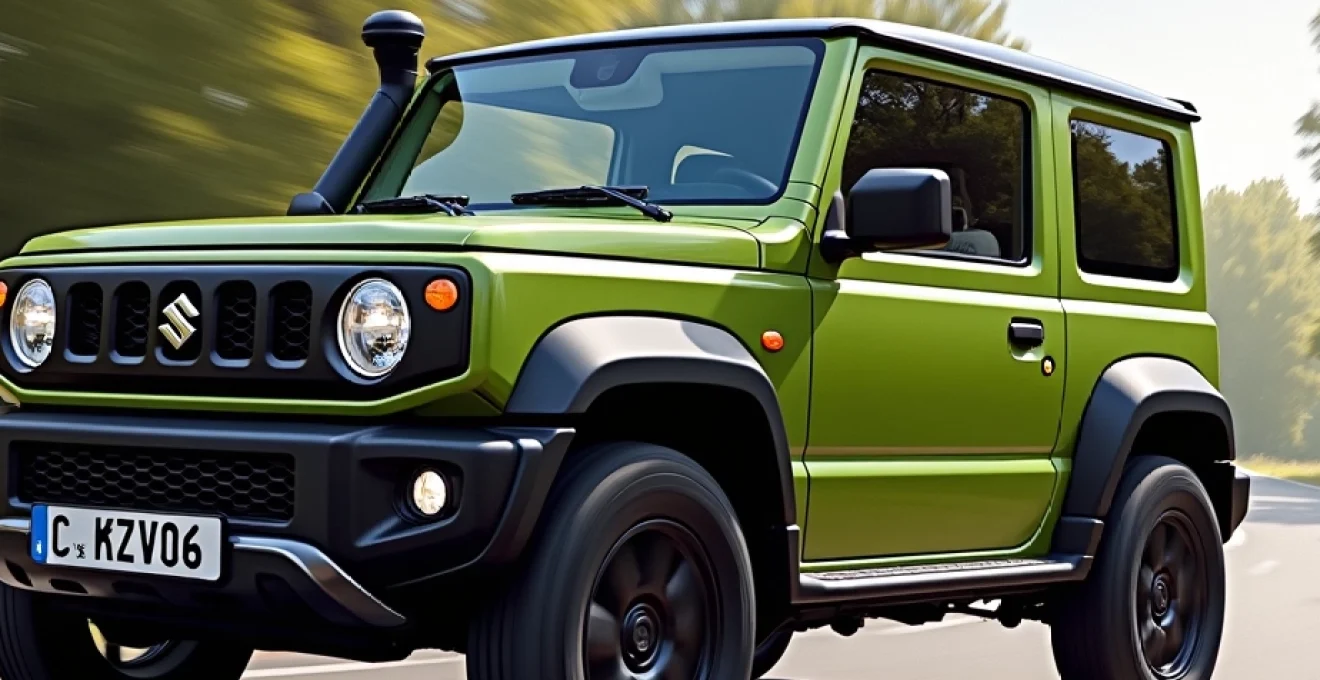
The Suzuki Jimny diesel automatic represents a fascinating intersection of compact off-road capability and practical urban mobility. This diminutive 4×4 has captured the hearts of enthusiasts worldwide with its rugged charm and genuine off-road prowess. The diesel automatic variant combines the torquey performance of turbocharged diesel power with the convenience of automatic transmission, creating a unique proposition in today’s increasingly SUV-dominated market.
Understanding the technical specifications and real-world capabilities of the Jimny diesel automatic becomes crucial for potential buyers seeking authentic off-road performance without compromising daily usability. The vehicle’s distinctive character emerges from its ladder-frame construction, sophisticated 4WD system, and surprisingly capable powertrain combination. Modern emissions regulations have significantly impacted the availability of this configuration across different markets, making comprehensive knowledge of its specifications even more valuable.
Suzuki jimny diesel engine specifications and performance characteristics
The diesel-powered Suzuki Jimny represents a departure from the more common petrol variants, offering enhanced torque delivery and improved fuel economy for extended off-road adventures. The diesel engine configuration provides substantial benefits for users who prioritise low-end torque over outright power, particularly valuable when navigating challenging terrain or towing equipment.
1.5-litre DDiS turbocharged diesel engine technical analysis
The 1.5-litre DDiS (Direct Diesel injection System) engine delivers 90 horsepower at 4,000 rpm, producing its maximum torque output of 200 Nm at just 1,750 rpm. This low-rpm torque characteristic proves invaluable for rock crawling and steep gradient climbing. The engine features a variable geometry turbocharger that optimises boost pressure across the rev range, ensuring responsive performance from idle speeds through to highway cruising.
Construction materials include an aluminium cylinder head with four valves per cylinder, operated by dual overhead camshafts. The engine block utilises cast iron construction for durability, particularly important given the Jimny’s intended usage scenarios. Compression ratio sits at 16.0:1 , typical of modern diesel engines, contributing to efficient combustion and reduced fuel consumption.
Torque output and power delivery across RPM range
The diesel engine’s torque curve reveals its strength in low-speed applications. Peak torque arrives early at 1,750 rpm and remains relatively flat until approximately 2,500 rpm, providing excellent flexibility for off-road maneuvering. This characteristic eliminates the need for frequent gear changes when traversing uneven terrain, allowing drivers to maintain momentum through challenging sections.
Power delivery feels progressive rather than explosive, with the turbocharger providing noticeable boost from around 1,500 rpm onwards. The engine demonstrates particular strength between 2,000-3,000 rpm, where most real-world driving occurs. Maximum power output remains modest by modern standards , but proves entirely adequate for the Jimny’s lightweight construction and intended purpose.
Fuel consumption ratings and Real-World efficiency metrics
Official fuel consumption figures for the diesel automatic Jimny indicate approximately 5.4 litres per 100 kilometres in combined cycle testing. Real-world consumption typically ranges between 6-8 litres per 100 kilometres, depending on driving conditions and terrain type. Urban driving with frequent stop-start conditions may push consumption toward the higher end of this range, while steady highway cruising can achieve figures closer to the official ratings.
Off-road consumption increases significantly due to extended low-speed operation and frequent use of four-wheel drive modes. Expect consumption figures around 8-10 litres per 100 kilometres during serious off-road adventures. The 40-litre fuel tank provides reasonable range for extended expeditions, though auxiliary fuel storage may prove beneficial for remote area exploration.
Euro 6 emissions compliance and AdBlue system integration
Meeting stringent Euro 6 emissions standards requires sophisticated exhaust after-treatment systems. The diesel Jimny incorporates a diesel particulate filter (DPF) and selective catalytic reduction (SCR) system using AdBlue fluid injection. The AdBlue tank capacity measures approximately 13 litres, requiring periodic refilling depending on usage patterns and driving conditions.
The emissions control system includes automatic regeneration cycles for the DPF, typically occurring every 400-600 kilometres under normal conditions. Extended low-speed operation may require manual regeneration cycles , which can be initiated through the vehicle’s diagnostic system. AdBlue consumption averages around 1.5 litres per 1,000 kilometres, though this varies based on engine load and operating conditions.
Automatic transmission technology in the suzuki jimny diesel
The automatic transmission option transforms the Jimny’s character, particularly in stop-start traffic and challenging off-road situations where manual clutch operation becomes tiresome. The transmission system integrates seamlessly with the AllGrip Pro 4WD system, maintaining the vehicle’s legendary off-road capabilities while enhancing everyday usability.
4-speed automatic gearbox configuration and gear ratios
The four-speed automatic transmission utilises conventional torque converter technology rather than modern CVT or dual-clutch systems. Gear ratios are optimised for torque multiplication rather than fuel economy, with first gear providing substantial reduction for steep climbs and heavy loads. The transmission features adaptive shift logic that modifies shift points based on driving style and conditions.
Gear ratios comprise: first gear 2.875:1, second gear 1.568:1, third gear 1.000:1, and fourth gear 0.696:1. These ratios, combined with the transfer case reduction, provide exceptional crawling capability in low-range mode. The torque converter’s multiplication factor adds approximately 2.0:1 additional reduction at stall conditions , further enhancing low-speed torque delivery.
Allgrip pro 4WD system integration with automatic transmission
The AllGrip Pro system maintains the traditional approach of driver-selectable transfer case operation, even with automatic transmission. The system offers 2H (rear-wheel drive), 4H (four-wheel drive high range), and 4L (four-wheel drive low range) modes. Transfer case ratios provide 1.0:1 in high range and 2.03:1 in low range, significantly multiplying available torque at the wheels.
Integration between the automatic transmission and transfer case occurs through mechanical linkages rather than electronic controls, maintaining reliability and simplicity. The system includes brake-assisted limited slip differential functionality, automatically applying individual wheel brakes to transfer torque to wheels with better traction. This electronic aid works in conjunction with the mechanical differential systems to maximise traction in challenging conditions.
Hill descent control and Low-Range transfer case operation
Hill descent control becomes particularly effective when combined with automatic transmission operation. The system maintains predetermined descent speeds without driver intervention, allowing focus on steering inputs rather than speed control. The automatic transmission’s torque converter provides smooth engagement and disengagement of engine braking, eliminating the jerky operation sometimes experienced with manual transmissions.
Low-range operation transforms the Jimny’s character completely, providing crawling speeds as low as 2-3 kilometres per hour in first gear. The automatic transmission eliminates stalling concerns during technical climbs , automatically downshifting to maintain forward progress. This combination proves invaluable for inexperienced off-road drivers or in situations requiring precise speed control.
Transmission cooling system and maintenance requirements
The automatic transmission includes dedicated cooling systems to manage heat generation during extended operation. A transmission cooler, integrated with the main radiator assembly, maintains optimal fluid temperatures even during sustained low-speed operation. Additional external cooling may prove beneficial for extreme conditions or heavy towing applications.
Maintenance intervals for the automatic transmission typically extend to 60,000-80,000 kilometres under normal conditions, though severe duty cycles may require more frequent servicing. The system uses approximately 4.5 litres of automatic transmission fluid, with specific viscosity requirements for optimal operation. Regular fluid and filter changes ensure longevity and maintained performance throughout the vehicle’s service life.
Off-road capabilities and technical performance metrics
The Jimny’s off-road prowess stems from fundamental design principles rather than electronic aids. Its compact dimensions, short overhangs, and high ground clearance create exceptional capability in technical terrain. The combination of rigid axles, coil spring suspension, and low-range gearing provides the foundation for serious off-road performance that rivals much larger and more expensive vehicles.
Ground clearance, approach and departure angles specifications
Ground clearance measures 210mm, providing adequate protection for the vehicle’s underside components during moderate off-road use. The approach angle reaches 37 degrees, allowing navigation over substantial obstacles without front bumper contact. Departure angle measures 49 degrees, preventing rear bumper damage when cresting hills or navigating steep descents.
These specifications compare favourably with much larger SUVs, demonstrating the advantages of the Jimny’s compact proportions. The short wheelbase of 2,250mm enhances manoeuvrability in tight situations , allowing navigation through spaces impossible for conventional SUVs. Break-over angle measures 28 degrees, indicating the vehicle’s ability to navigate sharp crests without bellying out.
Wading depth capacity and water crossing performance
Official wading depth capacity reaches 300mm, though practical limitations may reduce this figure in flowing water or muddy conditions. The air intake system requires protection during deep water crossings, with the standard configuration limiting safe wading depth to approximately 250mm. Aftermarket snorkel systems can extend this capability significantly for users requiring deeper water crossing ability.
Water crossing performance depends heavily on approach speed and water conditions. The diesel engine’s lower compression ratio and turbocharger positioning make it more susceptible to hydrostatic damage than naturally aspirated petrol engines. Careful attention to water depth and crossing techniques becomes essential for preserving engine integrity during river crossings or flood conditions.
Brake LSD and traction control system functionality
The brake-assisted limited slip differential system represents the Jimny’s primary traction aid, using individual wheel braking to transfer torque to wheels with better grip. The system operates automatically when wheel slip is detected, requiring no driver intervention. Response times prove adequate for most off-road situations, though the system may struggle in extremely slippery conditions where all wheels lose traction simultaneously.
Integration with the stability control system provides additional safety margins during on-road driving while maintaining off-road capability when required. The system can be partially disabled for serious off-road use, allowing controlled wheel slip necessary for momentum maintenance in sand or snow. Complete system deactivation remains possible for extreme off-road situations where electronic intervention might hinder progress.
Ladder frame chassis construction and articulation flexibility
The traditional ladder frame chassis provides exceptional durability and repairability compared to unibody construction. The separate body-on-frame design allows significant chassis flex without body stress, enabling excellent wheel articulation over uneven terrain. Steel construction ensures longevity even under severe usage conditions, though weight considerations limit overall payload capacity.
Suspension articulation reaches impressive levels for such a compact vehicle, with independent front and solid rear axle configuration maximising wheel contact with uneven surfaces. Coil spring suspension provides superior ride comfort compared to leaf spring systems while maintaining adequate load capacity for most users. The suspension geometry prioritises off-road performance over on-road refinement, resulting in some compromise in highway comfort.
The ladder frame construction represents old-school engineering principles that prioritise durability and repairability over weight optimisation, making the Jimny particularly suitable for remote area use where repair facilities may be limited.
Market availability and regional specifications across europe
European market availability of the diesel automatic Jimny has become increasingly limited due to stringent emissions regulations and changing manufacturer priorities. The combination of Euro 6d emissions compliance costs and relatively low sales volumes has prompted Suzuki to discontinue this configuration in many markets. Current availability varies significantly between countries, with some markets retaining commercial vehicle variants while others have eliminated diesel options entirely.
Regional specifications reflect local market requirements and regulatory frameworks. Some markets offer extended warranty coverage for commercial users, while others focus on recreational applications with enhanced equipment levels. Pricing structures vary considerably, with markets maintaining diesel availability typically commanding premium prices over petrol equivalents. Delivery times have extended significantly in markets where diesel automatic variants remain available, often requiring several months of waiting.
The transition toward electrification has accelerated the phase-out of diesel variants across many European markets. Suzuki’s strategic focus has shifted toward hybrid and electric powertrains, leaving traditional diesel engines as interim solutions pending full electrification. This market transition creates opportunities for well-maintained used examples to command strong resale values, particularly in markets where new diesel variants are no longer available.
Market dynamics continue evolving rapidly as manufacturers balance customer demand for diesel torque characteristics against regulatory pressure for reduced emissions, creating uncertainty around long-term diesel availability in compact SUV segments.
Maintenance schedule and service requirements for diesel automatic variant
The diesel automatic Jimny requires adherent maintenance scheduling to ensure reliability and longevity, particularly given the complexity of modern emissions control systems. Service intervals typically extend to 15,000 kilometres or 12 months, whichever occurs first, though severe duty cycles may necessitate more frequent attention. The combination of diesel engine technology and automatic transmission creates specific maintenance requirements beyond conventional petrol manual variants.
Engine oil specifications become critical for diesel variants, requiring low-ash formulations compatible with DPF systems. Oil capacity reaches approximately 4.3 litres including filter, with specific viscosity grades depending on climate conditions and usage patterns. The dual-mass flywheel requires particular attention in automatic variants, with replacement costs significantly higher than conventional flywheel systems. Regular inspection of the AdBlue system, including tank, lines, and injection components, prevents costly failures and ensures continued emissions compliance.
Transmission servicing involves fluid and filter replacement at prescribed intervals, typically every 60,000 kilometres under normal conditions. The transfer case requires separate lubrication using specific gear oils, with change intervals varying based on usage severity. Differential services become particularly important for vehicles experiencing regular off-road use, where contamination from water and debris can accelerate wear. Comprehensive pre-purchase inspections become essential when considering used diesel automatic examples, given the complexity and replacement costs of major components.